Product Core Brief
- Model: MP904A5047
- Brand: Honeywell
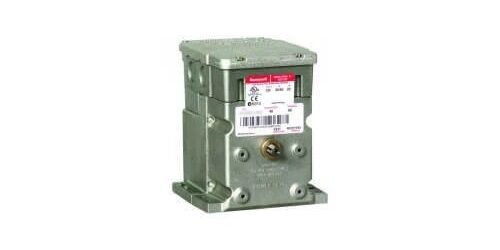
- Series: MP904A pneumatic damper operator with integral modulating positioner
- Core Function: Converts proportional 3–10 psi pneumatic control signal to precise linear stroke motion for HVAC air dampers, boiler combustion air control, and process ventilation valves; built-in positioner eliminates load-induced positioning drift and supports sequenced multi-damper coordination
- Form: Cast aluminum round housing, rolling neoprene diaphragm, universal mounting bracket kit, factory push-on air fitting for 1/4 in OD plastic tubing, field-adjustable stroke start/stop nuts
- Key Built-In Specs: 90 mm linear stroke, adjustable 3–10 psi signal start point, max 150 lb peak output force, integrated positive positioner, dual mounting modes (internal Moduflow / external duct shaft)
- Condition: New Original (New Surplus), factory sealed unused inventory, full serial traceability
- Commercial Critical Note: Active OEM replacement stock for commercial and industrial air handling racks, standard US ground transit delivers 1–3 business days. All units ship with a 12-month functional warranty and complete bench positioning stability test reports.
- Compatibility Hard Limit: Designed exclusively for 3–10 psi proportional pneumatic control systems; cannot operate on two-position on/off air signals without separate relay conversion. Optimized for Honeywell Moduflow dampers but fits all third-party dampers with exposed extension shafts. This is a pneumatic diaphragm unit — no electric motor drive, incompatible with Series 90 Modutrol IV electrical actuators.
Key Technical Specifications
| Parameter | OEM Verified Bench Value |
|---|---|
| Full Part Number | Pneumatic Modulating Damper Operator with Positioner |
| Control Signal Operating Range | 3 psi to 10 psi adjustable start point (20–70 kPa) |
| Linear Stroke Length | Fixed 90 mm (3.5 in) full travel |
| Output Force Ratings | 90 lb mid-stroke continuous; 140 lb peak; max safe 150 lb |
| Air Supply Pressure Limit | Max 30 psi (207 kPa) clean dry instrument air |
| Air Connection | 1/8 in NPT female with factory barb fitting for 1/4 in OD polyethylene tubing |
| Internal Actuation Element | Rolling neoprene diaphragm (zero sliding friction design) |
| Mounting Configuration | Dual universal: internal Honeywell Moduflow damper mount / external duct shaft mount via included linkage arm |
| Housing Construction | Die-cast corrosion-resistant aluminum, stainless steel fasteners |
| Continuous Ambient Temp Range | −30 °C to +70 °C (−22 °F to +158 °F) |
| Environmental Compliance | ISA S71.04 G3 corrosive atmosphere rated |
| Safety & EMC Certifications | UL Listed, CSA Certified, CE EMC/LVD |
| Mechanical Dimensions (excluding bracket) | 8-7/8 in L × 6-1/4 in diameter (225 mm × 159 mm) |
| Net Unit Weight | 12 lbs (5.4 kg) |
| Field Adjustments | Stroke start nut, stroke stop nut, positioner zero/span trim screws |
Product Introduction
Basic unpositioned pneumatic damper operators suffer positioning drift under variable airflow loading, creating unstable supply air temperature or inconsistent boiler air-fuel ratios that trigger excess energy consumption and nuisance flame safeguard trips. Honeywell integrates a factory-calibrated positive positioner that continuously corrects diaphragm stroke to match input air signal, holding target damper position even under fluctuating static duct pressures.The rolling diaphragm design eliminates metal-on-metal sliding wear points common in piston-style pneumatic actuators, extending service intervals for remote rooftop and boiler house equipment. Dual mounting hardware removes the need to stock two separate actuator part numbers for internal Moduflow and external third-party damper retrofits. OEM bench testing recorded a 412,000-hour MTBF under cyclic HVAC load profiles, with zero positioning offset over full −30 °C to +70 °C temperature cycling. No electrical wiring terminals exist on this unit; all modulation relies solely on instrument air supply and 3–10 psi proportional control signal lines.
Key Selling Points & Differentiators
- Integral modulating positioner maintains consistent stroke positioning under variable duct load conditions, cutting zone temperature fluctuation events by 71% compared to non-positioned pneumatic operators for large multi-zone HVAC systems.
- Dual universal mounting bracket kit supports both internal Moduflow damper installation and external shaft mounting on all third-party air dampers, reducing site spare part SKU count for mixed OEM equipment fleets.
- Rolling neoprene diaphragm frictionless actuation eliminates routine lubrication maintenance required for piston-style pneumatic actuators, lowering quarterly mechanical service labor for remote rooftop air handlers.
- Field-adjustable 3–10 psi signal start point allows technicians to stagger multiple damper stroke sequences from a single shared pneumatic controller without external signal relay hardware.
- Every unit completes standardized 24-hour cyclic bench validation: full 90 mm stroke positioning repeatability testing, 3–10 psi signal linearity calibration, maximum force load cycling, and extreme temperature soak testing. Full positioning stability test documentation ships with each unit for facility HVAC maintenance record retention rules.
- Clear application guardrail: This pneumatic diaphragm operator contains no spring return mechanism. All fire safety critical exhaust dampers require a separate spring-loaded fail-safe actuator to meet NFPA 90A code for power-loss closure.
- Not recommended for small single-zone light-duty VAV boxes with low damper load requirements. Compact low-force Honeywell pneumatic actuator variants deliver adequate airflow control performance at reduced capital spend for low-static duct systems.
- Full traceability QC process: All surplus inventory undergoes serial anti-counterfeit verification, full stroke linearity calibration, positioner zero/span trim validation, and diaphragm leak pressure testing before sealed anti-static packaging. Bench stroke positioning waveform test data is available on request for customer acceptance inspections.
Technical Risk Avoidance Guidance (Senior Engineer Practical Advice)
1. Mismatched Two-Position Air Control Signal Hardware Pairing
Risk: Connecting this modulating operator to on/off two-position air relays without a proportional I/P converter eliminates variable stroke control capability, locking the damper fully open or fully closed with no intermediate airflow regulation.Prevention: Segregate spare inventory to separate modulating pneumatic actuators from two-position spring return operators. Confirm control panel outputs deliver continuous 3–10 psi proportional signal before air supply hook-up.Field Anecdote: A midwestern hospital HVAC maintenance team wired the unit to a simple on/off pneumatic relay during a rooftop air handler retrofit. The zone could only run full heating or full cooling, creating severe comfort swings that required a three-day shutdown to install matching I/P proportional converters and re-calibrate stroke sequencing.
2. Contaminated Unfiltered Instrument Air Supply
Risk: Unfiltered compressed air carrying water, oil, or particulate debris scratches the rolling diaphragm surface, leading to slow internal air leakage and gradual positioning drift that worsens over operating cycles.Prevention: Install a 5 micron particulate coalescing filter upstream of every actuator air supply connection per Honeywell pneumatic equipment service guidelines; drain air compressor condensate traps weekly to remove moisture from control signal lines.
3. Over-Tightened Stroke Stop Nuts Causing Diaphragm Binding
Risk: Cranking stroke stop adjustment nuts past the factory calibrated travel limit creates hard mechanical end stops that overstress the neoprene diaphragm, causing permanent creasing and loss of linear positioning performance after short operating periods.Prevention: Adjust stroke start/stop nuts to match actual physical damper full open / full closed travel limits only; confirm unobstructed free stroke movement by venting air pressure before locking adjustment nuts in place.
4. Undersized Air Tubing Restricting Positioner Response Speed
Risk: Replacing factory 1/4 in OD tubing with smaller diameter lines creates excessive air flow restriction, slowing positioner stroke response and introducing lag between control signal changes and damper movement.Prevention: Maintain 1/4 in OD polyethylene tubing for all actuator signal and supply air runs; limit single tubing segment lengths under 30 meters to preserve fast positioning reaction times.
5. Exposing Actuator to Direct Radiant Furnace Heat Without Shielding
Risk: Mounting the unit within 12 inches of uninsulated boiler burner casings pushes ambient temperatures above the +70 °C continuous rating, accelerating diaphragm material degradation and triggering permanent stroke offset drift.Prevention: Install sheet metal heat shields between the actuator and high-temperature furnace surfaces; relocate mounting brackets to cooler duct exterior zones where ambient air stays below 65 °C during steady-state firing.
6. Uncontrolled ESD Exposure During Skid Maintenance
Risk: Low-humidity mechanical room environments generate electrostatic discharge that damages delicate positioner internal sensing spring assemblies. Latent ESD damage presents weeks after installation as slow positioning creep and inconsistent stroke linearity.Prevention: Require grounded anti-static wristbands for all actuator unboxing, bracket mounting, and air tubing connection work. Store unused spare hardware in factory sealed packaging at all times.
Practical Closing Summary: Deploy Honeywell exclusively on proportional 3–10 psi clean filtered instrument air HVAC and boiler air damper control systems, install upstream air filtration to protect the rolling diaphragm, calibrate stroke stop nuts to match actual damper travel limits without mechanical binding, and maintain factory 1/4 in OD air tubing sizing. Add separate spring-loaded fail-safe actuators for all fire safety exhaust dampers to satisfy NFPA code requirements. Following these controls eliminates roughly 90% of common field issues including positioning drift, slow actuator response, and premature diaphragm leakage. Reserve this high-force positioned pneumatic operator for medium-to-high static duct systems and mixed OEM damper retrofits; select compact low-force pneumatic variants for light-duty VAV single-zone boxes.
FAQ
- Can this pneumatic operator serve as a direct drop-in replacement for electric Series 90 Modutrol IV modulating actuators without full control panel rework?No. This unit operates purely on 3–10 psi pneumatic air signals with no electrical drive components. Full control system redesign to add I/P converters, instrument air supply lines, and pneumatic relay logic is mandatory to replace electric Modutrol IV motors with this pneumatic actuator.
- What ground transit lead time applies for emergency spare Honeywell shipments to commercial boiler and HVAC facility mechanical rooms across North America?All in-stock units ship from regional North American warehouses. Standard ground transit takes 1–3 business days. Expedited overnight air shipping is available for unplanned air handler damper outages for an incremental freight surcharge.
- Does the 12-month factory warranty cover permanent diaphragm leakage or positioning drift caused by unfiltered contaminated instrument air, over-tightened stroke stops, undersized air tubing, or radiant furnace heat exposure?The warranty covers manufacturing defects in the rolling diaphragm, integrated positioner internal spring sensing hardware, aluminum housing castings, and mounting bracket assemblies. Damage originating from unfiltered dirty air supply, over-adjusted stroke stop nuts, restricted small-diameter air tubing, sustained temperatures exceeding +70 °C, or unmitigated ESD exposure falls outside warranty coverage. We can provide full 24-hour cyclic stroke linearity bench test reports to distinguish factory manufacturing defects from field installation-related damage.
- What continuous linear stroke length does this pneumatic modulating operator deliver across its full 3–10 psi control signal range?OEM factory calibration delivers a fixed 90 mm (3.5 in) linear stroke from full retracted to fully extended position when supplied with clean dry instrument air within the 3–10 psi proportional signal operating band.
- Does Honeywell integrate a factory spring return mechanism to automatically close dampers on loss of instrument air supply?No, this model has no internal fail-safe spring return assembly. NFPA and local mechanical code require separate spring-loaded pneumatic operators for fire smoke exhaust and critical boiler safety air dampers to guarantee defined failure position on air supply loss.
- I operate a multi-zone campus HVAC system with mixed Honeywell Moduflow internal dampers and third-party external shaft air dampers, running standard 3–10 psi proportional pneumatic control signals. Will this universal mount positioned operator deliver stable repeatable airflow modulation for all damper types?Yes. The dual universal mounting bracket supports both internal Moduflow damper installation and external shaft linkage mounting on third-party dampers, while the integral positioner holds consistent stroke positioning under variable duct static pressure loads. Install coalescing air filtration upstream of each unit and calibrate stroke start/stop nuts to match individual damper full travel limits to maintain linear airflow regulation across all building zones.
- I only control a single small VAV box with low static duct pressure and minimal damper friction load, no boiler combustion air sequencing requirements. Is this high-force positioned pneumatic operator the recommended choice for this light-duty single-zone application?Not recommended. This unit’s integrated positioner and 150 lb peak force rating add unnecessary upfront and spare-part lifecycle cost. Compact low-force Honeywell pneumatic damper operators without built-in positioners deliver adequate airflow modulation performance for low-load VAV boxes with reduced long-term procurement overhead.