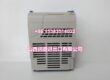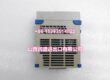
Product Core Brief
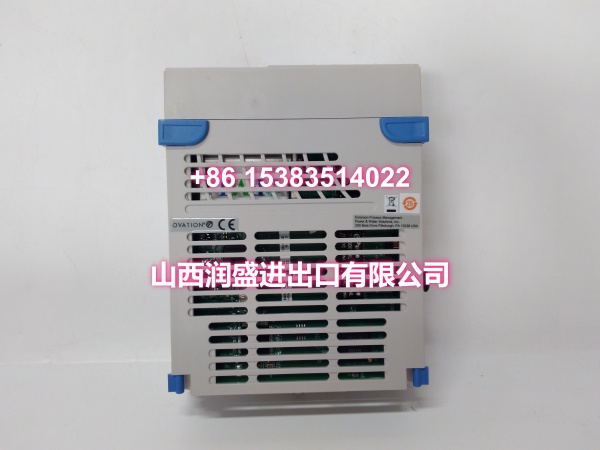
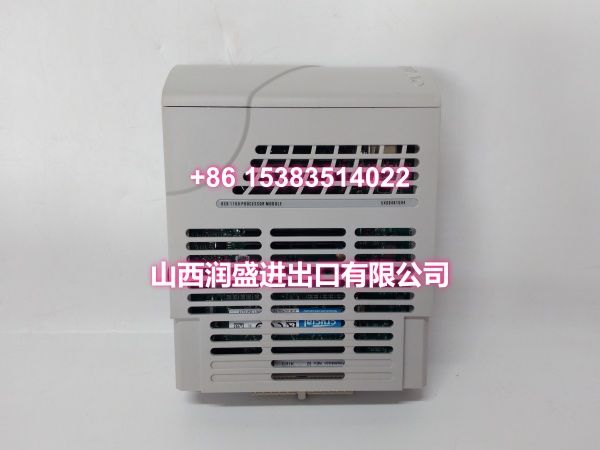
- Model: 5X00481G04 (OCR1100 Controller)
- Brand: Emerson (Ovation System)
- Series: Ovation DCS OCR1100 Controller Family
- Core Function: High-performance, redundant process controller that executes continuous (PID) and sequential control strategies, handles data acquisition, and interfaces with Ovation I/O subsystems and networks — the “brain” of the Ovation DCS for power generation, water/wastewater, and industrial process applications.
- Product Type: Ovation DCS Controller (OCR1100)
- Key Specs: Bumpless Redundant Failover | 10ms–30s Scan Rates | 32,000 Points | 1ms SOE Resolution | IEC 61131-3 Compliant | Achilles Level 1 Certified | Fanless Operation
- Condition: New Original / New Surplus
Key Technical Specifications
- Controller Model: OCR1100 (part number 5X00481G04)
- Processor: Intel-based processor for high-speed control execution
- Redundancy: Hot-standby redundant configuration with bumpless (no-bump) automatic failover between primary and secondary controllers — zero process disturbance on switchover
- Control Task Execution: Up to 5 simultaneous process control tasks with configurable scan rates from 10ms to 30 seconds; two tasks have predefined 1s and 100ms scan rates, three tasks are user-selectable
- Point Capacity: Up to 32,000 process points per controller
- Control Functions: Continuous (PID) control, Boolean logic, advanced control algorithms, special logic and timing functions, data acquisition, sequence-of-events (SOE) processing with 1ms resolution, cold junction compensation
- I/O Interface: Local and remote Ovation and WDPF I/O interface; integrates with digital bus via Ovation I/O modules; virtual I/O capability for third-party OEM systems via Ethernet protocol
- Memory: Non-volatile flash memory for application software, point database, configuration data, and tuning constants — no battery required
- Standards Compliance: IEC 61131-3 compliant; Achilles Level 1 certified
- Operating Environment: Fanless design for low power consumption and high reliability; typical control-room environment 0–55°C depending on cabinet airflow and rack configuration
- Power Supply: Supplied via Ovation backplane (logic power provided by rack PSU; no separate external supply needed)
- Installation: Plug-in card; mates with Ovation 5X-series rack/cage and associated terminal assemblies
Product Introduction
The 5X00481G04 is the part number for Emerson’s OCR1100 controller — the central processing unit of the Ovation distributed control system. If the I/O modules are the eyes and hands of the DCS, the OCR1100 is the brain: it reads thousands of process inputs, executes control algorithms (PID loops, logic interlocks, sequencing), and writes output commands back to the field — all in real time, with millisecond precision.
What sets the OCR1100 apart from generic PLCs is its purpose-built design for critical infrastructure. In power plants, water treatment facilities, and industrial process operations, a controller failure can mean a unit trip, a safety event, or hours of production loss. The OCR1100 addresses this with hot-standby redundancy: two controllers run in parallel, constantly synchronizing their databases and control state. If the primary controller fails, the secondary takes over with bumpless transfer — the process never sees a glitch, and operators may not even notice the switchover happened.
The controller handles up to 32,000 points and can execute up to five control tasks simultaneously at independently configurable scan rates. Fast loops (like turbine governor control or feedwater regulation) can run at 100ms or faster, while slower supervisory tasks run at 1s or longer — all on the same controller, without resource contention. The 1ms sequence-of-events (SOE) resolution means you can pinpoint the exact order of trips and alarms during a disturbance, which is essential for post-event analysis in power generation.
The fanless, flash-memory-based design eliminates two common failure points: spinning fans that wear out and batteries that leak or die. Configuration, application logic, and the point database are all stored in non-volatile flash memory, so there’s no risk of data loss on power cycling.
For system integrators and plant engineers, the OCR1100 speaks the language of open standards: IEC 61131-3 programming, Ethernet-based virtual I/O for third-party integration, and full compatibility with both local Ovation I/O and remote WDPF I/O subsystems. Achilles Level 1 certification confirms it meets the rigorous reliability standards expected in utility-grade applications.
Bottom line: if you’re running an Ovation DCS and need a reliable, redundant controller for critical process control, the 5X00481G04 (OCR1100) is the workhorse you spec.
QA & Testing SOP
Controllers are the single point of failure for the entire DCS — if the controller goes down, the whole process goes dark. Our validation protocol covers both hardware integrity and functional performance:
- Physical & Anti-Counterfeit Inspection: We verify the OEM chassis integrity, check for authentic Emerson labeling and correct part number (5X00481G04 / OCR1100), and inspect the backplane connector pins for corrosion, bending, or wear.
- Power-On Self-Test (POST): The controller is seated in an OEM Ovation rack and powered up. We verify that the POST completes successfully, with no hardware fault LEDs illuminated.
- Backplane Communication Test: We verify that the controller correctly enumerates all I/O modules in the rack and establishes communication with the Ovation network.
- Redundancy Switchover Test: In a redundant pair configuration, we simulate a primary controller failure (power removal or forced fault) and verify that the secondary controller takes over with bumpless transfer — no output disturbance, no process upset, and no alarm flood on the HMI.
- Control Task Execution Test: We download a test control strategy with multiple tasks at different scan rates (100ms, 1s, 10s) and verify that all tasks execute within their configured scan times, with no overrun or jitter.
- Point Database & SOE Test: We verify that the controller correctly reads and writes process points, and we trigger a series of digital input changes to confirm that the SOE function records events with 1ms resolution and correct timestamping.
- Memory Retention Test: We power-cycle the controller multiple times and verify that the application logic, point database, and configuration are retained in flash memory with no data loss.
- Thermal & Fanless Operation Verification: We run the controller under load for an extended period and verify that it operates within thermal specifications with no fan (fanless design).
- Anti-Static Packaging: After validation, the controller is sealed in industrial-grade ESD shielding bags with connector protectors installed for transit.
Installation Pitfalls & Guide
Controller installation and configuration mistakes can cause process upsets, failed redundancy, or even a full plant trip. These are the traps to avoid:
- ❗ Redundancy Configuration: For bumpless failover, both controllers in a redundant pair must have identical firmware versions, identical I/O configurations, and synchronized point databases. A version mismatch or configuration drift between primary and secondary will cause the redundancy to fail or produce a bump on switchover. Always verify firmware and configuration parity before putting a redundant pair into service.
- ❗ Scan Rate Overload: The controller has finite processing capacity. If you assign too many control tasks or set scan rates too aggressively, the controller will experience task overruns, which can cause missed scans and erratic control behavior. Use the Ovation HMI diagnostic displays to monitor control task cycle times (average, worst-case, and standard deviation) and ensure you have adequate headroom.
- ❗ I/O Module Compatibility: The OCR1100 interfaces with both local Ovation I/O and remote WDPF I/O subsystems. Verify that all I/O modules in the rack are compatible with the controller’s firmware version and that the I/O configuration in the controller matches the physical module layout. A mismatch will cause I/O communication faults.
- ❗ Network Configuration: The controller communicates with operator stations, engineer stations, and other controllers over the Ovation network. Verify IP addressing, subnet configuration, and network switch settings before connecting the controller to the live network. An IP conflict or misconfigured switch port can isolate the controller from the rest of the system.
- ❗ Battery-Free Design: The OCR1100 uses flash memory for non-volatile storage — there is no backup battery to replace. However, this also means that a corrupted flash memory image can be more difficult to recover than a battery-backed RAM system. Always maintain a current backup of the controller’s application logic and point database on the engineer station.
- ❗ Hot-Swap Caution: While the Ovation system supports online controller replacement in a redundant configuration, removing the primary controller while the secondary is in standby is safe. However, removing the only controller in a non-redundant configuration will cause an immediate loss of all control — all outputs will go to their fail-safe state. Never remove a controller from a non-redundant rack without first placing the process in a safe state.
Replacement Procedure (Redundant Pair):
- Pre-Install: Back up the current controller configuration and application logic from the engineer station. Verify that the replacement controller has the same firmware version as the existing controller. Note the slot location and any DIP switch or jumper settings on the existing controller.
- Removal: In a redundant pair, the secondary controller can be removed while the primary is running. If replacing the primary, first force a manual switchover so the current primary becomes secondary. Open the blue locking lever and remove the controller from the rack.
- Install: Insert the new controller into the rack slot, ensuring it mates correctly with the backplane connector. Close the blue locking lever. The controller will power up and begin synchronizing with its redundant partner.
- Synchronization & Test: Wait for the synchronization process to complete (indicated by the redundancy status LEDs on both controllers). Verify that the HMI shows both controllers as healthy and in redundant mode. Perform a manual switchover test to confirm bumpless transfer.
Technical FAQ
What’s the difference between the OCR1100 and other Ovation controllers? The OCR1100 (5X00481G04) is the standard high-performance process controller for Ovation DCS, designed for continuous PID control, logic, and data acquisition in power, water, and industrial applications. Other Ovation controller variants include the OCR1000 (entry-level, lower point capacity) and specialized controllers for safety-rated or motion control applications. The OCR1100 is the most widely deployed controller in the Ovation family and is the go-to choice for general-purpose process control.
Can I run the OCR1100 in a non-redundant configuration? Yes. The OCR1100 can operate as a standalone (non-redundant) controller. However, for critical process applications, Emerson strongly recommends redundant configuration to eliminate the single point of failure. In a non-redundant setup, a controller failure will cause a complete loss of control until the controller is replaced.
What programming software is used for the OCR1100? The OCR1100 is programmed using Ovation’s engineering tools, which support IEC 61131-3 compliant programming languages (ladder logic, function block diagram, structured text). Control strategies are built from Ovation’s library of pre-tested algorithm blocks designed for power, water, and wastewater applications.
How do I monitor controller performance and task execution times? The Ovation HMI provides advanced diagnostic displays that show control task cycle times — including configured scan rate, average execution time, worst-case execution time, and standard deviation. These diagnostics help you identify overloaded tasks and optimize your control strategy before problems occur.
Is the 5X00481G04 compatible with older Ovation I/O modules? Yes. The OCR1100 maintains backward compatibility with the full range of Ovation 5X-series I/O modules, as well as remote WDPF I/O subsystems. This allows you to upgrade the controller without replacing existing I/O infrastructure.
Do you offer volume pricing for plant spare controllers? Yes. Controllers are critical spare parts for any Ovation DCS installation. We offer flexible pricing tiers for bulk orders. Contact our sales team with your required quantity for a competitive quote.
Need the full OCR1100 technical manual, firmware version compatibility chart, or the redundant controller wiring diagram? I can pull those up for you.