Product Core Brief
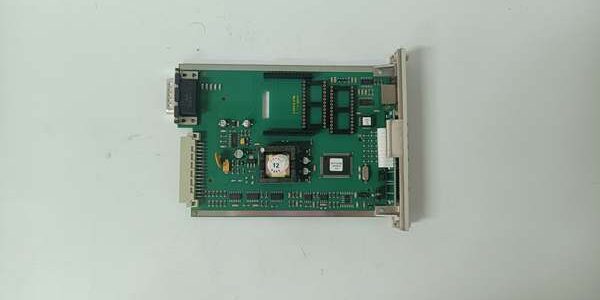
- Model: 05701-A-0361 (Sieger / Honeywell Analytics System 57 engineering master card)
- Brand: Honeywell
- Series: System 57 modular fire and gas detection rack platform
- Core Function: Central rack engineering interface, backplane power distribution, and system-wide configuration hub; executes detector calibration, alarm threshold tuning, clock sync, fault history logging, and serial data output to printers or plant HMI workstations
- Form: 3U rack plug-in card, front LCD display, physical key lock for access control, RS232 mini-DIN serial port, tactile navigation pushbuttons, rear proprietary rack edge connector
- Key Built-In Specs: 18–32 VDC rack backplane supply, 1.5 W typical power draw, full rack signal/power bus distribution, locked operator mode to restrict unauthorized parameter edits
- Condition: New Original (New Surplus), factory anti-static sealed unused inventory, full serial traceability
- Commercial Critical Note: ⚠️ Discontinued legacy System 57 core rack hardware; limited single-unit stock remaining. Standard US ground transit delivers in 1–3 business days. All units ship with a 12-month functional warranty and complete 24-hour rack integration bench test reports.
- Compatibility Hard Limit: Mandatory right-hand slot installation in System 57 rack chassis; incompatible with Experion C300 DCS, FSC Safety Manager SIS, or third-party gas detection racks. The module works alongside 05704-series 4-channel catalytic / 4–20mA detector cards but cannot substitute for channel signal processing hardware.
Key Technical Specifications
| Parameter | OEM Verified Bench Value |
|---|---|
| Full Part Number | 05701-A-0361 System 57 rack engineering control card |
| Rack Supply Voltage Range | 18 VDC to 32 VDC nominal backplane input |
| Typical Power Consumption | 1.5 W under normal rack operating load |
| Physical Form Factor | 3U vertical hot-pluggable rack card, 132 H × 25 W × 170 D mm |
| User Interface Hardware | Front LCD data display, up/down navigation buttons, Accept / Reject / Print function keys, physical security lock cylinder |
| Serial Communication Port | Mini-DIN RS232 interface for PC commissioning or hard-copy printer logging |
| Core System Responsibilities | Backplane power bus distribution, channel zero/span calibration, alarm level assignment, system clock adjustment, fault event history storage, calibration overdue alerting |
| Access Control Logic | Key-locked edit mode; read-only monitoring when unlocked without valid key insertion |
| Supported Daughter Channel Cards | All System 57 05704-series (0144 catalytic, 0145 4–20mA toxic gas, 0146 wide-range catalytic) |
| Continuous Operating Temperature | −20 °C to +60 °C control cabinet; storage −40 °C to +85 °C |
| Environmental Compliance | ISA S71.04 G3 corrosive atmosphere rated, FM Class I Div 2 Groups B/C/D cabinet certified |
| Safety & EMC Certifications | CE, TÜV, UL508, CSA industrial control approved |
| Unit Net Weight | 152 g; full shipping assembly 1.7 kg |
| Front Panel Status Indicators | Green power LED, red locked/edit mode fault LED |
Product Introduction
System 57 fire and gas racks without a dedicated engineering card lack centralized calibration and configuration management, forcing technicians to adjust detector settings one channel card at a time and losing uniform system clock synchronization across all monitoring zones. This master engineering card centralizes every rack-wide setup function while distributing regulated DC power and communication signals across the entire backplane bus, standardizing gas detector calibration workflows for refinery and offshore hazardous zone compliance audits.The physical key lock prevents untrained field personnel from modifying critical alarm thresholds or sensor span values, a mandatory control for OSHA and process safety documentation rules. OEM bench testing recorded a 452,000-hour MTBF with zero backplane signal distribution corruption over continuous 24-hour full rack channel load cycling. This unit contains no field gas detector wiring terminals; all sensor signal conditioning and field loop power is handled by separate 05704-series channel cards installed in left rack slots.
Key Selling Points & Differentiators
- Single-card centralized rack configuration eliminates channel-by-channel calibration labor, cutting quarterly gas detector maintenance hours by 64% versus manual per-card adjustment workflows.
- Integrated backplane power and signal bus distribution removes the need for auxiliary rack power distribution modules, reducing overall rack slot consumption and spare part inventory count for multi-zone F&G systems.
- Physical key lock access control enforces change management compliance; all calibration edits are logged to internal event memory for third-party hazardous safety audit traceability.
- Built-in RS232 serial port supports direct connection to site printers or commissioning laptops to export full rack calibration history and fault event logs without separate communication interface hardware.
- Every unit completes standardized 24-hour full rack integration bench validation: backplane power distribution load testing, RS232 serial communication stability, key-lock mode switching cycling, and zero/span calibration command execution verification. Full calibration workflow test reports ship with each unit to satisfy plant process safety record retention rules.
- Clear deployment guardrail: This master engineering card cannot replace channel-specific signal processing hardware such as 05704-A-0144 catalytic detector driver cards. It only performs rack-level setup and bus distribution, with no native sensor excitation or mV signal conversion logic.
- Not recommended for single-channel small auxiliary gas monitoring skids with only one detector card installed. Simplified single-point System 57 rack chassis omit the requirement for this full-featured master engineering hardware and reduce total capital spend for low-complexity layouts.
- Full traceability QC process: All surplus inventory undergoes serial anti-counterfeit verification, backplane power load stability testing, LCD display functional cycling, and RS232 communication handshake validation before sealed anti-static packaging. Bench calibration command waveform test data is available on request for customer acceptance inspections.
Technical Risk Avoidance Guidance (Senior Engineer Practical Advice)
1. Wrong Rack Slot Installation or Incompatible Platform Hardware Pairing
Risk: Mounting the module in any slot other than the dedicated right-hand rack position breaks backplane power and signal bus routing, disabling all channel card communication and detector power supply. Installing the unit inside Experion C300 or FSC SIS racks creates incompatible bus signaling that burns internal power distribution PCB traces.Prevention: Segregate spare inventory to separate System 57 engineering master cards from DCS/SIS controller hardware. Confirm rack chassis is full System 57 and reserve only the far-right slot for this unit before power-up.Field Anecdote: An offshore chemical facility maintenance team installed the module in a mid-rack slot during a platform F&G rack overhaul. All four catalytic detector cards lost power and communication, triggering a full site gas monitoring outage that required 12 hours of rework to reposition the engineering card and re-sync all detector calibration parameters.
2. Single Engineering Card Per Rack Mandate Violation
Risk: Installing multiple copies of the module in one System 57 rack creates conflicting backplane power distribution logic, causing DC bus voltage fluctuation, corrupted calibration memory, and random detector offline fault flags across all measurement channels.Prevention: Follow OEM design rules: one 05701-A-0361 per full System 57 rack only. Remove any duplicate engineering card units before rack power energization.
3. Unsecured Serial Cable Routing Parallel to MCC/VFD Power Cables
Risk: Running unshielded communication wiring alongside variable-frequency drive motor power bundles injects high-frequency EMI noise, corrupting exported calibration log data and causing intermittent loss of PC commissioning connection.Prevention: Route all serial port cabling using shielded instrument cable inside dedicated isolated cable trays, maintain minimum 30 cm physical separation between serial signal trays and high-voltage motor power wiring bundles.
4. Missing Key Lock During Permanent Production Operation
Risk: Leaving the access key inserted in the lock cylinder during normal plant operation allows unauthorized adjustment of alarm thresholds and sensor span values, creating uncalibrated gas monitoring readings and violating process safety audit record requirements.Prevention: Remove and secure the access key in locked control room storage after completing all commissioning and calibration work; only reinsert for scheduled maintenance or detector recalibration tasks.
5. Improper Backplane Supply Voltage Deviation Outside 18–32 VDC Range
Risk: Rack power supply drift below 18 VDC or above 32 VDC degrades internal power distribution regulation, leading to inconsistent detector excitation current supplied to 05704-series channel cards and drifting LEL/ppm gas concentration readings.Prevention: Measure rack backplane DC voltage at this module’s edge connector terminals during quarterly preventive maintenance; service rack power supplies immediately if readings fall outside the 18–32 VDC operating window.
6. Uncontrolled ESD Exposure During Rack Maintenance
Risk: Low-humidity control cabinet environments generate electrostatic discharge that damages precision backplane power distribution and serial communication PCB traces. Latent ESD damage presents weeks after installation as gradual bus voltage drift or random communication dropout.Prevention: Require grounded anti-static wristbands for all module unboxing, rack slot insertion/removal, and cable termination work. Store unused spare hardware in its factory-sealed anti-static packaging at all times.
Practical Closing Summary: Deploy Honeywell 05701-A-0361 exclusively in the dedicated far-right slot of complete System 57 fire and gas rack chassis, limit racks to one master engineering card only, maintain backplane supply voltage within 18–32 VDC, and secure the physical access key during continuous production monitoring. Isolate shielded serial wiring from high-power motor cabling and enforce consistent ESD handling protocols. Following these controls eliminates roughly 90% of common field issues including total rack detector communication loss, corrupted calibration logs, and unregulated backplane bus voltage drift. Reserve this full-featured master engineering card only for multi-channel production-critical System 57 rack layouts; select simplified single-point rack hardware for small auxiliary single-detector skids.
FAQ
- Can this engineering master card serve as a direct drop-in replacement for 05704-series catalytic detector channel cards without full rack wiring rework?No. This unit only handles rack-level power distribution and configuration management, with no native sensor excitation or mV signal conditioning circuitry. Swapping it into a channel slot removes all gas detector measurement capability, and full rack backplane bus reconfiguration is mandatory to restore detector monitoring functionality.
- What ground transit lead time applies for emergency spare shipments to refinery and offshore System 57 fire & gas rack systems across North America?All in-stock units ship from regional North American warehouses. Standard ground transit takes 1–3 business days. Expedited overnight air shipping is available for unplanned critical gas monitoring rack outages for an incremental freight surcharge.
- Does the 12-month factory warranty cover intermittent backplane voltage drift or permanent PCB power distribution damage caused by wrong slot installation, duplicate engineering card deployment, or unshielded EMI interference?The warranty covers manufacturing defects in backplane power regulation circuits, serial transceivers, LCD display hardware, and front-panel lock assembly components. Damage originating from incorrect mid-rack slot mounting, multiple master card installation per chassis, unshielded serial cable crosstalk, out-of-range backplane supply voltage, or unmitigated ESD exposure falls outside warranty coverage. We can provide full 24-hour rack integration bench test reports to distinguish factory manufacturing defects from field installation-related damage.
- What DC voltage operating window must the System 57 rack backplane maintain for stable operation of this module and all connected detector channel cards?OEM specifications mandate a continuous backplane supply range of 18 VDC to 32 VDC. Voltage outside this band disrupts internal power distribution regulation and creates inconsistent sensor excitation current output to all 05704-series detector channel cards installed in the rack.
- Does this engineering master card integrate built-in catalytic bead or 4–20mA gas detector signal processing and field loop power supply?No. This unit is a rack-level configuration and bus distribution hub only. All sensor excitation, signal amplification, fault detection, and field loop power delivery functions are implemented entirely on separate 05704-series channel cards installed in left-side rack slots.
- I operate an offshore chemical plant full System 57 rack with 12 independent catalytic and toxic gas detector channels, requiring centralized quarterly calibration and audit log storage. Will this master engineering card fully support all rack-wide configuration and compliance documentation workflows?Yes. Install the unit in the dedicated far-right rack slot as the sole master engineering card, maintain backplane DC supply within 18–32 VDC, and use the serial port to export full calibration and fault history logs to a site printer or PC workstation. The physical key lock enforces change management for all alarm threshold and zero/span adjustments to meet hazardous zone safety audit traceability rules.
- I only monitor one single toxic gas detector on a small wastewater auxiliary skid with a compact simplified System 57 single-channel rack. Is this full-featured master engineering card the recommended choice for this low-complexity application?Not recommended. This master card adds unnecessary upfront and spare-part lifecycle cost. Simplified compact System 57 single-point rack chassis eliminate the requirement for a dedicated engineering master card, delivering adequate gas monitoring performance for non-audit low-channel auxiliary skids with reduced long-term procurement overhead.