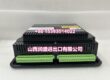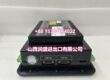
Product Core Brief
- Model: 8440-1706 A
- Brand: WOODWARD
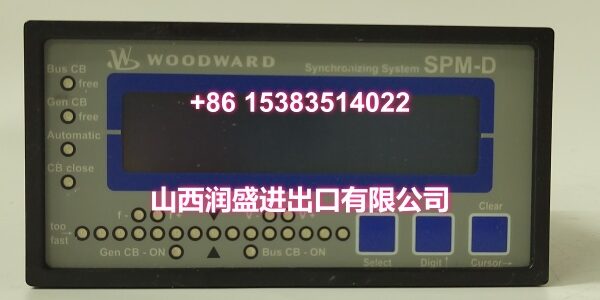
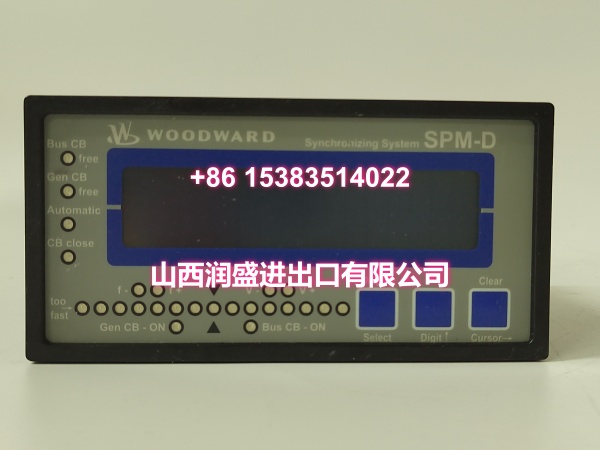
- Series: SPM-D11 Load Share Synchronizer
- Core Function: Microprocessor-based synchronization, load sharing, and generator protection for single- or three-phase AC generator systems.
- Product Type: Generator Synchronizer / Load Share Synchronizer Module
- Key Specs: 12/24 V DC supply | 144 × 72 × 122 mm panel-mount | 2-line LCD display | Analog/discrete bias outputs | Breaker control | Power factor and load control | Generator protection functions
- Condition: New Original / New Surplus (verify per lot)
Key Technical Specifications
- Module type: SPM-D11-series load share synchronizer.
- Application: Single-phase or three-phase AC generator sets; paralleling with grid or bus; islanded and dead-bus operation.
- Synchronization: Automatic frequency, phase-angle, and voltage matching via analog or discrete bias outputs to speed governor and AVR.
- Breaker control: Provides breaker close control with synchronization supervision and time monitoring.
- Load sharing: Supports active-power and reactive-power load sharing via analog load-share lines.
- Power control: Active-power control, power-factor control, and soft unloading features.
- Generator protection: Over/under voltage (59/27), over/under frequency (81 O/U), reverse/limit power (32R/F), overload (32).
- Operating modes: Operation, inspection, permissive, and inhibit modes.
- Display: 2-line LCD text display for parameters, alarms, and synchronization status.
- Power supply: 12/24 V DC per SPM-D11 series references.
- Mounting: Standard 144 mm × 72 mm × 122 mm panel-mount housing.
- Weight: Approximately 800 g or more.
- Operating temperature: -20 °C to +70 °C per SPM-D11 series references.
- Configuration: Front-panel configuration and PC-based configuration via Woodward Toolkit.
Note: The “A” suffix in 8440-1706 A is not independently confirmed in available references. Most sources list 8440-1706 or 8440-1706/B. Treat the suffix as a revision or option variant and verify against the nameplate.
Product Introduction (No Fluff)
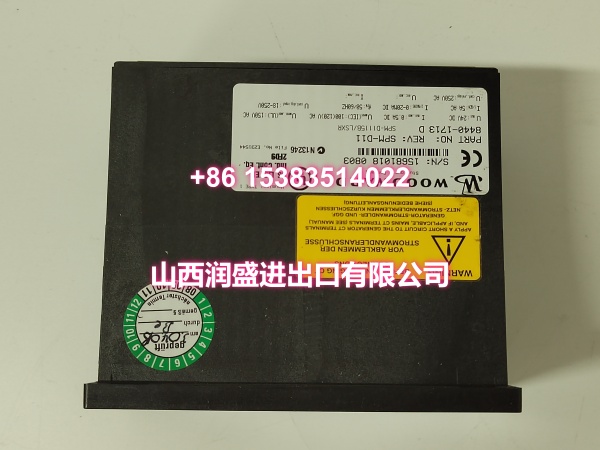
The WOODWARD 8440-1706 A SPM-D11 is a microprocessor-based load share synchronizer for AC generator systems. It provides automatic synchronization by matching frequency, phase angle, and voltage, then issuing bias signals to the governor and AVR to close the breaker at the correct synchronizing point.
Beyond synchronization, it supports active-power and reactive-power load sharing, power-factor control, soft unloading, dead-bus operation, and generator protection functions such as over/under voltage, over/under frequency, and reverse power. The 144 × 72 mm panel-mount form factor, 2-line LCD display, and configurable analog/discrete I/O make it suitable for retrofitting existing generator panels or integrating into new paralleling switchgear.
QA & Testing SOP (Dynamic & Transparent)
- Visual & counterfeit inspection — Verify part number 8440-1706 A, revision markings, connector condition, and signs of rework, corrosion, or heat damage.
- ESD-safe handling — Store and ship in anti-static packaging; handle with grounded wrist straps and ESD mats.
- Power-up check — Apply rated 12/24 V DC per nameplate, confirm display initialization and menu access.
- I/O sanity check — Where test equipment permits, verify analog bias output range, discrete I/O response, and breaker control outputs.
- Synchronization logic check — Full synchronization validation requires a compatible governor, AVR, breaker, and VT/CT signals. Bench testing alone cannot validate sync timing.
Note: This module cannot be fully validated without the generator system it is intended to control.
Installation Pitfalls & Guide (Engineer to Engineer)
❗ Confirm 12/24 V DC supply before energizing. Do not assume 110 V AC or 220 V AC. Some unrelated listings incorrectly associate SPM-D11 with 220 V AC turbine controllers; that description does not match the SPM-D11 synchronizer family.
❗ Do not treat this as a turbine governor. The SPM-D11 is a synchronizer/load-share module. It biases the governor and AVR; it does not replace them.
❗ Verify bias output polarity and range. The speed and voltage bias signals must match the connected governor and AVR input requirements.
❗ CT/VT phasing is critical. Incorrect CT or VT connections can cause false reverse-power trips, incorrect load sharing, or unsafe breaker closure.
❗ Do not enable auto-sync without verified breaker control wiring. A miswired close command can cause out-of-phase closure.
Replacement steps:
- Pre-install: Lock out energy sources, confirm the generator is offline, and record existing configuration parameters.
- Removal: Label all wiring, photograph terminal assignments, disconnect I/O, CT/VT, and communication cables.
- Install: Seat the replacement module, reconnect wiring with verified polarity, and confirm CT/VT and breaker wiring.
- Commissioning: Power up the module, verify display and diagnostics, test bias outputs, then validate synchronization under controlled conditions.
Technical FAQ
Is 8440-1706 A a turbine governor? No. It is an SPM-D11-series load share synchronizer for generator systems, not a steam or gas turbine governor.
What voltage does it require? SPM-D11 series references indicate 12/24 V DC. Always confirm against the actual nameplate.
Can it control the generator breaker? Yes. It provides breaker close control with synchronization supervision.
Does it support load sharing? Yes. It supports active-power and reactive-power load sharing via analog load-share lines.
Can it replace older SPM-D11 units? It belongs to the SPM-D11 synchronizer family and is listed alongside variants such as 8440-1706/B. Configuration, I/O mapping, and firmware compatibility should be verified before substitution.
Can I replace it without reprogramming? Not automatically. Sync windows, bias limits, protection settings, load-share parameters, and breaker timing must be verified. Treat replacement as a recommissioning event.
Heads-up: this one shifts from turbine governors to generator synchronization. Some third-party listings incorrectly describe SPM-D11 as a 505E-style turbine controller — that’s a mismatch. If you’re batching pages, it’s worth keeping synchronizers in a separate product family from turbine governors to avoid confusing buyers.