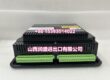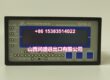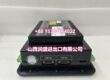
Product Core Brief
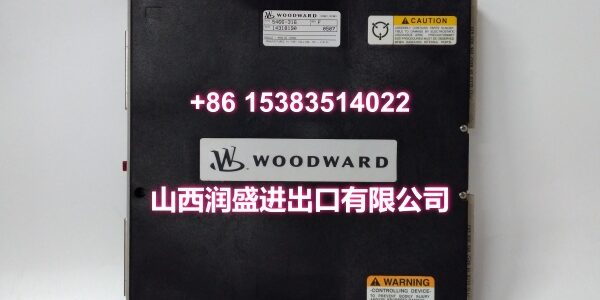
- Model: 5466-316
- Brand: WOODWARD
- Series: 505E Series Microprocessor Control
- Core Function: Digital speed, load, and synchronization control for industrial steam turbines, gas turbines, turbo-generators, and turbo-expanders.
- Product Type: Turbine Governor / Digital Microprocessor Controller Module
- Key Specs: 2-line × 24-character display | Speed/load/isochronous control | Single or split-range actuator drive | Menu-driven configuration
- Condition: New Original / New Surplus (verify per lot)
Key Technical Specifications
- Controller type: Digital microprocessor turbine governor
- Application: Steam turbines, gas turbines, turbo-generators, turbo-expanders
- Control modes: Speed control, load control, isochronous/synchronization
- Display: 2-line × 24-character front-panel operator display, menu-driven
- Actuator drive: Single or dual staged/split-range actuator output for steam inlet valve positioning
- Configuration: Programming mode and run mode
- Processor speed: 50 MHz (per published listings)
- Memory: Program and data capacity listed as 53 MB each in public references
- Power supply: 220 V AC, 50 Hz (confirm from nameplate before energizing)
- Operating temperature: 0 °C to 60 °C (verify against nameplate for specific lot)
- Humidity: Up to 60% non-condensing
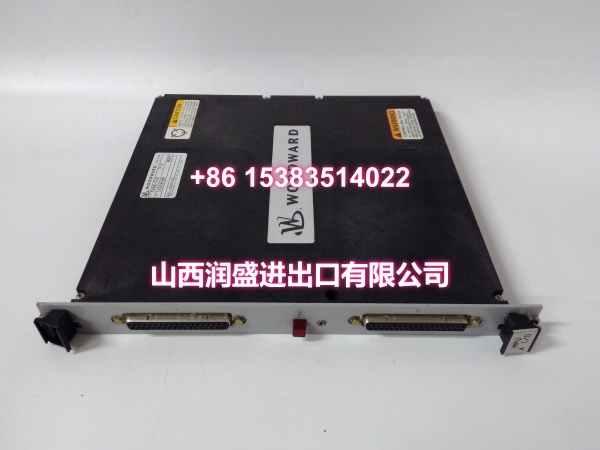
- Mounting: Modular panel-mount/controller-cabinet module assembly
- Weight: Approximately 6.5 kg (reference value for comparable 505E-series modules)
Product Introduction (No Fluff)
The WOODWARD 5466-316 is a microprocessor-based turbine governor used to manage start/stop sequencing, acceleration, speed regulation, load control, and synchronization on industrial turbines. It drives single or dual staged actuators to position steam inlet valves while continuously monitoring speed, process variables, and I/O status.
For plant engineers and system integrators, this controller consolidates turbine sequencing, protection logic, operator display, and actuator drive into one configurable module. That reduces panel wiring, shortens commissioning, and provides a practical replacement path when legacy governor hardware reaches obsolescence.
QA & Testing SOP (Dynamic & Transparent)
Every unit is treated as a critical control component. Before release, we perform the following checks:
- Visual & counterfeit inspection — Verify part number, serial/lot markings, PCB revision, connector condition, and signs of rework, corrosion, or heat damage.
- ESD-safe handling — Stored and shipped in anti-static packaging; handled with grounded wrist straps and ESD mats.
- Power-up & firmware check — Apply rated 220 V AC per nameplate, confirm boot sequence, display initialization, and access to configuration menus.
- Display & keypad verification — Confirm all display segments/characters and front-panel keys respond correctly.
- I/O sanity check — Where test equipment permits, verify actuator output stage readiness and digital/analog interface presence. Full turbine-loop validation is completed during site commissioning.
Note: Bench testing confirms hardware health. Final speed/load tuning requires the actuator, speed pickup, and process instrumentation.
Installation Pitfalls & Guide (Engineer to Engineer)
❗ Verify 220 V AC nameplate rating before energizing. Applying the wrong supply voltage or frequency can permanently damage the controller. Do not assume compatibility with 24 V DC or 110 V AC systems.
❗ Do not hot-swap during active turbine operation. This is a governor-class controller; removing it while the turbine is online can cause loss of speed/load control and unsafe valve behavior.
❗ Confirm actuator compatibility and fail-safe behavior. The actuator output must match the existing staged/split-range actuator’s range, polarity, and trip response.
❗ Grounding and noise discipline matter. Speed pickup, actuator, and analog signal cables should be routed away from VFD outputs, contactor coils, and high-current feeds. Poor grounding can cause drift, instability, or false trips.
Replacement steps:
- Pre-install: Lock out energy sources, confirm turbine is tripped/secured, record existing parameters, and verify replacement nameplate data.
- Removal: Label all wiring, photograph terminal assignments, disconnect I/O and communications, then remove the module.
- Install: Seat the replacement securely, reconnect I/O with correct polarity, and verify grounding.
- Power-on test: Apply power, confirm display and diagnostics, verify I/O readings, then recommission under controlled conditions with the turbine offline or in manual test mode.
Technical FAQ
Is this compatible with my existing 505E system? It is listed as part of the 505E-series microprocessor control family, but compatibility depends on firmware, I/O mapping, actuator type, and existing configuration. Always cross-check the nameplate and application notes before substitution.
Can you supply this as new surplus? Yes, availability depends on current inventory. We can provide new original or new surplus stock when available, with photos and lot details on request.
What warranty do you offer? Warranty terms depend on condition and lot. New original units typically carry a standard defect warranty; surplus items may carry a shorter DOA/inspection window. Confirm before ordering.
Can I replace a failed 5466-316 without reprogramming? Not automatically. Even if the hardware matches, parameters such as speed setpoints, actuator limits, critical-speed bands, and I/O assignments must be verified. Treat it as a recommissioning event, not a plug-and-play swap.
What power supply does it require? Public listings indicate 220 V AC, 50 Hz for this part number. Always confirm against the actual nameplate before installation, as applying incorrect voltage can damage the module.