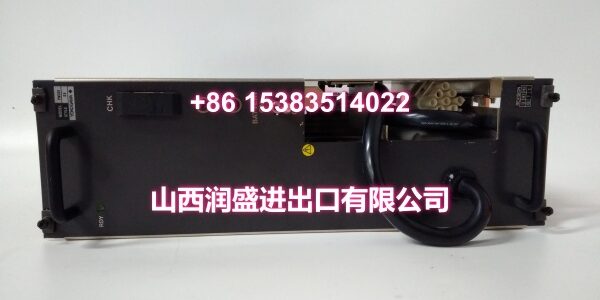
Product Core Brief
- Model: PW301
- Brand: YOKOGAWA
- Series: Industrial Power Supply Module
- Core Function: DIN-rail power supply converting AC input to regulated 24V DC for control systems
- Product Type: DIN-Rail Switching Power Supply
- Key Specs: 100-240V AC input | 24V DC / 10A output | 45mm DIN-rail width
- Condition: New Original / New Surplus
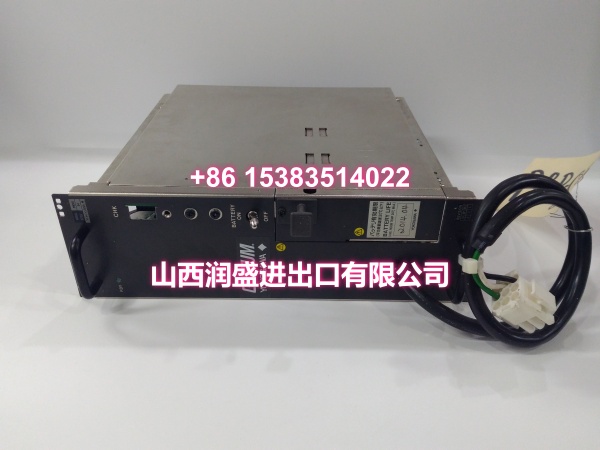
Key Technical Specifications
| Parameter | Specification |
|---|---|
| Input Voltage | 100-240V AC (wide range) |
| Output Voltage | 24V DC |
| Output Current | 10A |
| Output Power | ~240W |
| Mounting | Top-hat DIN rail (TS-35/7.5 or TS-35/15) |
| Width | 45mm |
| Dimensions | 45mm W × 125mm H × 120mm D |
| Weight | ~0.65 kg |
| Operating Temperature | -10°C to +60°C (derate above 50°C) |
| Alarm Output | Relay fault indication |
| Protection | Overload, short-circuit, overvoltage |
| Redundancy | Dual-unit parallel redundancy supported |
Product Introduction
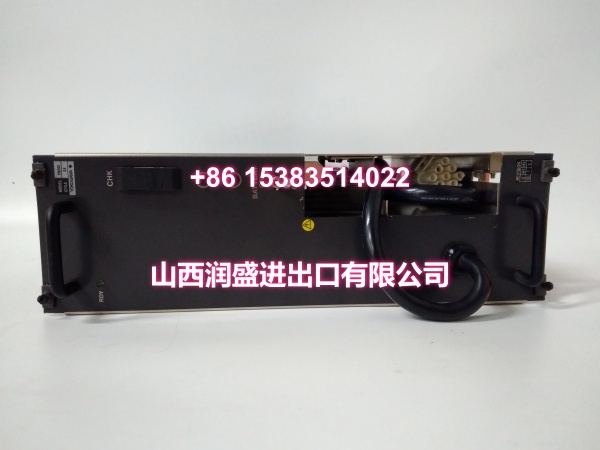
The PW301 is a DIN-rail switching power supply designed for industrial control cabinets and DCS power distribution. It accepts 100-240V AC and delivers a regulated 24V DC output at up to 10A, making it suitable for powering PLC racks, I/O modules, instrumentation, relays, and control circuitry.
Its 45mm slim profile fits tight panel layouts, and the built-in relay alarm output gives maintenance crews immediate fault visibility. Dual-unit redundancy is straightforward to implement, which matters when a single power failure cannot take down the control system.
QA & Testing SOP
Every unit is checked before dispatch:
- Visual inspection: Verify housing, terminal blocks, DIN-rail clip, labeling, and signs of heat stress or corrosion.
- Input/output test: Apply rated AC input and measure 24V DC output under no-load and resistive load conditions using a calibrated DC load and Fluke multimeter.
- Ripple and regulation check: Measure output ripple voltage and confirm stable regulation across typical load steps.
- Protection verification: Confirm overload and short-circuit protection behavior, and check relay alarm output operation.
- Redundancy readiness: For dual-unit setups, verify parallel operation compatibility and diode/OR-ing behavior where applicable.
- ESD-safe packaging: Packed in anti-static bags with corner protection to prevent terminal or housing damage.
Installation Pitfalls & Guide
❗ Do not skip derating above 50°C. In hot cabinets, continuous full-load operation shortens capacitor life. Leave at least 50mm clearance above and below for airflow.
❗ Tighten terminal screws to spec. Loose AC or DC terminals cause heating, voltage drop, and intermittent faults. This is one of the most common field failures.
❗ Verify redundancy wiring before energizing. If running two units in parallel, confirm correct diode/OR-ing modules or redundancy settings. Incorrect wiring can back-feed a failed unit.
❗ Check input voltage range on site. Although it accepts 100-240V AC, unstable supply, harmonics, or frequent surges can trip protection. Add surge protection where needed.
Replacement steps:
- Pre-install: Confirm input voltage, load current, DIN-rail space, and redundancy configuration.
- Removal: Isolate AC input, label wires, disconnect DC output, and release the DIN-rail clip.
- Install: Snap onto DIN rail, wire AC input and DC output, and torque terminals properly.
- Power-on test: Measure 24V DC output, check LED status, verify alarm relay, and confirm stable operation under load.

Technical FAQ
Is pricing flexible for multiple units? Yes. Unit price varies with condition, quantity, and lead time. New original and new surplus stock are quoted separately. Send your quantity and we can provide a project-level price.
What warranty is included? Standard warranty is 12 months from shipment for functional defects. Damage from incorrect wiring, overvoltage, or environmental misuse is not covered.
Can two PW301 units run in redundancy? Yes, but they must be wired correctly with appropriate redundancy diodes or an external OR-ing arrangement. Do not simply parallel the DC outputs without confirming the method.
Is this compatible with YOKOGAWA DCS cabinets? It is commonly used in industrial control and DCS power distribution as a 24V DC supply. However, always confirm the exact cabinet BOM and power budget before substitution.
What if my site runs on 110V AC? The 100-240V AC input range covers 110V systems. Just confirm the actual supply voltage, tolerance, and grounding before installation.