Product Core Brief
- Model: -50
- Brand: YOKOGAWA
- Series: CENTUM CS3000 R3 DCS
- Core Function: Executes dual redundant real-time control algorithms for continuous process operations.
- Product Type: Dual Redundant Processor Module
- Key Specs: 24VDC Power | Hard PLC Logic | 8 I/O Points
- Condition: New Original / New Surplus
Product Introduction
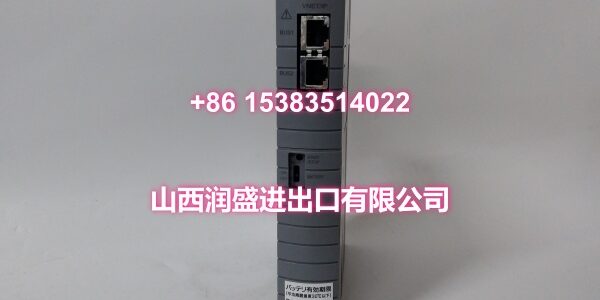
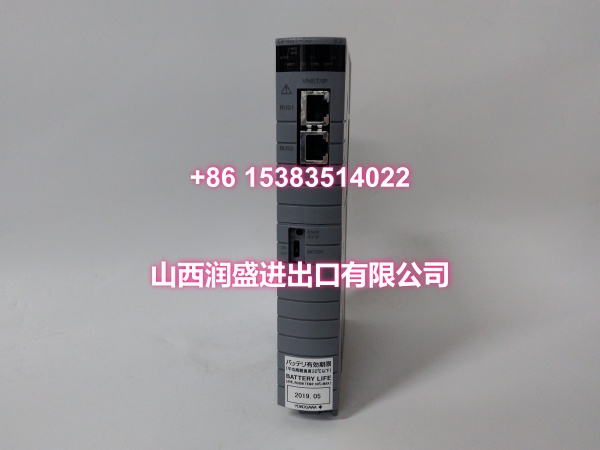
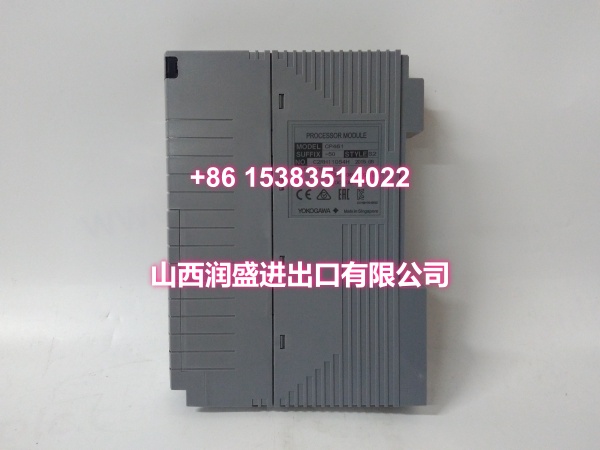
YOKOGAWA CP461-50 processor modules serve as the high-availability computing core for CENTUM CS3000 distributed control systems. This industrial automation unit utilizes two identical modules to enable dual redundant configuration for fail-safe operations.
The YOKOGAWA CP461-50 operates on 24VDC and serves as a direct replacement for the legacy CP461-10 model. Field engineers rely on this replacement module to achieve instantaneous control transfer without any momentary shutdown during system faults.
Key Technical Specifications
| Parameter | Value |
|---|---|
| Redundancy Level | Dual Redundant Configuration |
| Operating Voltage | 24 VDC (Power Group) |
| Base Model | CP461 Processor Module |
| Suffix Code | -50 (Non-Explosion Proof, Basic Type) |
| Legacy Replacement | -10 |
| Integrated I/O | 8 Points (Non-Standard Component) |
| Architecture | Hard PLC Processor |
| Target System | CENTUM CS3000 R3 |
| Dimensions | 15.2 x 5.1 x 20.3 cm |
| Weight | 0.7 kg |
Quality Control Process
Every YOKOGAWA CP461-50 undergoes strict hardware validation before shipping. We first perform a comprehensive RAM diagnostic and verify the firmware backup integrity on the hard PLC architecture. Next, technicians simulate a primary processor failure to confirm the secondary module takes over control seamlessly without dropping the 24VDC bus.
We also test the integrated 8 I/O points using signal injection tools to verify accurate switching thresholds. The module is then powered up on a live DCS test rack to validate dual-redundancy communication. Finally, the unit is sealed in anti-static packaging to protect the sensitive logic during transit.
Replacement Pitfall Guide
❗ Never install a single module expecting redundancy. The YOKOGAWA CP461-50 requires two identical modules to activate the hot-standby failover logic. A single installation will operate as a standalone controller with zero fault tolerance.
❗ Verify the 24VDC power group capacity. Dual redundant processors draw significant current. Ensure your backplane power supply can handle the cumulative load of both active CPUs plus the integrated I/O points.
❗ Confirm the non-explosion-proof rating. The “-50” suffix explicitly denotes a standard, non-explosion-proof basic type. Installing this unit in a classified hazardous area will violate safety certifications and site compliance.
❗ Check the legacy CP461-10 migration path. While this module directly replaces the CP461-10, always verify the existing firmware revision before swapping. Mismatched firmware between the old and new processors can cause synchronization failures.
Keep these in mind and you’ll cut 90% of rework time.
Compatibility Matrix & Benchmarks
| Original Model | Replacement / Successor Model | Compatibility Level (Direct/Needs Adaptation) | Migration Notes |
|---|---|---|---|
| -10 | YWA | Direct | Drop-in replacement for enhanced redundancy |
| YWA | Direct | Identical specs; requires matching pair for redundancy | |
| CP471 | YWA | Needs Adaptation | Cross-compatible for dual redundancy; verify firmware |
- Failover Speed: Instantaneous control transfer with zero momentary shutdown during primary CPU failure.
- System Availability: Dual redundant architecture guarantees continuous process operation and maximum uptime.
Need me to pull up the specs for another Yokogawa part? Just send the model number.