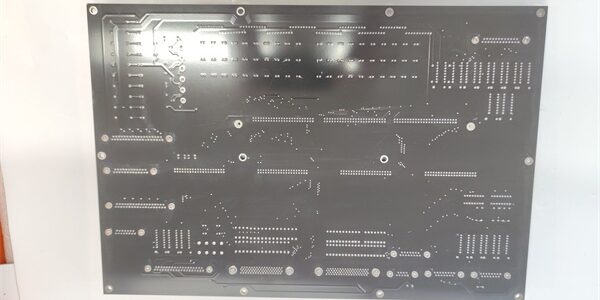
Product Core Brief
- Model: 0100-71313
- Brand: Applied Materials (AMAT)
- Series: Centura Water-Cooled High-Power 400kHz Bias RF Generator Spare Hardware Line
- Core Function: Delivers stabilized 400kHz low-frequency high-power bias RF to wafer substrates, precisely adjusts ion bombardment energy for deep trench etch and high-deposition-rate PVD heavy-load processes
- Product Type: Water-cooled solid-state bias RF power generator module
- Key Specs: Fixed 400kHz operating frequency | 3000W continuous bias RF rating | DI deionized water cooling | 0–10V analog + RS232 serial tool communication
- Note: New Original OEM spare; matching AMAT high-power 400kHz bias matching networks sold separately
Key Technical Specifications
- Operating Frequency: Fixed 400kHz low-frequency plasma bias band
- Max Continuous RF Output Power: 3000 W
- Nominal System Impedance: 50 Ω at generator RF output port
- Power Regulation Precision: ±0.5 W steady-state closed-loop bias power stability
- Cooling Architecture: Liquid cooling via temperature-controlled DI deionized water, inlet range 18–24°C
- RF Output Connector: 7/16 DIN high-power coaxial port
- Control Interfaces: 0–10 V analog setpoint/feedback signals, RS232 serial host tool communication
- Built-In Safety Interlocks: Over-reflected power, over-temperature, over-current, hardware interlock auto-shutdown
- Enclosure Rating: IP30 sealed low-outgassing cabinet designed for Class 1 cleanroom operation
- Operating Environment: 18°C–26°C, 30–70% non-condensing relative humidity
- Compliance Standards: SEMI S2 industrial safety, CE EMC certification
- Unit Net Weight: 9.5 kg
- Overall Outer Dimensions: 298 mm W × 352 mm H × 198 mm D
Product Introduction
This heavy-duty 400kHz bias RF module serves as the high-power substrate ion energy controller for AMAT Centura ultra-high-throughput deep etch and high-rate metal PVD chambers. Closed-loop power regulation compensates for severe plasma impedance swings during long production batches to maintain consistent etch angle and film uniformity across all wafers in a lot.Liquid DI water cooling enables sustained full 3000W continuous power without thermal derating, critical for high-duty-cycle heavy-load processes. Multi-stage fault interlocks trigger controlled power cutoffs to reduce wafer scrap and extend service life of downstream high-power bias match assemblies.
QA & Testing SOP (Transparency Building)
- Incoming Inspection: Cross-reference AMAT OEM serial database to validate authentic cleanroom-grade hardware; inspect 7/16 DIN RF port center pins, DI water cooling threaded fittings, and control terminal blocks for corrosion, bending, or surface abrasions.
- Live Testing: Couple the unit to calibrated 400kHz high-power dummy RF load; supply stabilized 480VAC input power and temperature-regulated DI cooling water via calibrated Fluke bench sources; run 24-hour cyclic load testing at 2400W fixed setpoint, log forward/reflected power deviation and heat exchanger thermal performance metrics hourly.
- RF Electrical Calibration Test: Network analyzer sweep range 100kHz–1MHz; pass threshold requires reflected power below 0.3% at nominal 400kHz operating frequency.
- Firmware/Config Backup: Record factory PID bias power loop tuning parameters stored on onboard flash memory; photograph analog and serial control wiring pinout layout for direct one-to-one replacement matching.
- Final QC & Packaging: Purge internal cooling heat exchanger cavities with dry nitrogen to clear residual machining moisture and oils; seal inside double-layer anti-static vacuum packaging; attach printed test tag with serial trace number and full RF stability test records.
Installation Pitfalls & Guide (Engineer to Engineer)
❗ Frequency Mismatch Risk: This generator exclusively pairs with 400kHz high-power bias match assemblies. Mating with 13.56MHz main RF match hardware creates extreme reflected power and immediate interlock shutdowns.❗ Improper RF Connector Torque: Under-tightened 7/16 DIN coaxial fittings introduce impedance discontinuities; over-torquing fractures internal PTFE insulation and causes permanent RF leakage. Adhere strictly to OEM 14 N·m torque specification.❗ Low-Purity Cooling Water Damage: Tap water or low-resistivity fluid causes electrolytic corrosion of internal copper heat exchangers, triggering recurring over-temperature trips within 30 production days. Only use facility 18MΩ·cm DI cooling water.❗ EMI Cross-Routing Hazard: Running low-voltage analog/RS232 control cables parallel to 480VAC main power wiring induces electrical noise, leading to random bias power jumps and inconsistent wafer etch profiles. Separate cable trays with minimum 15cm vertical clearance.❗ Unprotected RF Service Exposure: Ungrounded technicians face high-frequency RF burn hazards during live cabinet maintenance; wear RF-rated insulated gloves and grounded anti-static wristbands before opening powered enclosure panels.
4-Step Replacement Guide
- Pre-install: Complete lockout/tagout of tool 480VAC AC power, DI cooling water, and RF supply; photograph RF coax routing, analog serial control pin assignments, and cooling water plumbing connections for exact configuration replication.
- Removal: Isolate and fully drain cooling water lines; disconnect high-power 7/16 DIN RF cable; unplug analog and RS232 control harness; remove four rack mounting fasteners and extract the unit from chamber rack slots.
- Install: Secure new unit to rack with OEM specified torque values; reconnect DI cooling water lines with brand new OEM sealing O-rings; reattach AC power, control wiring and RF coax per photographed layout, torque RF port to 14 N·m.
- Power-on Test: Restore facility DI cooling water and 480VAC AC supply; execute factory auto bias power calibration routine; verify reflected power remains below 0.3% across full process impedance window before releasing wafer production batches.
FAQ (Frequently Asked Questions)
Q: Can this high-power bias generator sustain continuous 3000W full-power operation over 24-hour production shifts?A: Yes, only with temperature-stabilized 18°C–24°C DI cooling water. Sustained full-power operation above 24°C inlet water temperature triggers thermal power derating.Q: Does this bias RF module support hot-swap while the Centura cluster tool stays energized?A: No. Live disconnection of high-voltage AC input and RF lines generates dangerous voltage transients, damages internal RF amplifier semiconductors, and poses severe RF burn safety hazards. Full lockout/tagout procedure is mandatory.Q: What causes repeated high reflected power faults after unit replacement?A: Primary root causes include mis-torqued RF coaxial connectors, fouled cooling heat exchangers, or heavily coated chamber showerheads shifting plasma load impedance outside the high-power bias match tuning range.Q: Are third-party generic high-power bias RF generators drop-in interchangeable with this OEM unit?A: Physical rack dimensions may fit, but non-OEM hardware lacks proprietary AMAT bias power control firmware tuned for Centura high-load plasma ion profiles, resulting in uncorrectable wafer etch non-uniformity.Q: What OEM preventive maintenance interval applies to the internal cooling heat exchanger?A: Annual DI water system flushing and inline filter replacement for standard production facilities; fabrication sites with poor water purity require bi-annual heat exchanger cleaning to avoid thermal fault trips.Q: Can this bias RF generator integrate with non-AMAT third-party vacuum processing chambers?A: It physically interfaces via standard 50Ω RF ports, but proprietary analog interlock and serial communication protocols only natively integrate with AMAT Centura platform control systems.Q: What warranty coverage applies to surplus OEM spare generator units?A: Standard 12-month functional warranty covers oscillator, power amplifier and control circuit manufacturing defects; damage from low-quality cooling water, improper RF connector torque, or live RF service mishandling is fully excluded from coverage.