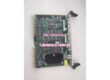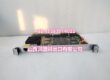
Product Core Brief
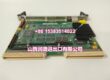
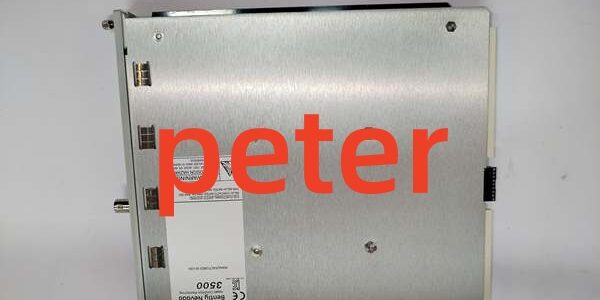
- Model: 3500/40M, Front Card PWA 176449-01
- Brand: Bently Nevada (Baker Hughes)
- Series: 3500 Machinery Protection TSI Rack System
- Matching Rear Base: Standard external termination PN 125680-01 (no built-in intrinsic safety barriers, for safe-area industrial cabinets)
- Core Function: Four-channel dedicated eddy-current proximity monitor that conditions all 3300 XL probe signals to measure radial vibration, thrust position, eccentricity, differential expansion, and REBAM rolling element bearing wear for non-classified power plant and factory turbomachinery racksBaker Hughes DAM
- Product Type: Single full-height hot-swappable split front/rear base M-series proximity-only monitor, exclusively for eddy-current transducer signals (no seismic input support)
- Key Specs: 4 paired proximity input channels | −24 VDC probe oscillator excitation | 7.7 W typical power consumption
- Condition: New Original factory sealed with standard OEM lead time; fully calibrated refurbished surplus stock ships within 3 working days
Key Technical Specifications
- Channel Architecture: Four independent proximity inputs grouped into two programmable channel pairs (Ch1/Ch2, Ch3/Ch4), two separate measurement tasks can run simultaneously on one module
- Supported Transducers: Full lineup of 3300 XL eddy-current proximity probes (5 mm, 8 mm, 11 mm, 25 mm long-range displacement variants)
- Transducer Excitation: Regulated −24 VDC high-frequency oscillator supply dedicated to eddy-current probe coil operation
- Measurable Machine Parameters: Radial shaft vibration, axial thrust position, shaft eccentricity, thermal differential expansion, REBAM bearing wear monitoring
- Selectable Signal Sensitivity
- Radial/Thrust/Eccentricity: 3.94 mV/µm (100 mV/mil) or 7.87 mV/µm (200 mV/mil)
- Differential Expansion: 0.394 mV/µm (10 mV/mil) or 0.787 mV/µm (20 mV/mil)
- REBAM Bearing Wear: 40 mV/µm (1000 mV/mil) or 80 mV/µm (2000 mV/mil)
- Frequency Bandwidth: DC to 10 kHz (−3 dB rolloff); DC static range captures slow thermal shaft displacement
- Analog Recorder Output: Isolated per-channel 4–20 mA scaled signal, max 550 Ω load resistance for continuous DCS trending
- Buffered Front BNC Tap: Short-circuit protected coaxial output per channel for field oscilloscope troubleshooting
- Power Consumption: 7.7 W steady-state load drawn from rack 24 VDC backplane bus
- Galvanic Isolation: 1500 VAC separation barrier between each field input circuit and rack ground bus
- Operating Ambient: −30 °C to +65 °C standard cabinet; conformal coated suffix variants extend service range to −40 °C to +85 °C offshore platforms
- Physical Dimensions: 241.3 mm H × 24.4 mm W × 241.8 mm D; full assembly weight 0.91 kg
- Compliance Standards: API 670, CE EMC, UL Class I Div 2, ATEX Zone 2 Ex nC IIC T4, SIL 2 functional safety
- Front Panel Status LEDs: OK (module health), TX/RX (backplane communication), BYPASS (channel inhibit mode)Baker Hughes DAM
Product Introduction
Steam and gas turbine protection racks installed in non-hazardous general industrial facilities rely on this standard proximity monitor to capture critical shaft displacement data without the extra cost of built-in intrinsic safety barriers required for classified refinery/offshore zones. Its pairwise channel programming allows users to assign distinct measurement tasks on one slot, such as thrust monitoring on the first channel pair and radial bearing vibration on the second pair.Its split external termination rear base PN 125680-01 lets maintenance crews rework field probe cabling without extracting the front measurement card during planned equipment outages. This hardware cannot process Velomitor, accelerometer, RTD, or 4–20 mA process transmitter signals; dedicated 3500/44M, 3500/60, and 3500/62 modules handle those alternate measurement types.Not recommended for refinery or offshore classified zone racks, as internal IS barrier variants eliminate separate external Zener junction boxes and simplify hazardous wiring certification.
Key Selling Points & Differentiators
- Pairwise channel programming enables dual independent measurement workflows on a single rack slot, cutting slot consumption by half for multi-bearing compressor layouts.
- Native REBAM bearing wear detection delivers early rolling element fault alerts unavailable on generic mixed proximity/seismic monitor hardware.
- Standard external termination rear base carries lower upfront spare part cost compared to internal IS barrier variants for non-classified power plant and factory control cabinets.
- Native TMR triple redundant voting capability meets API 670 single-point failure elimination rules for critical turbomachinery emergency shutdown interlock design.
- Refurbished surplus units carry a 12-month functional warranty covering proximity oscillator circuits, analog isolation, backplane communication, and 4–20 mA linear scaling; factory-new OEM assemblies ship with a full 36-month manufacturer warranty.
- Per-channel configurable Alert and Danger threshold time delays suppress nuisance alarms from transient cold startup thermal shaft movement without masking genuine rub or thrust failure events.
Quality Transparency SOP
- Incoming Verification: Cross-reference serial numbers against OEM M-series production archives to filter counterfeit assemblies. Complete visual audit of PCB proximity oscillator traces, rear base screw terminals, front panel BNC ports and status LEDs, and rack edge gold pins; timestamp photos of connector corrosion or cracked PCB substrates.
- Live Bench Test: Mount the front card and matched 125680-01 standard external termination rear base into a calibrated full-size test rack powered by a Fluke 115 24VDC supply. Run continuous 24-hour thermal soak test with simulated 3300 XL probe gap signals across all four channels to validate linear scaling, stable −24 VDC excitation, and consistent backplane data transmission to the Slot1 TDI module.
- Electrical Tests: 500 V megohmmeter insulation test confirms resistance >10 MΩ between each probe input terminal and rack protective ground; verify all short-circuit and overvoltage protection trigger thresholds match OEM factory limits.
- Firmware & Layout Backup: Flash the latest OEM M-series compatible firmware revision, log exact version numbers, and archive a blank four-channel proximity measurement configuration file to offline storage. Record baseline LED behavior during TMR voting simulation for post-replacement fault comparison.
- Final QC & Packaging: Inject full-scale proximity gap test signals to validate linear 4–20 mA recorder output across full measurement range. Separate front card and rear base into anti-static foam inserts, attach serialized QC Passed tag with timestamped linearity test data, and seal inside rigid shock-resistant cardboard crates. Bench test logs and raw signal readouts are available to buyers on formal written request.
Technical Risk Avoidance Section
❗ Firmware Rev Mismatch RiskMismatched rack-wide M-series firmware revisions trigger permanent TX/RX communication faults and disable TMR redundant voting and REBAM bearing analysis logic. Export the full rack firmware stack before swapping the module; never deploy mixed legacy/M-series firmware sets across rack slots.Field anecdote: A combined-cycle power plant installed mismatched firmware and lost all turbine thrust position trip interlocks for 10 hours during startup commissioning.
❗ Rear Terminal Base Mismatch RiskPairing the front card with any I/O base other than 125680-01 breaks four-channel proximity wiring pinouts and removes built-in channel surge suppression, creating erratic shaft gap readings and false machinery fault alarms.
❗ Dual-End Ground Loop Wiring RiskGrounding proximity probe coaxial cable shielding at both the rear terminal base and machinery mounting boss creates circulating low-frequency ground loop current that distorts analog gap signal linearity, triggering persistent nuisance high-gap annunciations.Prevention: Terminate cable shield at only the rack side of the wiring run.
❗ ESD Damage RiskUngrounded field tools touching exposed rear base terminal pins or front BNC port discharge static and destroy delicate proximity oscillator ADC front-end circuits; OEM PCB repair labor costs exceed $1,600 for production M-series hardware.Prevention: Mandate grounded ESD wrist straps for all rack module insertion and removal service work while the chassis is energized.
❗ Missing Probe Configuration Backup RiskFailing to export validated channel pairing, probe sensitivity, Alert/Danger threshold values prior to replacement resets all shaft position protection limits to blank factory defaults, removing critical turbomachinery safety interlock coverage.
Quick summary: Pair only with OEM standard external termination rear base PN 125680-01, unify rack firmware versions, implement single-point cable shield grounding, and maintain stored channel configuration backups to eliminate nearly all common safe-area proximity measurement field failures for this component.
FAQ
Q: Does this unit support live hot-swap operation with the rack energized?A: Yes, the front proximity measurement card is rated for hot-swap without full rack power loss. Existing channel alarm states hold their last valid condition during removal and replacement, so machinery thrust and vibration trip interlocks do not drop out mid-service. The rear terminal base cannot be removed while energized.
Q: Can this assembly replace internal IS barrier 3500/40M variants for classified hazardous zone racks?A: No, this unit uses standard external termination with no built-in energy-limiting IS circuits. Hazardous classified zone deployments require the 03 suffix internal barrier variant paired with IS-rated rear base PN 135489-04 to meet ATEX/Class I Div 2 certification requirements.
Q: What warranty coverage applies to refurbished surplus inventory of this standard proximity monitor?A: Refurbished assemblies carry a 12-month functional warranty covering proximity signal conditioning circuits, backplane communication, and channel fault detection hardware. Cosmetic surface scuffs and minor terminal screw wear are excluded from claim eligibility. Factory-new OEM units ship with a full 36-month manufacturer warranty.
Q: Will rack power cycling erase stored channel pairing, probe scaling, alarm thresholds, and TMR voting configurations?A: No. All shaft position linearization parameters, trip limits, and redundant voting logic write to non-volatile onboard flash memory; power loss or full rack shutdown does not clear saved proximity measurement configuration data.
Q: Can Velomitor seismic sensors, RTD temperature probes, or 4–20 mA process transmitters be wired directly to this module’s input channels?A: No. This hardware exclusively processes eddy-current proximity probe signals. Seismic, thermal, and analog process variable measurements require dedicated 3500/44M, 3500/60, or 3500/62 monitor modules respectively.
Q: I operate an auxiliary pump safe-area rack that only requires two radial vibration channels. Is it acceptable to leave the remaining two input channels unpopulated?A: Yes. Unused channels do not draw excess backplane power or create cross-channel signal interference. Install factory blank terminal jumpers on empty channel terminals to block dust buildup inside the rear base and reduce long-term insulation degradation.
Q: Does this module independently store transient shaft orbit or rub fault waveform snapshots on its PCB?A: No. All timestamped transient fault waveform capture and local flash storage functionality is managed exclusively by the rack’s Slot1 TDI master communication module; this hardware only processes steady-state shaft position and vibration measurements and threshold alarm logic.