Product Core Brief
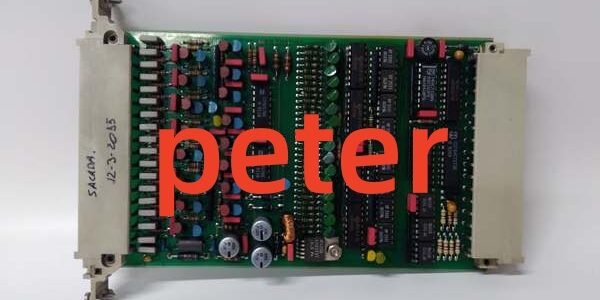
- Model: F3 DIO 20/8 02
- Brand: HIMA
- Series: HIMax / H41q / H51q
- Core Function: Provides 20 digital inputs and 8 digital outputs for safety-critical control.
- Product Type: Digital I/O Module
- Key Specs: 20 DI (24 VDC) | 8 DO (24 VDC / 0.5 A) | SIL 3 / AK 6
- Condition: New Original (New Surplus)
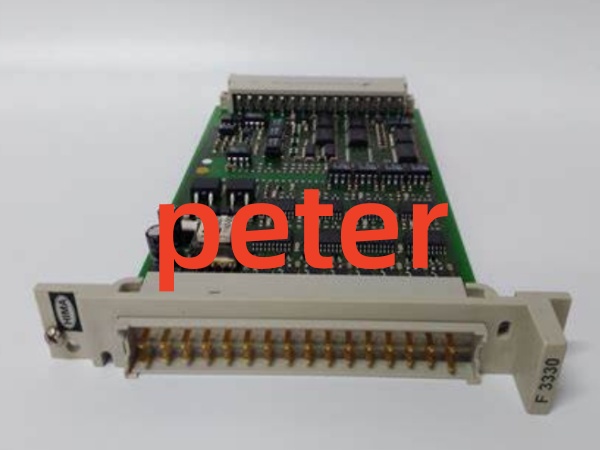
HIMA F3330
Product Introduction
The HIMA F3 DIO 20/8 02 is a digital I/O module designed for the HIMax safety system. It handles 20 digital inputs and 8 digital outputs, providing a direct interface for field sensors and final control elements in high-integrity applications.
Unlike generic I/O cards, this unit is built for SIL 3 and AK 6 safety loops. It features comprehensive diagnostics for each channel, allowing for early fault detection. The module’s design supports hot-swapping, which is critical for minimizing downtime during maintenance on a live H41q or H51q system.
Key Technical Specifications
| Parameter | Value |
|---|---|
| Digital Inputs | 20 channels |
| Input Voltage | 24 VDC (nominal) |
| Digital Outputs | 8 channels |
| Output Current | 0.5 A per channel |
| Safety Integrity Level | SIL 3 (IEC 61508) |
| AK Classification | AK 6 (DIN V 19250) |
| Bus Interface | HIMax System Bus |
| Diagnostics | Channel-specific |
| Hot Swap | Yes |
| Operating Temperature | 0 to 60 °C |
Quality Control Process (Engineer’s Perspective)
Here is how we verify these modules before they ship. We don’t just look at them.
- Incoming Verification: We check the serial number against HIMA’s database to confirm it’s not a clone. Visual inspection looks for bent pins on the bus connector—common in rack removals.
- Live Functional Test: We install the module in a test rack running HIMax OS. We simulate 24 VDC signals on all 20 inputs and verify the status bits in the controller. Then, we force all 8 outputs and measure the voltage at the terminals with a Fluke 115.
- Electrical Parameter Test: We run a 500 V insulation test (Megger) between the field terminals and the bus interface. It must read >10 MΩ. We also check ground continuity to the DIN rail clip.
- Firmware Verification: We read the firmware version via the service interface. It must be compatible with current HIMax releases (verify with OEM datasheet for specific version numbers).
- Final QC & Packaging: The unit is sealed in an anti-static bag with a desiccant pack. A QC label with the test date and technician ID is applied to the outside.
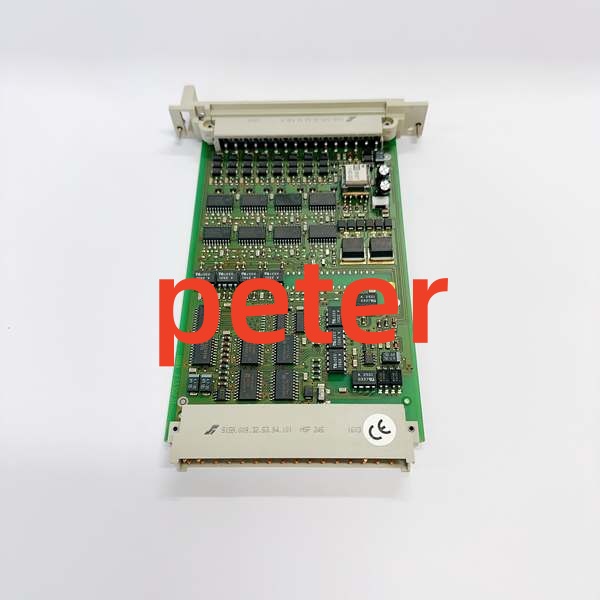
HIMA F3330
Replacement Pitfall Guide
Replacing a safety I/O module isn’t like changing a lightbulb. Here is what usually goes wrong.
- Firmware Mismatch: ❗ Critical. A new module might have firmware that is too recent for your existing CPU. The system will flag a “Type Mismatch” or “Version Error.” You may need to downgrade the firmware using the HIMA tool before it will run.
- DIP Switch / Jumper Misconfiguration: The F3 series often uses address switches. If you swap a card and forget to match the binary address setting from the old one, the CPU won’t see it. Check the rack slot assignment in the project file first.
- Terminal / Cable Incompatibility: While the HIMA connectors look standard, the keying can differ. Don’t force a connector. Also, verify the wiring diagram; some legacy installations use non-standard commoning for the 24 VDC supply.
- Power Supply Mismatch: Adding a fully loaded I/O module draws current. Ensure your 24 VDC field power supply has the headroom. We recommend calculating the total rack load and adding a 20% safety margin.
- ESD Damage: These are sensitive safety components. Always use a grounded wrist strap. I’ve seen modules fail acceptance testing because someone handled the bus connector in a dry environment without protection.
Keep these in mind and you’ll cut 90% of rework time.
Compatibility Matrix & Benchmarks
Compatibility
- HIMA F3 DIO 20/8 01 → F3 DIO 20/8 02 : Direct Replacement — Verify firmware compatibility.
- HIMA F3 DIO 16/8 02 → F3 DIO 20/8 02 : Needs Adaptation — Different input count (16 vs 20), requires wiring changes.
Benchmarks
- Input Scan Time: < 1 ms (for all 20 channels, HIMax default config)
- Output Update Time: < 2 ms (from logic solve to terminal energization)