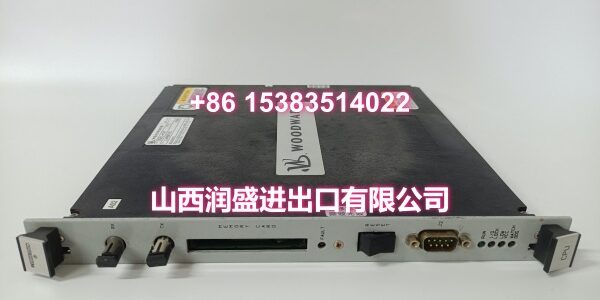
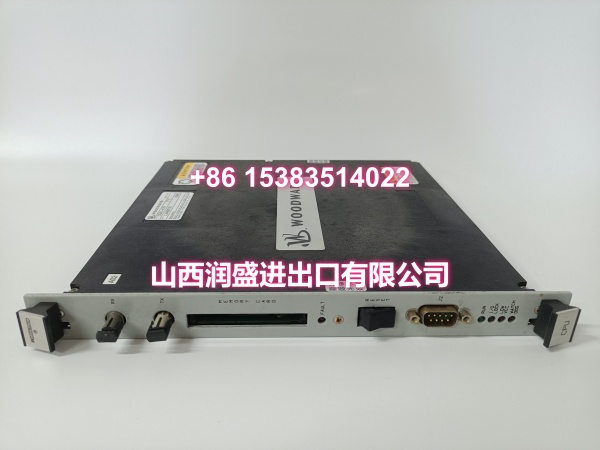
Product Core Brief
- Model: 5501-372
- Brand: WOODWARD
- Series: CPC — Current-to-Pressure Converter
- Core Function: Converts a 4–20 mA control signal into a proportional hydraulic pressure output to drive steam valves, fuel valves, or servo actuators.
- Product Type: CPC (Current-to-Pressure) Transducer / I/P Converter
- Key Specs: 4–20 mA input | Proportional hydraulic pressure output | Compatible with MicroNet, 505, and NetCon controllers | Single-acting servo / pressure-type actuator interface
- Condition: New Original / New Surplus
Key Technical Specifications
| Parameter | Specification |
|---|---|
| Part Number | 5501-372 |
| Manufacturer | WOODWARD, Inc. (Fort Collins, CO, USA) |
| Product Type | Current-to-Pressure (CPC) Converter |
| Input Signal | 4–20 mA (standard industrial control current) |
| Output | Proportional hydraulic / oil pressure |
| Typical Application | Steam valve, fuel valve, or servo actuator positioning |
| Controller Compatibility | Woodward MicroNet, 505 series, NetCon, and other electronic governors |
| Actuator Type | Single-acting servo cylinders, pressure-type servo mechanisms |
| Typical Use Case | Retrofit of mechanical governors to electronic control |
| Approx. Weight | Varies by configuration |
| Operating Temperature | Refer to nameplate / datasheet for rated range |
Note: Exact pressure range, supply pressure requirement, and terminal assignment depend on the specific sub-variant. Always verify against the installed unit label or Woodward datasheet.
Product Introduction (No Fluff)
The 5501-372 is a Woodward CPC (Current-to-Pressure) converter. It sits between an electronic controller and a hydraulic actuator, translating a 4–20 mA command signal into a proportional oil pressure output. This allows a digital controller — such as a MicroNet, 505, or NetCon unit — to position a steam valve, fuel valve, or single-acting servo cylinder with hydraulic force.
From an integration standpoint, this is the interface piece that closes the loop between electronics and hydraulics. If your turbine or engine governor outputs a 4–20 mA position command but your actuator requires hydraulic pressure, the CPC is the bridge. It is also commonly used in retrofit projects where mechanical-hydraulic governors are replaced with electronic control while retaining existing hydraulic actuators.
QA & Testing SOP (Dynamic & Transparent)
CPC converters are electro-hydraulic devices — they can fail electrically, hydraulically, or both. Here is how we verify them:
- Visual & anti-counterfeit inspection — Confirm part number 5501-372, revision label, serial number, and overall housing condition. Check for oil leaks, damaged electrical connectors, cracked fittings, or signs of contamination at the hydraulic ports.
- Electrical input verification — Apply a calibrated 4–20 mA signal using a loop calibrator. Confirm the unit draws current within specification and shows no open-circuit or short-circuit fault.
- Pressure output linearity check — With rated hydraulic supply pressure applied, step the input current (4, 8, 12, 16, 20 mA) and measure the output pressure at each point. Verify linear, proportional response with no hysteresis or sticking.
- Leak and hold test — Hold the output at mid-range pressure for a set dwell time. Monitor for pressure decay that would indicate internal leakage or seal degradation.
- Packaging — Hydraulic ports capped, electrical connector protected, ESD-bagged, foam-padded, and shipped in impact-resistant boxing.

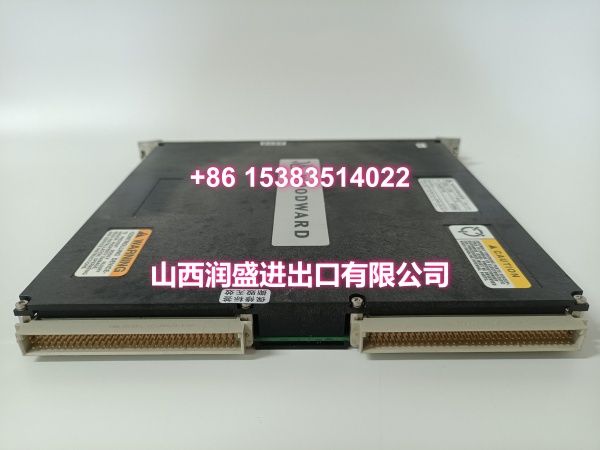
Tools: 4–20 mA loop calibrator, hydraulic pressure gauge, calibrated hydraulic supply, and leak-test setup.
Installation Pitfalls & Guide (Engineer to Engineer)
❗ Confirm pressure range before installation. CPC converters are configured for specific output pressure ranges. Installing a unit with the wrong pressure calibration will cause incorrect valve positioning — potentially leading to overspeed or load instability.
❗ Oil cleanliness is critical. Contaminated hydraulic oil is the leading cause of CPC failure. Particulate matter can jam the internal spool or nozzle-flapper assembly. Always flush the hydraulic supply line before connecting a new or replacement CPC.
❗ Verify controller output compatibility. The 5501-372 expects a 4–20 mA current signal. Do not connect a 0–10 V DC output directly without a signal converter.
❗ Check hydraulic supply pressure. The CPC requires a clean, regulated hydraulic supply within its rated range. Excessive supply pressure can damage the unit; insufficient pressure will limit output authority.
❗ Bleed air from the hydraulic circuit. Trapped air in the CPC or actuator line causes sluggish response and hunting. Purge the circuit thoroughly during commissioning.
Replacement steps:
- Isolate hydraulic supply pressure and depressurize the line. Disconnect electrical wiring and note terminal assignments.
- Remove the faulty CPC. Inspect hydraulic fittings and supply line for contamination; flush if needed.
- Install the replacement CPC. Connect hydraulic supply and output lines, ensuring all fittings are properly torqued and sealed.
- Restore hydraulic supply. Apply 4–20 mA signal and verify proportional pressure output across the full range. Commission under supervised run-up.
Technical FAQ
Can you offer price flexibility for bulk or repeat orders? Yes. Pricing depends on condition (new original vs. new surplus), configuration, and quantity. Surplus stock typically offers more flexibility. We can discuss volume pricing for maintenance spares packages.
What warranty do you provide? Warranty terms vary by condition and stock source. New original units carry manufacturer-backed coverage; new surplus units carry our own tested-unit warranty. We confirm terms before shipment.
Is this directly compatible with my existing Woodward controller? In most cases, yes — the 5501-372 is designed to interface with Woodward MicroNet, 505 series, NetCon, and similar electronic governors that output a 4–20 mA signal. However, you must confirm the output pressure range matches your actuator requirement.
Can this replace other Woodward CPC models? Potentially, but not automatically. Woodward CPC converters come in multiple pressure ranges and configurations. You must match the output pressure range, supply pressure rating, and electrical connection type to your existing installation.
Is this model still available or obsolete? The CPC product family remains relevant in both active installations and retrofit projects. Individual part availability depends on configuration and regional stock. If you are maintaining a critical turbine or compressor control system, we recommend securing tested spares now rather than waiting for an unplanned outage.