Product Quick Summary
- Model: PM803F
- Part Number: 3BDH000530R1
- Brand: ABB
- Core Function: Central processor unit (CPU) for the AC 800F distributed control system
- Memory: 16 MB SDRAM with battery backup
- Processor: 32-bit superscalar RISC CPU
- Dimensions: 239 × 202 × 164 mm (W × H × D)
- Weight: Approx. 1.6 kg (CPU board in rack, excluding power and modules)
- Condition: New surplus / legacy discontinued — ready to ship
- Origin: Sweden
The PM803F is the high-capacity CPU for the AC 800F platform, designed to handle large control programs and complex process applications requiring more memory than the PM802F can provide.
Core Technical Specifications
| Parameter | Detail |
|---|---|
| Product Type | Central Processing Unit (CPU) |
| Part Number | 3BDH000530R1 |
| System Platform | ABB AC 800F / Freelance |
| Processor | 32-bit superscalar RISC CPU |
| Main Memory | 16 MB SDRAM with battery retention |
| Data Bus Bandwidth | 100 MB/s |
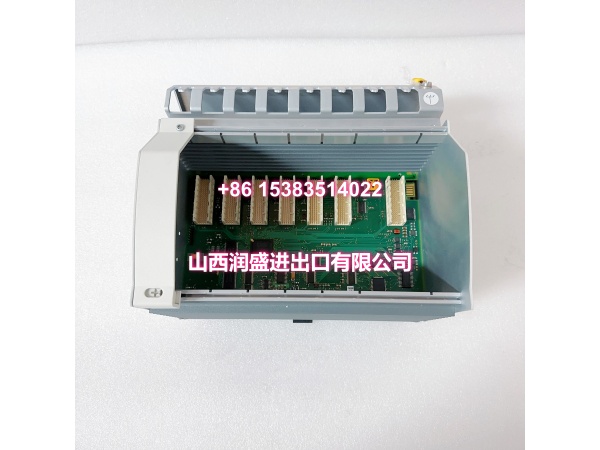
| Slot Configuration | 1 power slot (P), 2 Ethernet slots (E1/E2), 4 fieldbus slots (F1–F4) |
| Supported Fieldbus | PROFIBUS-DP, Modbus, CAN, Foundation Fieldbus HSE |
| Power Supply | 120/230 VAC or 24 VDC, redundant |
| Operating Temperature | 0°C to 60°C (no forced cooling required) |
| Protection Class | IP20 |
| Certifications | CE, UL, CSA, NAMUR |
| Condition | New surplus / legacy |
Engineer’s Perspective
The ABB PM803F 3BDH000530R1 is the high-capacity central processor unit that drives the AC 800F distributed control system. If you’re running a plant that was commissioned on this platform — whether it’s power generation, oil and gas, chemical processing, or water treatment — and your control program exceeds the 8 MB limit of the PM802F, this CPU is the only option that keeps your existing application running without a forced migration.
The AC 800F was ABB’s answer to the need for a fieldbus-native controller. Unlike older systems that treated fieldbus as an afterthought, the AC 800F was designed from the ground up to handle PROFIBUS-DP, Modbus, CAN, and Foundation Fieldbus natively — and it can run multiple bus types simultaneously on the same controller. The PM803F sits at the center of that architecture, executing the control program, managing I/O across up to five racks (roughly 1,000 points), and coordinating communication across the Ethernet system bus to operator stations and peer controllers.
The key differentiator between the PM803F and the PM802F is memory. The PM803F uses 16 MB of SDRAM (synchronous dynamic RAM) with battery retention, compared to the PM802F’s 8 MB of SRAM (static RAM). That doubled memory capacity means you can load larger control programs — more PID loops, more complex sequential logic, more data logging — without running into memory limits. The trade-off is that SDRAM’s battery hold time is shorter than SRAM’s due to the larger capacity, so keeping the backup battery (SB808F) in good condition is even more critical on the PM803F.
One thing to be aware of: the PM803F’s overall processing performance is approximately 5–10% lower than the PM802F’s, despite having more memory. This is because the PM802F uses an Intel 80960HD processor clocked at 75 MHz (150 MIPS), while the PM803F uses a different processor architecture optimized for memory capacity over raw compute speed. For most process control applications, this performance difference is negligible — but if your application is CPU-cycle-bound rather than memory-bound, the PM802F might actually execute faster.
What makes the PM803F particularly relevant today is that the AC 800F platform is well into its legacy phase. ABB has moved on to the AC 800M and now the Ability series, which means sourcing a genuine, tested PM803F is the only way to keep your existing large-program system running without a forced migration. The ABB PM803F 3BDH000530R1 is not a part you want to source from an unverified supplier — pulled modules with unknown service histories, expired backup batteries, or counterfeit units are a real risk in the aftermarket.
Installation, Compatibility & Risk Avoidance
Platform compatibility: The PM803F is designed specifically for the AC 800F controller family. It will not fit or function in an Advant OCS rack (PM510/PM511), Advant Controller 110 (PM632), Advant Controller 160 (PM665), or AC 800M (PM8xx) system. Confirm your system platform before ordering.
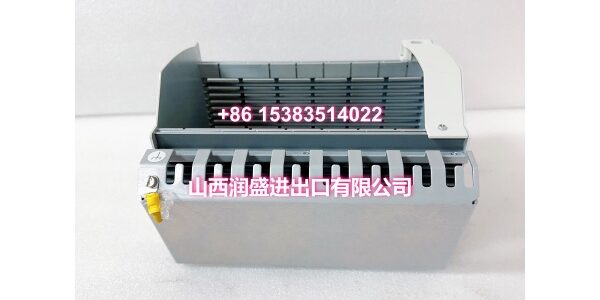
Slot configuration: The AC 800F CPU board has seven slots:
- P slot: Power module (SA801F/SA811F for AC, SD802F/SD812F for DC)
- E1 slot: Ethernet module for system bus communication (DigiNet S)
- E2 slot: Ethernet module for controller redundancy (if configured)
- F1–F4 slots: Fieldbus modules (PROFIBUS, Modbus, CAN, FF)
The E1 and E2 slots use fast DMA technology for direct high-speed communication with the CPU, while the F1–F4 slots communicate via interrupts.
Battery backup: The PM803F uses SDRAM with battery retention to preserve the control program and real-time clock during power loss. Because the SDRAM capacity is larger (16 MB vs. 8 MB), the battery hold time is shorter than the PM802F’s. If you’re installing a replacement unit, check the backup battery (SB808F) voltage before commissioning. A weak battery will cause RAM data loss on power-down, forcing a full re-download from the engineering station.
Redundancy configuration: If your system is configured for controller redundancy, both CPUs must be the same model and firmware revision. Mixing a PM803F with a PM802F in a redundant pair will cause a mismatch fault. Also verify that both E2 slots have Ethernet modules installed for the redundancy link.
Program download: The PM803F ships without your application program. You’ll need to download the control logic from your engineering station using Control Builder F (CBF). Ensure your project file matches the target hardware configuration, including all fieldbus module assignments.
Software version requirement: The PM803F requires Control Builder F version V7.1SP2a or higher. If your engineering station is running an older version, you’ll need to upgrade before you can download a program to the PM803F.
Temperature monitoring: The CPU board includes periodic temperature measurement and accumulates normal/high-temperature runtime counters. If the module is running hot (approaching 60°C), check cabinet ventilation — the PM803F is rated for 0–60°C without forced cooling, but poor airflow will shorten component life.
Field Note: Before pulling the failed CPU, photograph the slot configuration (which modules are in E1, E2, F1–F4), the front-panel LED states, and the DIP switch or rotary switch settings on each module. Also note the Ethernet IP addresses and PROFIBUS node addresses. Five minutes of documentation saves hours of reverse-engineering when the replacement doesn’t come up immediately.
Natural FAQ
Can I replace a PM802F with a PM803F? Yes. The PM803F (16 MB) is the memory-expanded variant of the PM802F (8 MB). Your existing program will load and run without modification on the PM803F. The reverse is not true: you cannot load a program larger than 8 MB onto a PM802F. If your plant was originally configured with a PM802F, upgrading to the PM803F gives you headroom for future program expansion.
Can I replace a PM803F with a PM802F? Only if your compiled program fits within 8 MB. Check your program size in Control Builder F before attempting the downgrade. If your program exceeds 8 MB, the PM802F will reject the download.
The module powers up but won’t communicate with the operator station. What should I check first? Start with the E1 Ethernet module. Verify the Ethernet cable is seated properly and the link LED is active. Then check the IP configuration in Control Builder F — the controller’s IP address must match what the operator station expects. If the E1 module itself has failed, the controller will run its program locally but will be invisible on the system bus. Swap in a known-good Ethernet module to isolate the fault.
Is this module tested before shipping? Yes. Every unit goes through incoming visual inspection, anti-counterfeit verification, live functional rack testing, electrical insulation checks, and static-proof packaging before it leaves our facility. We don’t ship untested legacy parts.
What’s the difference between the PM803F and the PM802F? Memory capacity and RAM type. The PM803F (3BDH000530R1) has 16 MB of SDRAM with battery retention; the PM802F (3BDH000002R1) has 8 MB of SRAM with battery retention. The PM803F’s SDRAM has a shorter battery hold time due to its larger capacity. The PM803F’s processing performance is also approximately 5–10% lower than the PM802F’s. Both use the same slot configuration and support the same fieldbus modules.
Do you offer warranty or return support? All modules are covered under our in-house warranty policy. If the ABB PM803F 3BDH000530R1 fails to operate correctly upon installation under normal conditions, contact our support team for replacement or refund options.