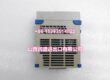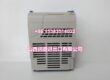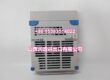
Component Snapshot At-a-Glance
- Model: IS220PDIAH1A
- Alt. P/N: Revised variant IS220PDIAH1B; matched terminal boards IS200STCIH1A / IS200TBCIH4C
- Product Series: GE Speedtronic Mark VIe Distributed Turbine DCS
- Hardware Type: Packaged Discrete Contact Input (PDIA) active I/O processing pack
- Key Feature: Built-in 32VDC contact wetting supply + dual redundant 100Mbps Ethernet, fully hot-swappable
- Primary Field Use: Capture valve position, breaker status, limit switch and safety interlock dry contact signals for gas/steam turbine trip logic
Hard-Numbers: Technical Specifications
- Protocol Support: Mark VIe IONet proprietary Ethernet, ToolboxST diagnostic IR port
- Port Count: 2×RJ45 redundant Ethernet, 1×37-pin D-Sub to terminal board, front IR local config port
- Baud/Data Rate: Ethernet 10/100 Mbps auto-negotiate full duplex
- Operating Temperature: -30 °C to +65 °C; derate to 55 °C inside sealed unventilated turbine enclosures
- Storage Temperature: -40 °C to +85 °C
- Isolation Rating: 1500 VAC opto-isolation per channel between field contacts and IONet logic
- Power Draw: Typical 5 W; nominal rack supply 28 VDC (20–29.4 VDC operating window)
- Input Channel Capacity: 24 independent isolated dry contact input channels
- Contact Wetting Output: 32 VDC nominal (minimum 27.4 VDC) for passive switch wetting
- Hardware Filter: Fixed 4ms input debounce filter to suppress contact bounce noise
- Hot Swap: Fully hot-swappable; no rack power shutdown needed for module replacement
- Ingress Protection: IP20; factory conformal coating for oil mist & high humidity turbine house environments
- Mount Style: Direct plug-on mount to matched STCI/TBCI series discrete terminal boards
- Unit Weight / Dimensions: 0.45 kg; 82 mm W × 132 mm H × 40 mm D
The Real-World Problem It Solves
Legacy Mark V single-channel discrete input packs lack contact wetting power; rusted or high-resistance switch contacts produce intermittent open signals that trigger unplanned turbine trips. Single-Ethernet non-redundant I/O packs lose all interlock status tags if one network cable or switch port fails. Non-hot-swap designs force full control rack power down for card swaps, costing multi-hour combined-cycle unit downtime. Uncoated bare PCB boards corrode rapidly from turbine lube oil vapor and condensation, creating random floating input faults during load swings.
Where you’ll typically find it:
- Combined-cycle gas turbine main control racks monitoring compressor bleed valve and trip limit switches
- Steam turbine generator MCC panels tracking generator breaker, lube oil pump and fire suppression interlock contacts
- Refinery turbine-driven compressor cabinets for process isolation valve and emergency shutdown (ESD) feedback signals
Bottom-line value statement: Integrated 32VDC contact wetting, dual redundant Ethernet and hot-swap coated hardware eliminate intermittent contact signal faults and single-point network failure risk without turbine shutdown during module service.
Hardware Architecture & Under-the-Hood Logic
This pack shares a standardized Mark VIe I/O processor common across all distributed I/O families; dedicated acquisition hardware handles only discrete contact sensing. Optocoupler isolation blocks ground loop transients from long field switch wiring runs. It directly mates to STCI/TBCI terminal boards via shielded 37-pin D-Sub cabling.
- 28 VDC rack input feeds isolated internal regulators for I/O logic, dual Ethernet transceivers and 32VDC contact wetting supply
- Each of the 24 channels routes 32VDC wetting voltage out to field dry contacts; optocoupler converts contact closure to digital logic level
- Onboard 4ms hardware debounce filter eliminates mechanical switch bounce noise before signal processing
- Local processor scans all 24 input channels cyclically, stores open/closed status and channel fault counters in non-volatile memory
- Dual RJ45 IONet ports run active/standby redundant links; instant auto-failover if primary Ethernet path drops
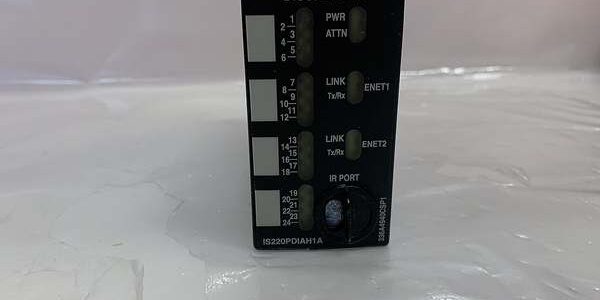
- Front-panel LED array displays rack power, Ethernet link health and channel attention alarms; IR port enables ToolboxST local configuration without network access
- All discrete status telemetry transmits to Mark VIe main controllers for ESD interlock, sequence logic and HMI status display via IONet
Field Service Pitfalls: What Rookies Get Wrong
Uncoated Replacement Modules Installed Inside Turbine Houses
New technicians swap uncoated non-A variant PDIA packs into high-humidity turbine enclosures. Oil mist and condensation degrade PCB traces within 6–12 months, causing random floating input status faults.
- Field Rule: Only deploy conformal coated IS220PDIAH1A units for turbine house installs; visually verify uniform protective coating before energizing rack power.
Dual-End Grounding of Field Contact Cable Shields
Junior crews ground twisted shield wiring at both the terminal board and remote valve junction boxes. Parallel ground paths induce circulating AC noise, generating flickering contact status tags on the HMI.
- Quick Fix: Ground cable shield braid only at the Mark VIe control cabinet terminal block; fully isolate shield conductors at all remote field switch enclosures.
Mismatched Terminal Board Model With PDIA Pack
Field crews pair IS220PDIAH1A with incompatible DTCI DIN rail terminal boards instead of approved STCI/TBCI series. Missing board ID handshake disables all 24 input channels, showing full offline tags in ToolboxST.
- Field Rule: Cross-reference GE hardware list before wiring; only use IS200STCIH1A / IS200TBCIH4C terminal boards with this PDIA pack; run hardware tree rescan post-install.
Commercial Availability & Pricing Note
Please note: The listed price is for reference only and is not binding. Final pricing and terms are subject to negotiation based on current market conditions and availability.