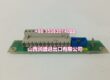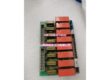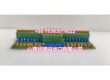
Product Core Brief
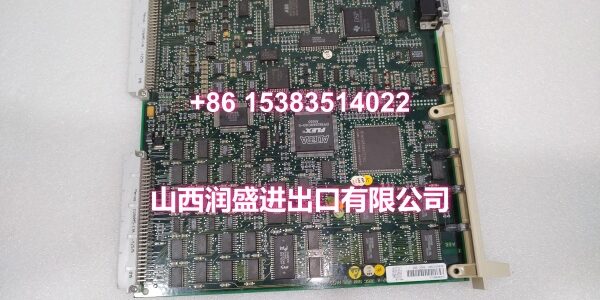
- Model: DSQC346G
- Order Code: 3HAB8101-8
- Brand: ABB
- Series: ABB IRC5 Robot Controllers
- Core Function: Axis drive module that converts digital control signals from the IRC5 controller into power signals for driving robot servo motors — precisely controlling motor speed, torque, and position to enable high-precision, stable robot motion.
- Product Type: Servo Drive Module
- Key Specs: Rated current up to 15A | Peak current up to 30A | 3-phase AC 400V±10% power supply | Comprehensive protection (overcurrent, overvoltage, undervoltage, overheating, motor overload) | Communication delay ≤100μs
- Condition: New Original / New Surplus
Key Technical Specifications
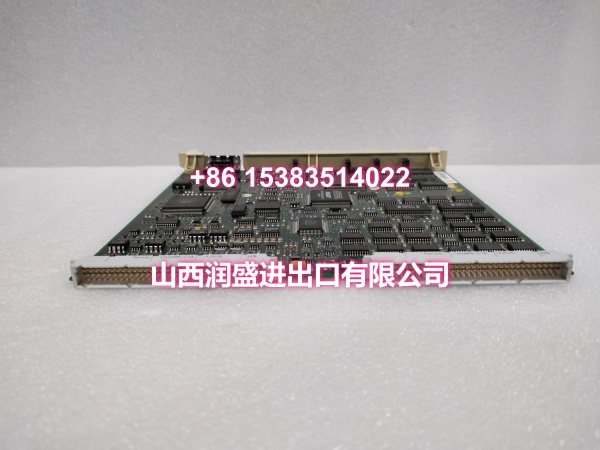
- Product Type: Servo Drive Module for ABB IRC5 Robot Controllers
- Brand: ABB
- Model Number:
- Order Code: 3HAB8101-8
- Series: ABB IRC5 Robot Controllers
- Core Function: Converts digital control signals from the IRC5 controller into power signals for driving robot servo motors — precisely controlling motor speed, torque, and position to enable high-precision, stable robot motion
- Driving Capacity: Rated current up to 15A, peak current up to 30A — meets the power requirements of medium and large industrial robot axis motors, suitable for heavy-load handling and welding applications
- Power Supply: 3-phase AC 400V±10%, 50/60Hz — compatible with standard industrial power systems; built-in power filtering and voltage regulation circuits resist supply fluctuations for stable output
- Control Signal Interface: High-speed digital communication with the robot controller, communication delay ≤100μs — ensures controller instructions are transmitted to the drive module in real time for fast motion response
- Protection Functions:
- Overcurrent protection: triggers when output current exceeds 150% of rated value
- Overvoltage protection: activates when supply voltage exceeds 440V
- Undervoltage protection: activates when supply voltage drops below 360V
- Overheating protection: activates when module temperature exceeds 85°C
- Motor overload protection
- All protections quickly cut off output during abnormalities to prevent module and motor damage
- Operating Temperature: 0°C to +70°C (cabinet environment); maximum heat sink temperature 90°C
- Environmental Rating: Designed for industrial control cabinet environments (IP20)
- Product Status: Discontinued (spare parts supply) — compatible with ABB IRC5 controller ecosystems
- Typical Applications: Axis drive for ABB IRC5-controlled industrial robots — powering servo motors in handling, welding, assembly, and palletizing applications; serving as a critical spare part for lifecycle support of mature IRC5 robot installations where axis drive replacement is required
Product Introduction
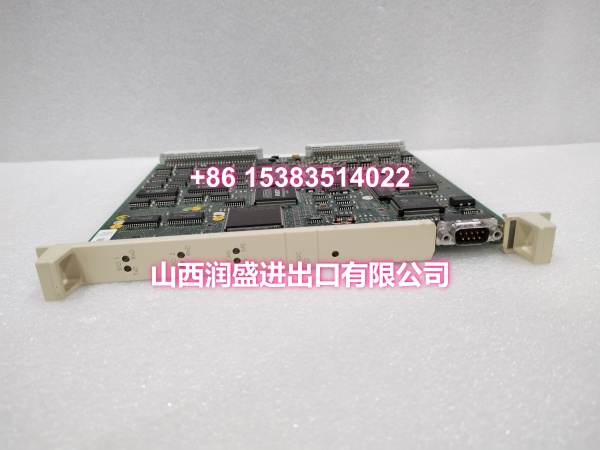
The ABB DSQC346G (order code 3HAB8101-8) is a servo drive module designed for ABB’s IRC5 robot controllers, engineered to serve as the critical power conversion link between the robot controller and servo motors. In an automated robot cell, the DSQC346G handles the essential task of translating the controller’s digital motion commands — position, velocity, and torque setpoints — into precisely regulated electrical power that drives each axis servo motor, enabling the robot to execute complex trajectories with high accuracy and repeatability.
What distinguishes the DSQC346G in IRC5 installations is its combination of robust drive capacity and comprehensive protection. Industrial robot applications — particularly heavy-load handling and arc welding — place demanding requirements on axis drives. The DSQC346G’s 15A rated / 30A peak current capability ensures that medium and large robots have sufficient power to move payloads accurately, even during high-acceleration maneuvers. At the same time, the module’s multi-layered protection suite (overcurrent, overvoltage, undervoltage, overheating, motor overload) provides a critical safety net: when electrical anomalies occur — whether from power supply disturbances, motor faults, or mechanical binding — the module responds within milliseconds to cut output and prevent cascading damage to both the drive and the motor.
The sub-100μs communication delay between the IRC5 controller and the DSQC346G is a key enabler of high-performance robot motion. In applications such as arc welding or precision assembly, the controller continuously updates motion trajectories based on real-time feedback. Any significant delay in the drive’s response to these commands would manifest as path deviation, velocity ripple, or reduced repeatability. The DSQC346G’s high-speed digital interface ensures that motion commands are executed faithfully, maintaining the tight synchronization between axes that ABB robots are known for.
For system integrators and maintenance engineers supporting mature IRC5 robot installations, the DSQC346G is a critical spare part. As a discontinued product, availability of genuine units is essential for lifecycle support — an axis drive failure can render a robot inoperable, resulting in production stoppage. The DSQC346G’s plug-in form factor in the IRC5 control cabinet means replacement is a straightforward like-for-like swap: the failed module is removed from the drive unit rack, the new module is inserted into the same position, and after verifying wiring and power connections, the system can be restarted and the robot re-homed, minimizing downtime during maintenance windows.
QA & Testing SOP
Every unit undergoes a standardized verification process before shipment:
- Visual & Anti-Counterfeit Check: Inspect the module housing for proper ABB branding and part number marking (DSQC346G, 3HAB8101-8). Check for physical damage including cracked housing, damaged connector pins, burnt components, or signs of moisture ingress (corrosion, white residue on contacts).
- Connector Pin Inspection: Examine all connector pins (power input, motor output, controller communication) for straightness, corrosion, or bending. Damaged pins can cause intermittent connections, arcing, or short circuits.
- Power Supply Test: Apply 3-phase AC 400V±10% power to the module and verify correct startup behavior — no abnormal inrush current, no voltage regulation errors, and stable DC bus voltage within specification.
- Drive Output Test: Connect a representative servo motor load and command the module to output controlled current. Verify that the module can deliver rated current (15A continuous, 30A peak) without overheating, voltage drop, or current ripple beyond specification.
- Communication Interface Test: Establish communication with an IRC5 controller and verify that command transmission delay is ≤100μs, with no data errors or communication dropouts during continuous operation.
- Protection Function Tests:
- Overcurrent: Simulate output current exceeding 150% of rated value and verify that the module trips within specification.
- Overvoltage: Apply supply voltage exceeding 440V and verify that the overvoltage protection activates.
- Undervoltage: Reduce supply voltage below 360V and verify that the undervoltage protection activates.
- Overheating: Raise module temperature above 85°C and verify that the thermal protection activates.
- Motor overload: Simulate motor overload conditions and verify that the protection triggers appropriately.
- Thermal Stability Test: Run the module under continuous rated load for an extended period and verify that heat sink temperature remains within safe limits (≤90°C) with adequate ventilation.
- Long-Duration Stability Test: Run the module under cyclic load conditions for an extended period to verify stable operation with no performance degradation, communication errors, or protection false trips.
- Anti-Static & Mechanical Protection: After passing all tests, the module is placed in anti-static shielding with protective caps on connectors. It is then packed in rigid cardboard with foam cushioning to prevent mechanical shock and ESD damage during transit.
Installation Pitfalls & Guide
Real-World Risks When Replacing This Module:
❗ Controller Compatibility: The DSQC346G is designed for ABB IRC5 robot controllers. It is not compatible with older S-Series (S3/S4/S4C) controllers, which use different drive module families (e.g., DSQC236, DSQC345, DSQC346C). It is also not directly interchangeable with newer IRC5 drive variants (e.g., DSQC346C) without verifying the specific controller configuration and drive unit type. Always verify your controller model and existing drive unit configuration before ordering.
❗ Drive Unit Configuration: The IRC5 controller stores drive unit configuration parameters (motor type, gear ratio, calibration data, current limits) in the controller memory. After installing a replacement DSQC346G, the controller should recognize the module automatically if the configuration is intact. However, if the controller memory has been lost or if the replacement module has different firmware, you may need to reconfigure the drive unit parameters from the teach pendant and perform a motor calibration (revolution counter update) before the robot can operate correctly.
❗ Incorrect Slot Placement: The DSQC346G must be installed in the correct drive unit slot position specified in the IRC5 controller’s configuration. Installing it in the wrong slot can prevent the controller from recognizing the module, resulting in drive communication errors or axis faults. Always verify the slot assignment matches the system documentation and the labeling on the drive unit rack before insertion.
❗ Power Wiring Verification: After replacing the module, verify that all power wiring connections are secure and correctly terminated — both the 3-phase AC input and the motor output cables. Loose power connections can cause arcing, voltage drops, and intermittent drive faults that are difficult to diagnose. Verify that cable torque specifications are met and that phase sequence is correct.
❗ Grounding Requirements: Ensure that the drive module and motor are properly grounded. Improper grounding can cause electrical noise issues, EMI interference with nearby equipment, and safety hazards. Verify that the protective earth (PE) connection is secure and that motor cable shields are properly terminated.
❗ Power-Down Requirement: Always power down the IRC5 controller and verify that the DC bus capacitors have fully discharged before inserting or removing drive modules. The DC bus can retain dangerous voltage levels for several minutes after power is removed. Use a multimeter to verify that the DC bus voltage is below safe levels before handling the module.
4-Step Replacement Guide:
- Pre-Install: Identify the failed DSQC346G slot position in the IRC5 drive unit rack. Document the existing drive unit configuration (motor type, gear ratio, calibration data, current limits) from the teach pendant or backup files. If possible, back up the current controller configuration before proceeding. Power down the IRC5 controller, disconnect the main power supply, and verify that the DC bus capacitors have fully discharged (DC bus voltage < 50V).
- Removal: Disconnect all power cables (3-phase AC input, motor output) and communication cables from the DSQC346G module. Release the module locking mechanism and carefully slide the old module out of the drive unit rack slot. Inspect the rack connector and cables for damage or debris.
- Install: Insert the new DSQC346G module into the correct drive unit rack slot, ensuring proper alignment with the backplane connector. Secure the module with the locking mechanism. Reconnect all power and communication cables, verifying correct terminal assignments and torque specifications. Verify that the protective earth connection is secure.
- Power-On Test: Reconnect the main power supply and power up the IRC5 controller. Verify that the controller recognizes the DSQC346G module with no drive communication errors. Check the module status LEDs for normal operation. If required, perform a motor calibration (revolution counter update) from the teach pendant. Run a test program at low speed to verify that all axes move correctly with no abnormal noise, vibration, or fault conditions. Gradually increase speed to full operational range and verify stable performance.
Technical FAQ
What is the difference between the DSQC346G and other ABB drive modules? The DSQC346G is specifically designed for ABB IRC5 robot controllers, providing servo drive capability for robot axis motors with 15A rated / 30A peak current. Compared to older drive modules like the DSQC346C (used in S4/S4C controllers), the DSQC346G uses a different physical form factor and communication interface tailored for the IRC5 architecture. It is not interchangeable with drive modules from other ABB controller families.
Can the DSQC346G be used in S4/S4C or OmniCore controllers? No. The DSQC346G is designed exclusively for ABB IRC5 robot controllers. S4/S4C controllers use different drive module families (e.g., DSQC345, DSQC346C), and OmniCore controllers use a completely different drive architecture. Always verify your controller model before ordering drive modules.
What are common failure modes for this module? Common failure modes include: power connector damage from repeated insertion/removal or loose wiring; IGBT or power stage failure due to overcurrent events or motor shorts; DC bus capacitor degradation from prolonged operation; communication interface failure from electrical noise or connector issues; and thermal protection degradation from prolonged overheating. In most cases, a failing DSQC346G will trigger drive fault codes in the controller diagnostics, which can be read from the teach pendant to identify the specific fault type (overcurrent, overvoltage, overheating, etc.).
Is the DSQC346G still in production? The DSQC346G is a discontinued product, with supply now limited to spare parts inventory (New Original / New Surplus). For plants maintaining IRC5 robot installations, having verified genuine DSQC346G modules on hand is critical for lifecycle support, as availability from ABB’s direct supply chain may be limited.
What warranty do you offer on New Surplus parts? We provide a full 12-month warranty on all New Original / New Surplus units. This is fundamentally different from refurbished or pulled modules, which often carry 30–90 day warranties and come with unknown operational history, potential connector wear, and degraded power stage performance. For a servo drive module that is critical to robot motion, the reliability difference between new surplus and refurbished directly impacts production uptime and the risk of unexpected drive faults.