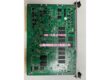
Component Snapshot At-a-Glance
- Model: Triconex 3617E
- Alt. P/N: No direct cross-replacement; lower voltage equivalent = 3614E, higher voltage equivalent = 3623
- Product Series: Tricon 3000 TMR I/O Family, compatible with CX, EX, RX chassis
- Hardware Type: 8-channel supervised solid-state digital output module, single-slot hot swappable
- Key Feature: Non-commoned 48VDC outputs with built-in pulse test for latent fault detection
- Primary Field Use: Control 48VDC solenoids, trip coils and isolation valves within SIL3-rated safety systems.
Hard-Numbers: Technical Specifications
- Protocol Support: Proprietary Tricon TriBus backplane bus only, no external fieldbus or Ethernet ports
- Port Count: 8 independent non-commoned supervised digital output channels
- Data Rate: Real-time output state update, dedicated pulse test cycle for each channel
- Operating Temperature: -40°C to +70°C continuous operation; -40°C to +85°C component storage
- Isolation Rating: 1500VDC field-to-backplane galvanic isolation per channel
- Power Draw: 8W maximum at 5VDC backplane input, 1.0A nominal operating current
- Output Voltage: 48VDC nominal, 42VDC to 56VDC valid operating range
- Current Rating: 2A continuous per channel, 10A peak for 10ms transient loads
- Minimum Load: 30mA per channel to maintain valid diagnostic status
- Certifications: IEC61508 SIL3, UL Class I Div 2, ATEX Zone 2 hazardous area listing
The Real-World Problem It Solves
Standard 24VDC output cards cannot support 48VDC field coils used on offshore and heavy industrial safety equipment. Conventional output modules also lack pulse test functions, leaving broken wiring or open coils undetected until a safety demand occurs.Where you’ll typically find it:
- Offshore platform fire and gas panels controlling 48VDC isolation solenoids
- Refinery ESD racks driving medium-voltage shutdown valves and trip relays
- Power plant BMS cabinets for 48VDC fuel valve interlock circuitsThis module delivers dedicated 48VDC switching with full diagnostics to eliminate latent failures on medium-voltage safety loops.
Hardware Architecture & Under-the-Hood Logic
This module uses three fully separate TMR logic legs and independent output drivers. Each channel features isolated sense circuitry and pulse test hardware, with no shared return paths between channels.
- TriBus receives command signals from the main SIS controller and distributes data to all three TMR processing legs.
- Each leg processes output logic independently; a 2-out-of-3 vote activates the corresponding 48VDC output driver.
- Per-channel sense circuits monitor voltage and current to confirm load presence and wiring integrity.
- Automatic low-amplitude pulse tests run periodically to detect open coils or high-resistance connections without actuating loads.
- Hot-swap circuitry maintains normal rack operation during module replacement; all outputs stay de-energized for fail-safe operation.
Field Service Pitfalls: What Rookies Get Wrong
Mismatched Voltage Between Module and Field LoadsTechnicians install 24VDC solenoids on 3617E channels. Lower impedance creates overcurrent conditions and permanent damage to output drivers.
- Field Rule: Only connect 42–56VDC rated loads to 3617E. Use 3614E for all 24VDC circuits.
Unloaded Channels Triggering False Diagnostic AlarmsRookies leave unused channels open with no load. The module registers missing load faults because it cannot meet the 30mA minimum current requirement.
- Quick Fix: Install suitable dummy resistors on all empty channels to maintain 30mA minimum load current.
Disabling Pulse Test FunctionField staff turn off pulse tests to clear nuisance alarms. This removes the primary method for catching hidden open-circuit faults in safety wiring.
- Field Rule: Keep pulse test enabled at all times. Troubleshoot root causes instead of disabling critical diagnostics.
Commercial Availability & Pricing Note
Please note: The listed price is for reference only and is not binding. Final pricing and terms are subject to negotiation based on current market conditions and availability.