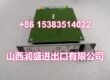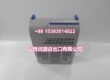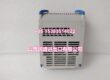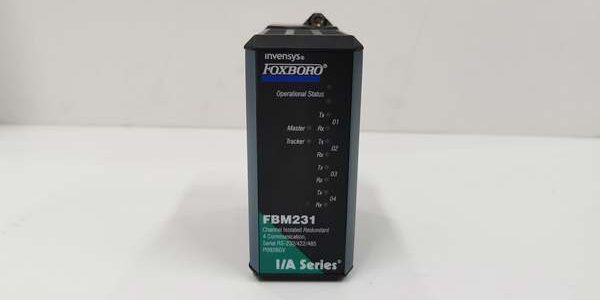
Component Snapshot At-a-Glance
- Model: FBM231, factory part code = P0926GV
- Alt. P/N: No direct factory cross part; sibling comm card = FBM230
- Product Series: Foxboro I/A Series Evo FDSI (Field Device System Integrator) family
- Hardware Type: Rack plug-in serial gateway FBM, redundant-capable DCS communication module
- Key Feature: Four independently software-configurable serial ports (RS232/422/485), per-port galvanic isolation + master/tracker auto failover redundancy
- Primary Field Use: Bridge third-party Modbus PLC, smart transmitters, analyzer controllers to Foxboro I/A DCS backplane bus, aggregate up to 2000 DCI control points per card
Hard-Numbers: Technical Specifications
- Protocol Support: Modbus RTU/ASCII, custom serial driver via I/A SMDH software; native I/A backplane FBM bus protocol
- Port Count: 4 configurable serial ports; each RS485 supports multidrop, max 16 field devices per port (64 total per module)
- Baud/Data Rate: 300bps~115200bps software selectable per individual channel
- Operating Temperature: Old Rev(A-L): -20℃~+70℃; New Rev(M+): 0℃~+70℃ continuous cabinet rating
- Isolation Rating: 1500VAC channel-to-backplane galvanic isolation per serial port PCB layout
- Power Draw: Max 7~8W per single module, nominal 24VDC SELV input (21.6~25.2VDC acceptable range)
- Mount Spec: Standard I/A 50pin edge connector for I/O rack backplane, DIN-mate dedicated TA terminal base for field wiring
- Unit Weight: ~360g per bare module, ATEX Class1 Div2 / Zone2 hazardous location rated
The Real-World Problem It Solves
Hardwired discrete analog I/O cards rack overflow when pulling hundreds of Modbus smart instruments into DCS; separate third-party protocol converters add extra enclosures and unmanaged single-point failure nodes. Mixed RS232/485 field devices previously required multiple standalone converters cluttering control cabinet layout.
Where you’ll typically find it:
- Refinery reformer analyzer rack: Connect online gas chromatograph analyzers and Modbus flow computers to main I/A DCS
- Coal plant boiler BMS cabinet: Pull boiler safety PLC run status and burner management fault codes via Modbus RS485 multidrop
- Offshore FPSO crude separation skid: Aggregate tank radar level transmitters and variable speed pump VFD serial data in salt-spray compact enclosures
Single consolidates dozens of serial field devices onto one DCS rack slot to cut cabinet space and eliminate intermediate protocol converter downtime.
Hardware Architecture & Under-the-Hood Logic
Onboard dedicated RISC processor handles serial protocol translation separate from backplane bus traffic; no passively wired PCB, all port signals go through isolated transceiver IC before hitting backplane interface; dual-card redundant pairing uses master/tracker heartbeat sync over chassis backplane.
- Each of four serial ports routes field wiring signals through isolated optocoupler/transceiver circuits to onboard MCU peripheral UART banks
- Onboard processor parses incoming Modbus/serial data then maps raw field values into I/A DCS DCI database register blocks
- Backplane edge connector exchanges mapped point data with host FCP controller via proprietary I/A fieldbus clocked communication
- Redundant paired setup: Master processes live field traffic; Tracker mirrors all output writes and continuously syncs input register table via backplane heartbeat signal
- SMDH-configured port DIP switch on matching TA terminal base enables selectable 120Ω bus termination for RS485 multidrop trunk ends
Field Service Pitfalls: What Rookies Get Wrong
Enabling Bus Termination Resistor At Both Mid-Trunk And EndpointsTech flips termination DIP switch on every TA terminal base across long RS485 trunk; multiple parallel 120Ω resistors pull bus impedance low, causing random device dropouts and cyclic read errors on DCS HMI.
- Field Rule: Only enable 120Ω termination at physical two extreme endpoints of each RS485 bus segment, all intermediate nodes leave resistor disabled.
Mixing RS232/RS485 Wiring On Same Unconfigured PortImproper field wire landing between DB25 RS232 pins and RS485 A/B terminals burns port transceiver IC; affected channel locks FAULT light and blocks remaining port data polling.
- Quick Fix: Predefine port mode(RS232/422/485) inside SMDH software before landing any field wiring to terminal base.
Unshielded daisy-chain cabling without single-point chassis ground creates common-mode EMI noise; hot weather cabinet temperature swing triggers intermittent partial register reads.
- Field Rule: Run shielded twisted pair for all runs, connect shield drain wire to cabinet PE ground at one end only of trunk cable.
Commercial Availability & Pricing Note
Please note: The listed price is for reference only and is not binding. Final pricing and terms are subject to negotiation based on current market conditions and availability.