Component Snapshot At-a-Glance
- Model: P0916CC
- Alt. P/N: No factory alternate; matched core card = FBM237
- Product Series: Foxboro I/A Series FBM Analog Output Termination Family
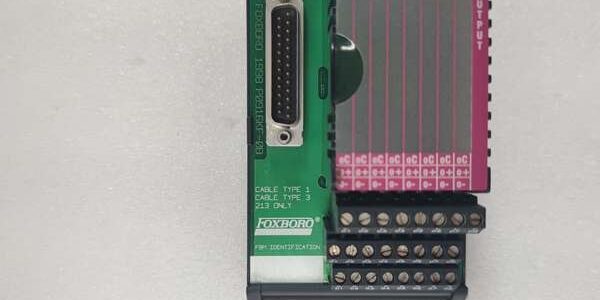
- Hardware Type: Compression-style field wiring termination assembly (terminal base) for FBM237 plug-in card
- Key Feature: Per-channel built-in HART pass-through routing + compression wire terminals without screw crimping
- Primary Field Use: Bridge backplane analog output signals to field-mounted control valves, I/P converters and HART smart positioners via 4-20mA loop wiring.
Hard-Numbers: Technical Specifications
- Protocol Support: HART bidirectional overlay + native I/A backplane analog command bus, compatible redundant pairing
- Port Count: 37-pin card edge receptacle for plug; 8 compression terminal groups for field wiring, 1 dedicated HART tap header
- Baud/Data Rate: HART fixed 1200bps, analog signal 0–20mA DC loop standard
- Operating Temperature: -40°C ~ +70°C continuous rated; cabinet steady run recommended 0°C~60°C
- Isolation Rating: 1500VAC channel-to-channel galvanic isolation on PCB traces
- Power Draw: Passive terminal base, no onboard power consumption; loop power sourced externally from field side or card
- Signal Range: Standard 4–20mA analog output, supports 0–20mA extended calibration range
- Mount Spec: Standard 35mm DIN rail footprint; dimension 100×50×30mm, net weight 0.2kg
The Real-World Problem It Solves
Screw-type terminal blocks loosen from cabinet thermal cycling and equipment vibration, creating intermittent open loops that drift control valve position mid-process. Conventional split terminal wiring also breaks HART digital communication needed for smart valve calibration checks.
Where you’ll typically find it:
- Refinery fractionation cabinet: Terminate outputs to distillation column reflux flow control globe valves
- Coal-fired power plant boiler feedwater rack: Drive feedwater regulating valve I/P converters with HART diagnostics
- Offshore crude FPSO skid enclosures: Connect tank level modulating valves in salt-spray high-vibration environments
Compression lock wiring eliminates loose terminal drift and preserves unbroken HART digital access for in-place field device troubleshooting without pulling field cables.
Hardware Architecture & Under-the-Hood Logic
This is fully passive PCB termination base with no onboard microprocessor or active drive circuits; internal PCB traces split analog current paths and route superimposed HART digital signals separately toward field terminals.
- 37-pin female edge connector receives full 8-channel analog + HART composite signal directly from plugged-in card front edge
- PCB internal isolation barriers separate each of eight independent current loops to prevent cross-channel signal bleed from field ground faults
- Embedded passive HART tap circuit splits digital HART data off main 4–20mA analog line to accessible header for handheld communicator hook-up
- Compression spring terminals mechanically clamp solid/stranded field wire via cam lock, no screw threads subject to thermal creep
- All channel traces route individually to corresponding terminal cluster; shorted single field wire cannot impact adjacent output channels
Field Service Pitfalls: What Rookies Get Wrong
Using Multi-Strand Unferruled Wire Inside Compression TerminalsLoose fine strands squeeze out of compression lock, vibrate loose over weeks and create high-resistance intermittent valve drift faults hard to pinpoint during live run.
- Field Rule: Crimp copper wire ferrules on all stranded field conductors before inserting into compression ports.
Shorting HART Tap Header Terminals With Spare Test LeadsAccidental jumper across HART header shorts digital bus; all 8 channels lose HART communication while analog 4–20mA still runs, hiding smart valve fault alarms from DCS HMI.
- Quick Fix: Cap unused HART header pins with insulating plastic caps after commissioning; only uncover for periodic field calibration.
Forcing Oversized AWG Wire Into Compression SlotsOversized gauge wire overstretches internal compression springs; terminal loses clamping force after temperature swings leading to open control loops.
- Field Rule: Restrict field wiring to specified 16–24AWG range per terminal datasheet rating.
Commercial Availability & Pricing Note
Please note: The listed price is for reference only and is not binding. Final pricing and terms are subject to negotiation based on current market conditions and availability.