Component Snapshot At-a-Glance
- Model:
- Alt. P/N: No cross OEM alternate part; paired sibling P0916VB variant
- Product Series: Foxboro I/A Series Cable Plus family, matched for FBM field modules
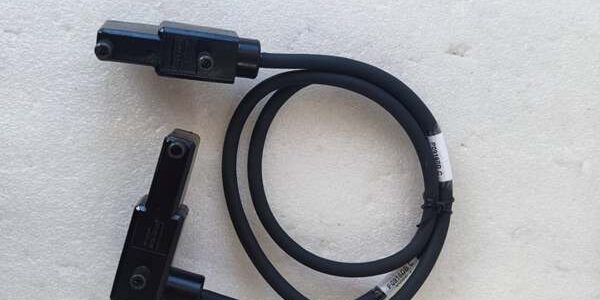
- Hardware Type: Pre-terminated D-shell dual-head interconnect transition cable
- Key Feature: Factory crimped dual 50-pin D-sub connectors eliminating field hand-crimp termination error
- Primary Field Use: Bridge Foxboro FBM I/O card rear backplane port to cabinet terminal strip field wiring inside DCS control enclosures
Hard-Numbers: Technical Specifications
- Protocol Support: Passive hardwired pin mapping, no signal conversion; routes proprietary I/A Series FBM bus & discrete analog/digital signals
- Port Count: Dual-end 50-pin male D-Sub connectors, one for FBM card, one for cabinet terminal base
- Baud/Data Rate: Pass-through only, supports native FBM fieldbus max 1.5Mbps transmission unchanged
- Operating Temperature: Rated -40℃ ~ +85℃ continuous; recommended steady cabinet ambient 0℃ ~ +60℃
- Isolation Rating: Individual twisted-pair internal isolation ~1500V between adjacent signal conductors
- Power Draw: Zero active power consumption, fully passive copper wiring construction
- Fixed Cable Length: Standard factory 1m finished length per original Foxboro OEM spec
- Insulation Grade: Teflon high-temperature jacket rated for high-heat boiler/refinery cabinet environments
- Unit Weight: 0.28kg per single finished assembly
The Real-World Problem It Solves
Field tech hand-crimp loose discrete wiring to FBM rear pinouts introduces intermittent open/short faults; vibration from nearby compressors loosens loose terminal crimps and triggers random I/O point dropout mid-running process. Custom field-spliced cabling also creates unmanaged cross-talk across adjacent analog instrument loops.
Where you’ll typically find it:
- Crude oil refinery distillation rack: Connect FBM207 analog input cards to cabinet field terminal strips for column temperature transmitters
- Coal utility boiler DCS cabinet: Link FBM242 discrete I/O modules to MCC cabinet pump/valve feedback wiring
- Offshore production platform control enclosure: Transition tank level analog FBM wiring to explosion-proof field junction boxes
Pre-factory terminated removes field crimp variables and cuts intermittent I/O fault calls related to homemade wiring.
Hardware Architecture & Under-the-Hood Logic
This is passive harness hardware with no onboard semiconductors or circuit chips; internal twisted paired copper routing strictly maps FBM rear pinout directly to opposite-end D-sub terminal layout.
- One 50-pin D-sub end locks mechanically into rear mating port of compatible Foxboro FBM I/O modules
- Internal individually twisted copper pairs isolate each channel’s power, analog and discrete signal paths to reduce EMI bleed
- Opposite D-sub end mates with matching cabinet terminal breakout base pre-mounted on DIN rail
- Full pin-to-pin one-to-one hardwire mapping with no internal signal splitting or jumper traces
- Molded strain relief at both connector ends limits wire fatigue from repeated cabinet door swing vibration
Field Service Pitfalls: What Rookies Get Wrong
Forcing Misaligned D-Sub Connector Into FBM Rear PortNew technicians apply side load pressure to seat misaligned D-sub shell, bending internal connector pins on FBM rear header; bent pins create partial channel short and permanent I/O card front-end damage after power up.
- Quick Fix: Align D-sub guide posts first before applying straight axial insertion force only.
Cable Run Tucked Against Hot Power Bus BarsRouted directly alongside cabinet 220VAC power bus, jacket thermal degradation over months shorts internal twisted pairs and causes floating analog PV drift across entire FBM rack.
- Field Rule: Separate DCS signal cabling minimum 5cm clearance from high-current AC power wiring inside all control cabinets.
Improper Zip Tie Over-Tightening Crushes Internal ConductorsExcessively tight cable bundling zip ties compress outer Teflon jacket and crack internal copper conductors; intermittent open faults only surface during cabinet thermal swing between day/night ambient shifts.
- Quick Fix: Use loose loop cable ties with finger-tight tension only for all I/A Series interconnect cable routing.
Commercial Availability & Pricing Note
Please note: The listed price is for reference only and is not binding. Final pricing and terms are subject to negotiation based on current market conditions and availability.