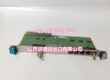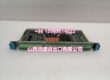
Product Core Brief
- Model: CMU 42015-115-00
- Brand: ALSTOM
- Series: ALSTOM Control/Monitoring Module Family
- Core Function: Control and monitoring module coordinating I/O, system health, alarms, and relay/logic outputs in ALSTOM rack systems.
- Product Type: Control/Monitoring Module
- Key Specs: 24 VDC cabinet supply | Backplane-mounted | Relay/logic output support | Status and diagnostic indicators
- Condition: New Original / New Surplus
Product Introduction
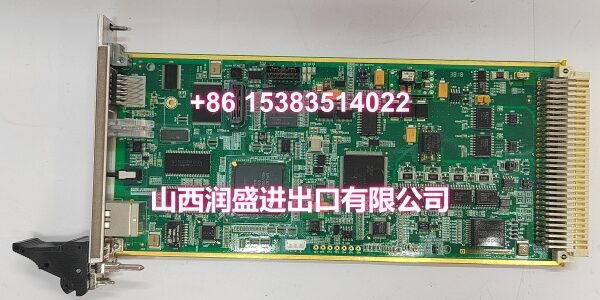
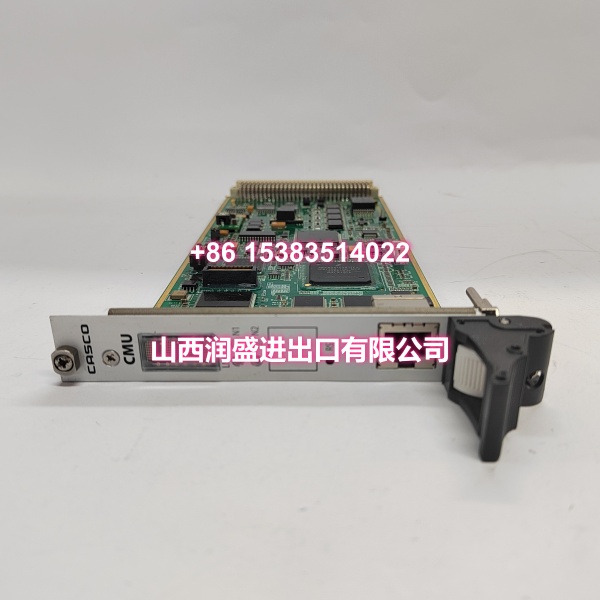
ALSTOM CMU 42015-115-00 is a control/monitoring module used in ALSTOM rack-based automation systems. It typically coordinates companion I/O cards, monitors system health, processes field alarms, and provides relay or logic outputs for equipment control.
The module slides into a dedicated ALSTOM backplane, making it field-replaceable without rewiring the entire cabinet. It is commonly deployed in railway signaling and interlocking cabinets, substation automation, power plant balance-of-plant control, and industrial process racks where availability and diagnostics matter.
Exact I/O mapping, relay count, firmware revision, and communication interfaces should be confirmed from the installed nameplate and system documentation before replacement.
Key Technical Specifications
| Parameter | Value |
|---|---|
| Full Model | ALSTOM CMU 42015-115-00 |
| Product Type | Control/Monitoring Module |
| System Platform | ALSTOM Rack / Legacy Control Platform |
| Core Function | I/O coordination, system health monitoring, alarm handling, relay/logic output |
| Power Supply | 24 VDC nominal (typical) |
| Installation | Rack-mounted; plugs into dedicated ALSTOM backplane |
| Communication | Proprietary backplane bus; service/diagnostic interface as equipped |
| I/O Handling | Via companion I/O cards on the same rack |
| Diagnostics | Front-panel status indicators and test points |
| Operating Temperature | -20 °C to +60 °C (typical industrial cabinet range) |
| HS Code | 8537.10 |
Quality Control Process
- Visual and code check: Confirm CMU 42015-115-00 labeling, PCB condition, connector integrity, and front-panel hardware.
- Backplane and power verification: Check backplane contacts and 24 VDC supply rails before energizing the module.
- Initialization test: Verify module startup, status LEDs, and diagnostic indicators under normal operating conditions.
- I/O and relay check: Confirm relay/logic output response and coordination with companion I/O cards where applicable.
- Final packing: Record test results, apply asset labels, and ship in anti-static packaging with connector protection.
Replacement Pitfall Guide
❗ Confirm the exact module code. CMU 42015-115-00 may appear with variant suffixes; mismatched revisions can affect I/O mapping or firmware behavior.
❗ Verify the host rack and slot position. This module depends on a dedicated ALSTOM backplane; incorrect slot placement may prevent commissioning.
❗ Don’t assume relay count or I/O mapping. Public references describe relay/logic output and monitoring functions, but the exact channel configuration depends on the installed system.
❗ Check system health and alarm restoration. After replacement, verify that alarms, diagnostics, and interlock logic are correctly restored before returning the cabinet to service.
Keep these in mind and you’ll cut 90% of rework time.
Compatibility Matrix & Benchmarks
| Original Model | Replacement / Successor Model | Compatibility Level | Migration Notes |
|---|---|---|---|
| ALSTOM CMU 42015-115-00 | ALSTOM CMU 42015-115-00 | Direct | Like-for-like replacement when rack, slot, and firmware match. |
| ALSTOM CMU 42015-115-00 | ALSTOM CMU-series module | Needs Adaptation | Confirm backplane compatibility, I/O mapping, and relay/logic configuration. |
| ALSTOM CMU 42015-115-00 | ALSTOM successor control module | Needs Adaptation | Requires verification of control logic, cabinet integration, and system diagnostics. |
- Typical use: Railway signaling/interlocking cabinets, substation automation, power plant control, and industrial process racks.
- Key verification points: 24 VDC supply, backplane compatibility, relay/logic output configuration, system health monitoring, and nameplate confirmation.