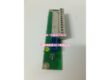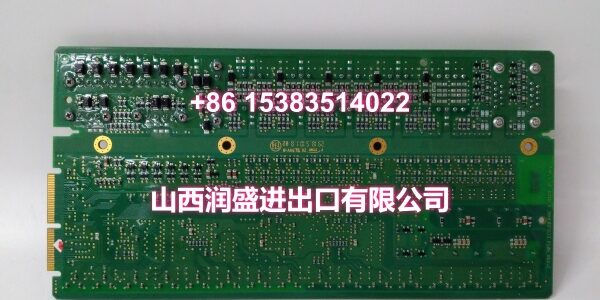
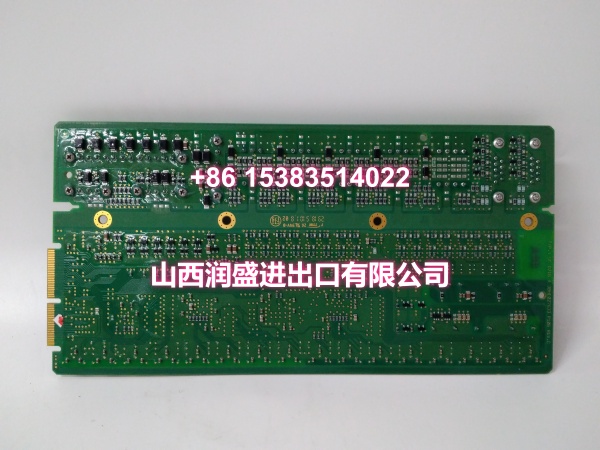
Product Core Brief
- Model: 3BHE055094R0002 / GBU72
- Brand: ABB
- Series: ABB PCS 6000 / Grid Breaker Unit Series
- Integration Role: Hardwired grid breaker control and status supervision module for ABB PCS 6000 medium-voltage drive systems, static frequency converters (SFC), and generator synchronizing schemes — providing reliable breaker close/trip commands and position feedback via galvanically isolated dry-contact I/O.
- Product Type: Grid Breaker Unit (Control Module)
- Key Specs: 24V DC auxiliary supply | Galvanically isolated dry-contact inputs for breaker status (52a/52b, spring-charged) | Relay outputs for Trip/Close commands | No fieldbus required for operation | Front-access terminal blocks | Compact cabinet-mount form factor
- Note: Condition: New Original (New Surplus)
Key Technical Specifications
- Product Type: Grid Breaker Unit (GBU72)
- Brand: ABB
- Model Number: 3BHE055094R0002
- Series: PCS 6000 / Grid Breaker Unit
- Primary Function: Commands and supervises upstream grid breakers in MV drive and power conversion systems — handles breaker close/trip control, position status monitoring (52a/52b, spring-charged readiness), and interlock logic support for synchronizing schemes.
- Power Requirements: 24V DC nominal (typical operating range 18–30V DC), power consumption approximately 6–10W depending on I/O loading
- Signal I/O Types: 24V DC opto-isolated digital inputs for breaker status feedback; relay outputs for Trip/Close commands (Form A/C as implemented), galvanically isolated for safer operation in MV/LV control cabinets
- Communication Interfaces: Hardwired I/O only — no fieldbus required for operation, ensuring stable performance even in electrically noisy industrial environments
- Rated Insulation Voltage: 1000V AC
- Rated Operating Voltage: 690V AC
- Rated Impulse Withstand Voltage: 12 kV
- Overvoltage Category: IV
- Pollution Degree: 3
- Rated Operating Frequency: 50/60 Hz
- Dimensions: Approximately 200 × 120 × 40 mm (compact cabinet module)
- Weight: Approximately 0.5 kg
- Operating Temperature: 0 to +55°C (indoor panel installation); 5–95% RH non-condensing
- Mounting: Cabinet/panel-mounted inside LV control cubicle; front-access wiring via terminal blocks
- Protection Features: Galvanic isolation on all I/O channels, industrial-grade EMC design, dry-contact interfaces for reliable operation in high-noise environments
- Enclosure Material: Industrial-grade metal housing with excellent impact and vibration resistance
- Typical Applications: ABB PCS 6000 medium-voltage drives (grid tie/incoming breaker control for pump, fan, compressor trains); Static Frequency Converters (SFC) for industrial power or aviation ground power; FACTS/STATCOM auxiliaries and energy storage converters; Hydro and thermal power plants (generator synchronizing to utility grid); Industrial captive power and CHP plants; Marine and offshore generator switchboards; Process plants and marine propulsion systems integrating MV breakers with ABB control logic.
Product Introduction
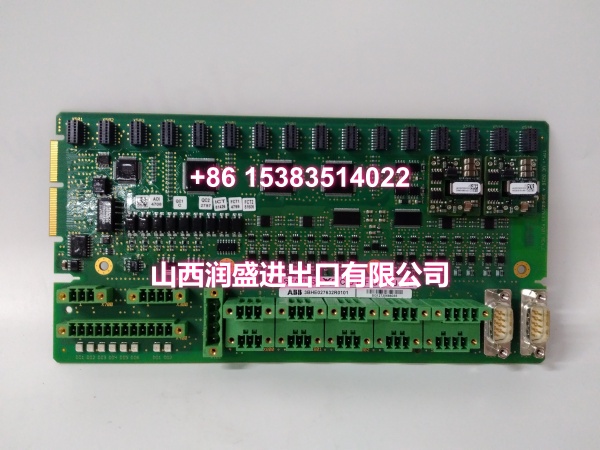
The ABB 3BHE055094R0002 (GBU72) is a Grid Breaker Unit control module from the PCS 6000 series, engineered specifically for commanding and supervising upstream grid breakers in medium-voltage drive and power conversion systems. As a dedicated breaker interface module, it serves as the critical link between ABB control systems and the physical grid breaker — providing reliable close/trip commands and real-time position status feedback (52a/52b auxiliary contacts, spring-charged readiness) through galvanically isolated dry-contact I/O channels.
Unlike fieldbus-dependent modules, the GBU72 operates entirely on hardwired I/O, which is a deliberate design choice for safety-critical breaker control applications. Hardwired signals eliminate fieldbus communication latency and protocol failure risks, ensuring that trip commands reach the breaker within milliseconds regardless of network conditions. This no-nonsense dry-contact interface delivers stable performance even in electrically noisy MV/LV control cabinet environments where electromagnetic interference from power electronics can disrupt digital communication.
The module’s compact form factor (approximately 200 × 120 × 40 mm, 0.5 kg) mounts directly inside the LV control cubicle with front-access terminal blocks — a service-friendly design that makes FAT/SAT checks and maintenance replacements straightforward. Terminal labeling and test points are clearly marked, so commissioning checks for 52a/52b status, trip, and close functions typically take minutes rather than hours.
Power is supplied from the cabinet’s 24V DC control bus (18–30V DC operating range, approximately 6–10W consumption depending on I/O loading), and all I/O channels feature galvanic isolation to protect the control system from voltage transients on the breaker side. The module supports interlock logic for synchronizing schemes where permissives, protections, and timing checks are essential — making it equally suitable for generator-to-grid synchronizing applications in hydro, thermal, and captive power plants.
System integrators and maintenance engineers specify this module for its proven reliability in MV drive and power conversion applications, straightforward hardwired integration that eliminates fieldbus configuration complexity, and true drop-in replacement compatibility with ABB system interfaces — minimizing retrofit risk and reducing commissioning time on both new installations and replacement projects.
Wiring & Backplane Integration Notes
- Power Supply Verification: This module operates on 24V DC nominal (18–30V DC range). Confirm your cabinet’s control power distribution provides a stable and regulated 24V DC supply within this tolerance before energizing. Voltage fluctuations outside the specified range can cause relay malfunction or damage.
- Breaker Status Input Wiring: The digital inputs accept 24V DC opto-isolated signals from the breaker’s auxiliary contacts (52a for closed position, 52b for open position, and spring-charged status). Verify that the breaker’s auxiliary contact ratings are compatible with the module’s input specifications. Wire each status input to the corresponding breaker auxiliary contact using shielded control cable, grounding the shield at the cabinet end only.
- Trip/Close Output Wiring: The relay outputs provide dry-contact Trip and Close commands to the breaker’s operating mechanism. Verify the breaker’s trip/close coil voltage and current ratings are within the relay output capacity. Use appropriately sized control cable for the coil circuits, and include flyback diodes or snubber circuits if the breaker mechanism is inductive.
- Interlock Integration: When using the GBU72 in synchronizing schemes, verify that all permissive and interlock signals (voltage match, frequency match, phase angle) are properly wired to the module’s digital inputs before commissioning. A missing or miswired interlock can allow unsafe breaker closure.
- Galvanic Isolation Verification: All I/O channels are galvanically isolated. Verify that the isolation barriers are not bypassed by incorrect wiring — do not common the control-side and breaker-side grounds, as this defeats the isolation protection.
- Cable Selection: Use shielded control cable for all signal connections to minimize electromagnetic interference from the MV drive’s power electronics. Ground shields at the cabinet end only. For Trip/Close output circuits, use cable rated for the breaker coil voltage and current.
- ESD-Safe Handling: As a cabinet-mounted control module, the GBU72 requires ESD-safe handling procedures. Always use an anti-static wrist strap when handling the module outside of its protective packaging. Avoid touching terminal blocks or circuit traces directly.
- Mechanical Mounting: The module measures approximately 200 × 120 × 40 mm and weighs approximately 0.5 kg. It mounts inside the LV control cubicle with front-access terminal blocks. Ensure adequate clearance around the unit for wiring access and verify all terminal connections are properly torqued before applying power.
- Compatibility: This module is designed for ABB PCS 6000 and related MV drive systems. Always cross-reference the full part number (3BHE055094R0002) against your system’s spare parts list, as revision-specific variants may have different I/O configurations or terminal assignments.
Integrator’s FAQ
What applications is this grid breaker unit best suited for? The GBU72 is primarily designed for grid breaker control in ABB PCS 6000 medium-voltage drive systems, where it manages the incoming/grid-tie breaker for pump, fan, and compressor drive trains. It is also widely used in Static Frequency Converters (SFC) for industrial and aviation ground power, FACTS/STATCOM auxiliaries, energy storage converters, and generator synchronizing schemes in hydro, thermal, and captive power plants.
Why does this module use hardwired I/O instead of fieldbus communication? Hardwired I/O is a deliberate safety and reliability choice for breaker control applications. Breaker trip commands are safety-critical — they must reach the breaker within milliseconds regardless of fieldbus network conditions. Hardwired dry-contact interfaces eliminate communication protocol failures, network latency, and bus contention issues that could delay or prevent a trip command. This design also simplifies commissioning and troubleshooting, as each signal can be verified with a multimeter rather than requiring bus diagnostics.
Can this module be used with non-ABB breakers? Yes. The GBU72 provides standard dry-contact relay outputs for Trip/Close commands and accepts standard 24V DC opto-isolated inputs for breaker status feedback. As long as the breaker’s auxiliary contacts and trip/close coils are compatible with the module’s I/O specifications, it can interface with breakers from other manufacturers. Verify coil voltage/current ratings and auxiliary contact ratings before integration.
How does the module protect itself and the control system? All I/O channels feature galvanic isolation, which protects the 24V DC control system from voltage transients and ground potential differences on the breaker side. The industrial-grade EMC design ensures stable operation in electrically noisy MV/LV control cabinet environments. The dry-contact relay outputs provide additional isolation between the control logic and the breaker operating mechanism.
What is the typical commissioning process for this module? Commissioning is straightforward due to the hardwired design: (1) Verify 24V DC supply is within 18–30V range. (2) Wire breaker status inputs (52a, 52b, spring-charged) to the module’s digital inputs. (3) Wire Trip/Close relay outputs to the breaker’s operating mechanism. (4) Perform a proof test — manually command Close and verify the breaker closes and the 52a input registers; manually command Trip and verify the breaker opens and the 52b input registers. This typically takes minutes rather than hours.
How do I troubleshoot a breaker that won’t close or trip? First, verify the 24V DC supply is within range. Second, check the breaker status inputs — if the module doesn’t see the correct 52a/52b state, it may block the command for safety. Third, verify the Trip/Close relay outputs are energizing when commanded (use a multimeter to check continuity across the relay contacts). Fourth, check the wiring between the module and the breaker operating mechanism for loose connections or broken wires. If the relay outputs are functioning but the breaker doesn’t respond, the issue is likely in the breaker mechanism itself.
What warranty do you offer on New Surplus parts? We provide a full 12-month warranty on all New Original / New Surplus units. This is fundamentally different from refurbished breaker control modules, which often carry 30–90 day warranties and come with unknown thermal cycling history, aged relay contacts, and potential insulation degradation. For safety-critical grid breaker applications, the cost of an unexpected module failure — measured in unplanned downtime, potential equipment damage, and safety risk — far exceeds any upfront savings from a used part.
Why is your pricing lower than OEM direct but higher than used parts? Our pricing reflects New Original / New Surplus inventory sourced from factory overstock and authorized distributors. You pay less than OEM list because these are surplus units, not current production. You pay more than used/refurbished because the part has zero operating hours, fresh relay contacts with full mechanical life remaining, and no degradation of the isolation barriers or terminal connections. For mission-critical breaker control applications, the reliability difference between new surplus and refurbished is not marginal — it’s the difference between a planned maintenance replacement and an emergency breaker failure during operation.