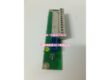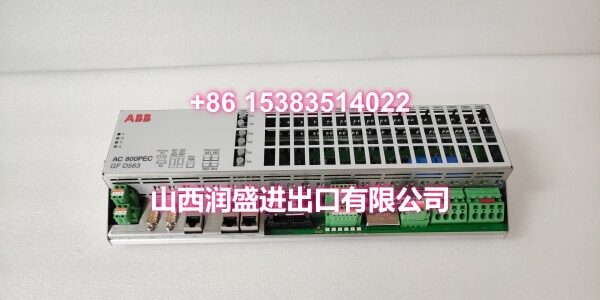
Product Core Brief
- Model: 3BHE046836R0102 / GFD563A102
- Brand: ABB
- Series: ABB AC 800PEC / UNITROL Excitation System Series
- Integration Role: High-performance excitation logic controller module for synchronous generator excitation systems, also supporting motion control, logic control, and data acquisition — widely deployed in thermal power, hydropower, industrial captive power stations, and new energy supporting power plants.
- Product Type: Excitation Logic Controller Module
- Key Specs: Multi-core processor (2.5GHz) | 4GB DDR3 RAM + 8GB eMMC storage | Up to 62 combined analog/digital I/O channels | Multi-protocol communication (Modbus TCP/IP, PROFIBUS DP, Ethernet) | Over-current/over-voltage/over-temperature protection | IEC 61131-3 & MATLAB/Simulink programming support
- Note: Condition: New Original (New Surplus)
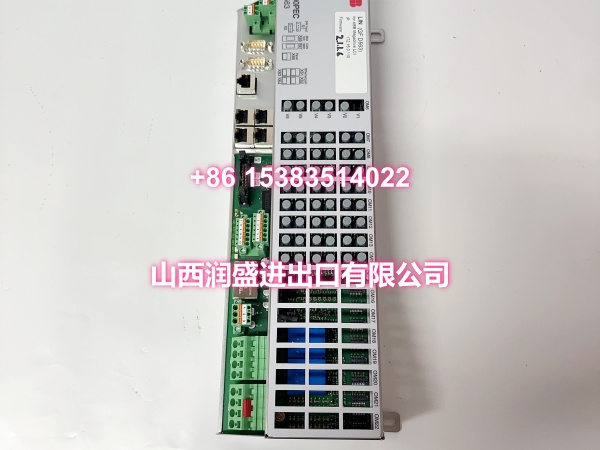
Key Technical Specifications
- Product Type: Excitation Logic Controller Module
- Brand: ABB
- Model Number: 3BHE046836R0102 / GFD563A102
- Series: AC 800PEC / UNITROL Excitation System
- Origin: Sweden
- Processor: Multi-core processor, main frequency 2.5GHz — delivers fast, accurate control response for demanding real-time applications
- Memory: 4GB DDR3 RAM
- Storage: 8GB eMMC for reliable configuration and data retention
- I/O Capacity: Up to 62 combined analog and digital I/O channels — including 30 digital inputs (with 2 axis encoder inputs), 2 analog inputs, 28 digital outputs, and 2 high-speed digital outputs; expandable to 1024 I/O via additional extension modules (local or remote, up to 1000m distance)
- Communication Protocols: Supports Modbus TCP/IP, PROFIBUS DP, RS232, RS485, Ethernet, PROFINET DP, CAN, and CANopen — seamless integration with existing automation infrastructure and third-party devices
- Control Functions: Excitation control (automatic/manual adjustment of excitation current and voltage), motion control (precise speed and torque control), logic control, data acquisition, and state monitoring
- Electrical Parameters: Input voltage typically 85–264V AC (some models support 24V DC); output voltage 0–380V AC or 0–400V AC (also available in 5–60V DC); maximum output current up to 10A; maximum output power approximately 100W
- Protection Features: Over-current, over-voltage, and over-temperature protection — ensures safe operation and minimizes unplanned downtime
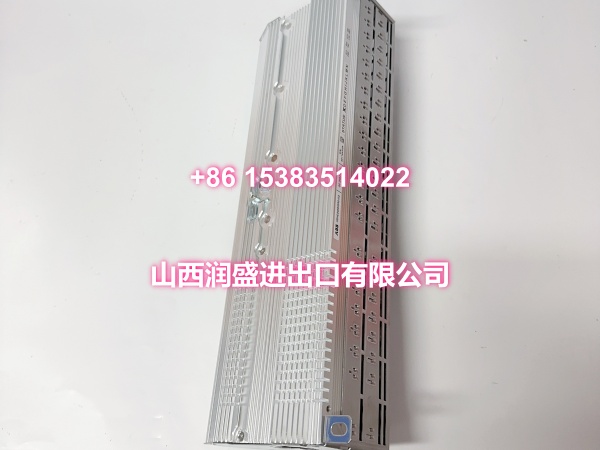
- Dimensions: Approximately 380 mm (depth) × 142 mm (width) × 73.5 mm (height)
- Weight: Approximately 1.54 kg (net)
- Operating Temperature: Generally -10°C to +50°C (some specifications: -20°C to +60°C)
- Protection Class: Commonly IP20/IP65/IP67 depending on configuration
- Programming Tools: ABB Control Builder M (IEC 61131-3 compliant), MATLAB, Simulink, and Simulink Coder
- Typical Applications: Thermal power plants, hydropower plants, industrial captive power stations, new energy supporting power stations (generator excitation regulation, control, and protection); also used in mechanical automation, conveying systems, CNC, robotics, and motion control applications
Product Introduction
The ABB 3BHE046836R0102 (GFD563A102) is a high-performance excitation logic controller module from the AC 800PEC / UNITROL Excitation System series, engineered for the regulation, control, and protection of synchronous generator excitation systems. As a core component of ABB’s excitation platform, it serves as the central processing unit for maintaining grid stability through automatic and manual adjustment of excitation current and voltage, while integrating comprehensive protection functions (overvoltage, overcurrent) and communication capabilities for remote configuration and status monitoring.
This module is distinguished by its multi-core 2.5GHz processor architecture, 4GB DDR3 RAM, and 8GB eMMC storage — providing ample processing power and memory for complex control algorithms and data logging. Its I/O capacity of up to 62 combined channels (expandable to 1024 via extension modules) makes it exceptionally versatile, supporting not only excitation control but also motion control, logic control, and data acquisition applications across diverse industrial sectors.
Communication flexibility is a key strength — the module supports Modbus TCP/IP, PROFIBUS DP, RS232, RS485, Ethernet, PROFINET DP, CAN, and CANopen protocols, enabling seamless integration with existing SCADA systems, DCS platforms, and third-party field devices. This multi-protocol support reduces integration complexity and allows system integrators to build cohesive automation solutions without protocol gateways.
The module’s robust protection suite (over-current, over-voltage, over-temperature) and high-performance processing capabilities ensure reliable operation in demanding power generation and industrial environments. Its compact form factor (380 × 142 × 73.5 mm, approximately 1.54 kg) supports standard control cabinet mounting, and the industrial-grade construction is designed for long-term stable operation in high-temperature, high-humidity, and high-vibration conditions.
Programming is supported via ABB Control Builder M (IEC 61131-3 compliant) as well as MATLAB/Simulink for model-based design — bridging the gap between simulation and real-world implementation. The AC 800PEC toolkit is required to access the controller hardware, and Simulink external mode enables user-friendly monitoring during commissioning.
Integrators and power system engineers specify this module for its proven reliability in generator excitation applications, extensive I/O capacity, multi-protocol communication support, and straightforward configuration — reducing commissioning time and minimizing integration complexity in both new installations and retrofit projects.
Wiring & Backplane Integration Notes
- Power Supply Verification: This module typically operates on 85–264V AC input (some models support 24V DC). Confirm your cabinet’s power distribution matches the rated input specification before energizing. Voltage fluctuations outside the acceptable range can cause controller malfunction or damage.
- I/O Channel Configuration: The module supports up to 62 combined analog/digital I/O channels. Before commissioning, verify that each channel is configured to match the signal type and function expected by the connected device. A mismatched configuration (e.g., assigning a digital input as an analog channel) will result in incorrect operation.
- Communication Protocol Setup: When integrating with external controllers, SCADA systems, or field devices, verify the communication protocol settings (protocol type, baud rate, node address, IP configuration) in your engineering tool before commissioning. A mismatched protocol configuration will prevent data exchange between the module and the connected device.
- Cable Selection: Use shielded cable for all analog signal connections to minimize electromagnetic interference. Ground the shield at one end only to prevent ground loops. For Ethernet connections, use Cat5e or better shielded cable. For PROFIBUS networks, ensure proper termination resistors are installed at both ends of the bus segment.
- ESD-Safe Handling: As a board-level controller module, the GFD563A102 requires ESD-safe handling procedures. Always use an anti-static wrist strap when handling the module outside of its protective packaging. Avoid touching connector pins or circuit traces directly.
- Mechanical Mounting: The module measures approximately 380 × 142 × 73.5 mm and weighs approximately 1.54 kg. Ensure adequate clearance around the unit for heat dissipation and verify all mating connectors are fully seated before applying power. The compact design allows dense panel layouts, but maintain sufficient spacing for service access.
- Extension Module Configuration: When using I/O extension modules (local or remote, up to 1000m distance), verify the extension bus configuration and addressing in your engineering tool. A misconfigured extension bus will prevent communication with remote I/O channels.
- Programming Environment Setup: Before commissioning, ensure ABB Control Builder M is installed and licensed on your engineering workstation. For MATLAB/Simulink integration, verify the ABB target support package is installed and the model is properly configured for code generation. The AC 800PEC toolkit is required to access the controller hardware.
- Compatibility: This module is designed for ABB AC 800PEC / UNITROL Excitation System platforms. Always cross-reference the full part number (3BHE046836R0102 / GFD563A102) against your system’s spare parts list, as revision-specific variants may have different firmware or hardware compatibility.
Integrator’s FAQ
What applications is this excitation controller module best suited for? The GFD563A102 is primarily designed for synchronous generator excitation systems in thermal power plants, hydropower plants, industrial captive power stations, and new energy supporting power stations. Its core function is automatic and manual adjustment of excitation current and voltage to maintain grid stability, with integrated overvoltage and overcurrent protection. Beyond excitation control, it also supports motion control, logic control, and data acquisition — making it suitable for mechanical automation, conveying systems, CNC, and robotics applications.
Can this module replace a separate PLC in my system? Yes. With its multi-core 2.5GHz processor, 4GB RAM, and up to 62 I/O channels (expandable to 1024), this module can handle both excitation control and general automation tasks that would traditionally require separate PLC units. This consolidation reduces system complexity, lowers hardware costs, and simplifies maintenance. However, verify that the I/O capacity and communication interfaces meet your application requirements before consolidating.
What programming environments are supported? The module supports ABB Control Builder M (IEC 61131-3 compliant), MATLAB, Simulink, and Simulink Coder. The AC 800PEC toolkit is required to access the controller hardware, and Simulink external mode enables user-friendly monitoring during commissioning. This flexibility allows control engineers to develop and deploy control strategies using familiar IEC languages or model-based design workflows.
How does the module protect itself and the connected equipment? The module includes comprehensive protection functions: over-current, over-voltage, and over-temperature protection. These features continuously monitor system status and take timely protective measures in case of anomalies, ensuring operational safety and minimizing unplanned downtime.
What is the I/O capacity of this module? The module supports up to 62 combined analog and digital I/O channels — including 30 digital inputs (with 2 axis encoder inputs), 2 analog inputs, 28 digital outputs, and 2 high-speed digital outputs. Through additional extension modules (local or remote, up to 1000m distance), the configuration can be expanded to 1024 I/O channels, providing exceptional flexibility for complex automation applications.
How do I troubleshoot communication issues with this module? First, verify the communication protocol settings (protocol type, baud rate, node address, IP configuration) match between the module and the connected device. Second, check all physical connections — ensure cables are properly seated and shields are grounded at one end only. Third, verify the module is receiving proper power within the specified voltage range. If issues persist, consult the ABB AC 800PEC system troubleshooting guide for module-specific fault codes.
What warranty do you offer on New Surplus parts? We provide a full 12-month warranty on all New Original / New Surplus units. This is fundamentally different from refurbished excitation controller modules, which often carry 30–90 day warranties and come with unknown thermal cycling history, aged components, and potential firmware issues. For critical generator excitation and process control applications, the cost of an unexpected controller failure — measured in unplanned downtime and potential equipment damage — far exceeds any upfront savings from a used part.
Why is your pricing lower than OEM direct but higher than used parts? Our pricing reflects New Original / New Surplus inventory sourced from factory overstock and authorized distributors. You pay less than OEM list because these are surplus units, not current production. You pay more than used/refurbished because the part has zero operating hours, no thermal aging on internal components, and no degradation of the processor or communication circuitry. For mission-critical excitation control applications, the reliability difference between new surplus and refurbished is not marginal — it’s the difference between planned maintenance and an emergency generator trip.