Product Core Brief
- Model: DSCP172H
- Brand: ABB
- Series: S4 / S4C Robot Control Cabinet
- Core Function: Handles signal conditioning and communication between the controller and connected cabinet modules.
- Product Type: Signal / Communication Board
- Key Specs: Controller slot interface | Internal cabinet supply | Firmware-dependent
- Condition: New Surplus (discontinued; inspected used units also available)
Product Introduction
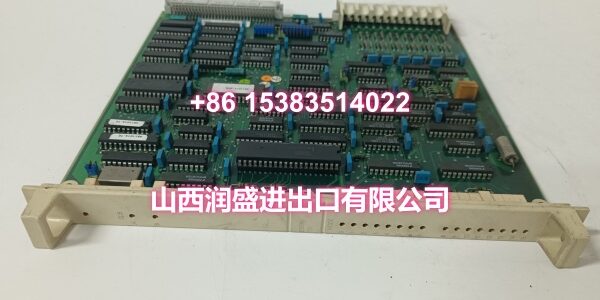
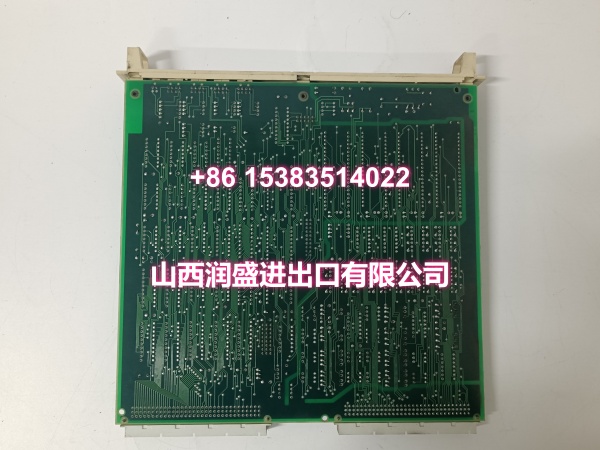
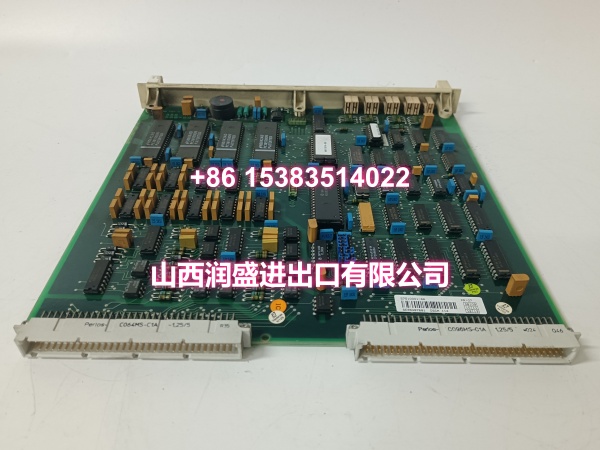
The ABB DSCP172H is a signal and communication board used inside S4 and S4C robot control cabinets. It passes data between the main controller and peripheral modules. When it degrades, faults appear intermittently — not as a hard stop.
That’s the problem. Intermittent communication loss costs more debugging hours than a clean failure. Most units we receive aren’t dead; they’re flaky.
Key Technical Specifications
| Parameter | Value |
|---|---|
| Model | |
| Brand | ABB |
| Compatible Platform | S4 / S4C Robot Control Cabinet |
| Module Type | Signal / Communication Board |
| Interface | Controller backplane slot |
| Supply | Internal cabinet supply (per manual) |
| Function | Signal conditioning and data transfer |
| Configuration | Firmware and jumper dependent |
| Mounting | Cabinet slot |
| Operating Temp | 0–55 °C (cabinet ambient) |
| Status | Discontinued — surplus stock |
| Test Record | Included with every shipment |
Quality Control Process
This part fails intermittently, so visual inspection is worthless. We test it live.
- Bench integration. Installed in a running S4C test cabinet. We watch for handshake errors over a 30-minute soak, not a 10-second power-up.
- Communication stress test. Repeated data exchanges are forced through the board. Any dropped packet or timeout fails the unit.
- Insulation and continuity. Megger across connector pins and to chassis. Oxidized contacts get flagged and rejected.
- Firmware and jumper capture. Version label and DIP positions photographed and archived for the buyer.
- ESD packaging. Anti-static bag, desiccant, rigid box, numbered seal.
Replacement Pitfall Guide
❗ Firmware version mismatch. This is the #1 cause of “new board, same fault.” Record the old board’s version label before removal. A newer board with a different revision may not talk to an older controller.
❗ Jumper and DIP settings. Address and mode are often set physically. Photograph the old board. Do not reconstruct from memory.
❗ Slot position matters. Backplane addressing can depend on the bay. Reinstall in the original slot.
❗ Intermittent faults misdiagnosed. Before replacing, rule out cable shielding, grounding loops, and connector oxidation. Roughly half the boards we receive are fine — the wiring was the problem.
Keep these in mind and you’ll cut 90% of rework time.
Compatibility Matrix & Benchmarks
| Original Model | Replacement / Successor Model | Compatibility Level | Migration Notes |
|---|---|---|---|
| DSCP172H (same) | Direct | Match slot, firmware, and jumper settings | |
| DSCP172 series variants | Needs Adaptation | Verify revision label before install | |
| IRC5 platform boards | Needs Adaptation | Controller generation change; not a swap |
- Test soak: 30-minute continuous communication cycle
- Failure tolerance: zero dropped packets accepted
Note: channel definitions and supply ratings vary across channel descriptions. Confirm against the nameplate and ABB manual before ordering — send a photo and we’ll verify it in minutes.