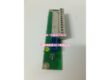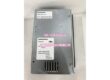
Product Core Brief
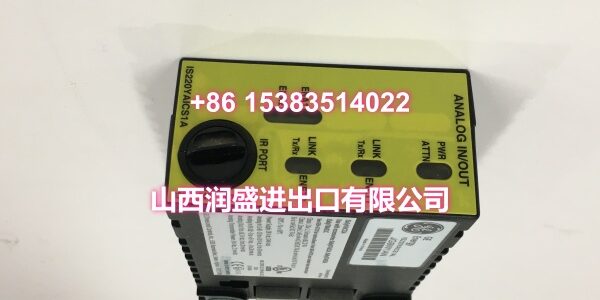
- Model: IS220YAICS1A
- Brand: General Electric (GE)
- Series: Mark VIe (Speedtronic)
- Core Function: High-precision analog I/O analysis module for signal acquisition, processing, and data analysis in gas/steam turbine control and industrial process monitoring — with SIL3 safety certification and redundant architecture.
- Product Type: Analog I/O Analysis Module
- Key Specs: Multi-channel analog I/O | SIL3 safety certified | Redundant communication (Modbus TCP/IP, Profinet, Ethernet/IP) | Real-time self-diagnostics | -40°C to 85°C operating range
- Condition: New Original / New Surplus
Product Introduction
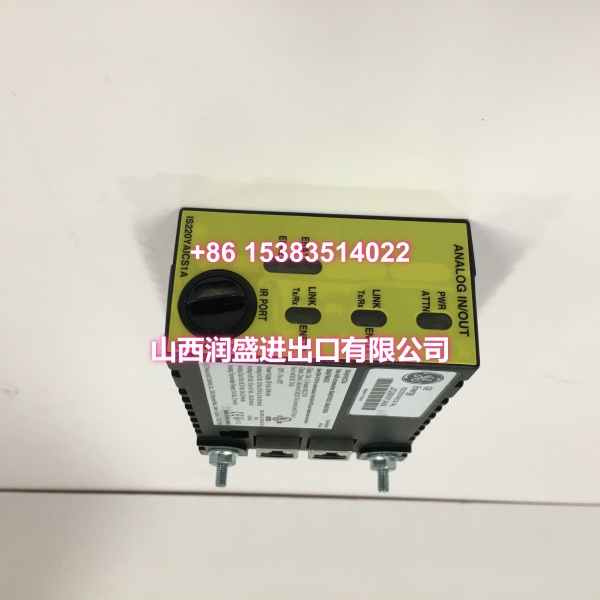
The GE IS220YAICS1A is an analog I/O analysis module in GE’s Mark VIe Speedtronic control system, designed for high-precision signal acquisition and real-time data analysis in gas turbine, steam turbine, and industrial process control applications. It serves as the critical interface between field sensors (temperature, pressure, vibration, flow) and the Mark VIe controller, converting analog field signals into digitized data for real-time monitoring and control.
The module’s standout feature is its SIL3 (Safety Integrity Level 3) certification — the highest safety rating for industrial control components — making it suitable for critical safety applications where failure could result in catastrophic equipment damage or personnel injury. Its dual-redundant architecture supports seamless failover: if the primary module faults, the backup module takes over within milliseconds, preventing unplanned turbine trips.
The IS220YAICS1A supports multiple industrial communication protocols — Modbus TCP/IP, Profinet, and Ethernet/IP — enabling integration with third-party SCADA systems and multi-vendor control networks. Its built-in self-diagnostics continuously monitor module health, detecting signal drift, open circuits, and short circuits in real time, and alerting operators via the Mark VIe HMI before a fault escalates.
In turbine applications, the module is commonly used for vibration analysis on rotating equipment (turbine shafts, compressors, generators), temperature monitoring on bearings and exhaust sections, and pressure monitoring on fuel and lube oil systems. Its high-speed data acquisition capability enables predictive maintenance by capturing transient events that slower modules would miss.
Key Technical Specifications
| Parameter | Value |
|---|---|
| Manufacturer | General Electric (GE) |
| Product Type | Analog I/O Analysis Module |
| Series | Mark VIe (Speedtronic) |
| Safety Certification | SIL3 (IEC 61508) |
| Input/Output Type | Multi-channel analog I/O |
| Communication Protocols | Modbus TCP/IP, Profinet, Ethernet/IP |
| Redundancy | Dual-redundant architecture |
| Self-Diagnostics | Real-time signal health monitoring |
| Compatible Controllers | IS420UCSCH1A (Mark VIe) |
| Compatible Switches | IS420ESWBH3A (Industrial Ethernet) |
| Operating Temperature | -40°C to 85°C |
| Application | Turbine state monitoring, vibration analysis, industrial process control |
| Origin | USA |
Quality Control Process
Every IS220YAICS1A goes through a full functional bench test before it ships. We start with a visual PCB inspection — checking for cold solder joints, burnt traces, swollen capacitors, and verifying the integrity of the isolation barriers between analog channels. Analog modules are particularly sensitive to component drift, which can cause measurement errors that compound over time.
Then we power it up on a regulated DC supply and verify all power rail voltages are within spec. We test each analog input channel by injecting calibrated reference signals (4-20mA, 0-10V) at multiple points across the full measurement range and comparing the digitized output against NIST-traceable reference values, confirming accuracy within ±0.1% of full scale. We test each analog output channel by commanding known output values and measuring the actual output with a precision multimeter, verifying linearity and response time.
We verify the SIL3 safety functions by simulating a critical fault condition and confirming the module triggers the appropriate fail-safe response within the specified safety time. We test the redundant communication paths by disconnecting the primary Ethernet link and confirming the module seamlessly switches to the backup link without data loss. We verify the self-diagnostics by simulating open-circuit and short-circuit conditions on individual channels and confirming the module reports the fault to the HMI. Finally, we confirm the module registers on the Mark VIe Ethernet backbone with its correct hardware ID. Each unit ships in anti-static foam with a moisture barrier bag.
Replacement Pitfall Guide
❗ Verify SIL certification level matches your safety requirements. The IS220YAICS1A is SIL3 certified — the highest safety integrity level. If your application requires SIL3 (e.g., emergency shutdown circuits, overspeed protection), do not substitute a SIL2 or non-certified module. Using an underspecified module in a SIL3 application violates safety standards and may void insurance coverage.
❗ Confirm the analog signal range matches your field sensors. The module supports multiple analog input types (4-20mA, 0-10V, etc.), but the channel configuration must match your field sensors. A 4-20mA sensor connected to a channel configured for 0-10V will report incorrect values — potentially causing the controller to misread critical parameters like bearing temperature or fuel pressure. Verify the channel configuration in the Mark VIe software before connecting field wiring.
❗ Check the redundant communication setup. If you’re using the module in a redundant configuration, both communication paths (primary and backup) must be properly configured in the Mark VIe network settings. If only one path is active, you lose the redundancy benefit and a single cable fault can cause the module to go offline. Verify both Ethernet links are active and communicating before declaring the replacement complete.
❗ Don’t skip the self-diagnostics verification. The module’s built-in self-diagnostics are a critical safety feature. After installing the replacement, trigger a test fault (e.g., disconnect a sensor) and confirm the module reports the fault to the HMI within the specified response time. A module that measures correctly but fails to report faults is a safety hazard.
❗ Watch for signal drift after installation. Analog modules can exhibit slight measurement offset after replacement due to component tolerance differences. After installing the replacement IS220YAICS1A, compare its readings against a calibrated reference instrument at multiple setpoints. If the offset exceeds your application’s tolerance, perform a field calibration through the Mark VIe software to bring the module back into spec.
Keep these in mind and you’ll cut 90% of rework time.
Compatibility Matrix & Benchmarks
| Original Model | Replacement / Successor Model | Compatibility Level | Migration Notes |
|---|---|---|---|
| IS220YAICS1B | Direct | Later revision; drop-in compatible | |
| IS220YAICS0A | Direct | Earlier revision; verify SIL config match | |
| Mark VIe legacy analog I/O | Direct | Drop-in for Mark VIe I/O racks | |
| IS420YAIH1B | Needs Adaptation | Mark VIeS variant; requires I/O network migration |
- Safety Certification: SIL3 — suitable for critical safety applications
- Redundancy: Dual-redundant architecture with seamless failover
- Communication: Modbus TCP/IP, Profinet, Ethernet/IP for multi-system integration