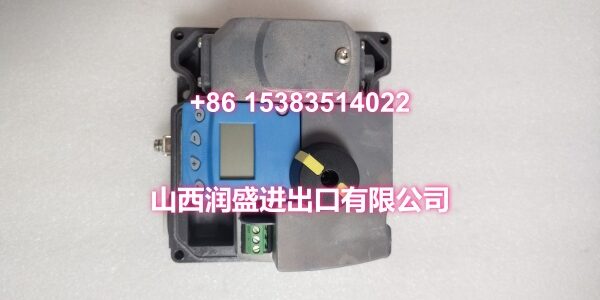
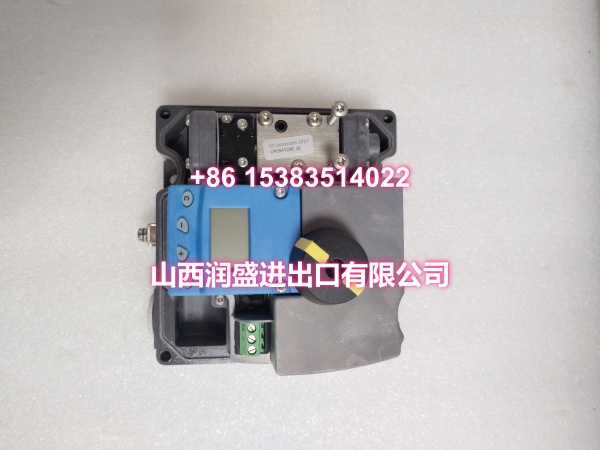
Product Core Brief
- Model: ND9103FX
- Brand: Metso (Neles)
- Series: ND 9000 Series Smart Positioners
- Core Function: Digitally controls and monitors pneumatic valve actuators via Foundation Fieldbus.
- Product Type: Smart Electropneumatic Valve Positioner
- Key Specs: Foundation Fieldbus (FF) | 32-bit ARM RISC | IP66 Enclosure
- Condition: New Original / New Surplus
Key Technical Specifications
- Microprocessor: 32-bit ARM RISC
- Communication Protocol: Foundation Fieldbus (FF)
- Input Signal: Digital FF H1
- Actuator Compatibility: Single/Double Acting Pneumatic
- Valve Travel Range: 10-120mm (Linear), 45-95° (Rotary)
- Position Sensor: Non-contact Eddy Current Type
- Pneumatic Stage: Nozzle-flapper Prestage driving spool valve
- Internal Sensors: 3x Pressure, 1x Spool Position
- User Interface: 2-line LCD with 4-button LUI
- Enclosure Protection: IP66 / NEMA 4X
- Diagnostics: Continuous online trend storage (100k write cycles)
- Mounting Standard: VDI/VDE 3845, IEC 60534-6
Product Introduction
Built for critical process control loops, this smart positioner translates digital FF commands into precise pneumatic actuator movement. It continuously monitors valve health, capturing friction, supply pressure, and dynamic response trends directly at the field device level.
Operators gain predictive maintenance visibility without adding extra instrumentation. The non-contact eddy current sensor eliminates mechanical wear, while the dual independent circuit boards ensure communication faults don’t corrupt core control logic.
QA & Testing SOP (Dynamic & Transparent)
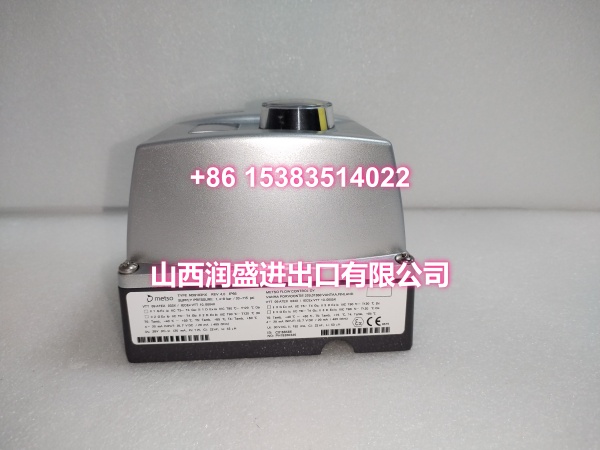
Every Metso gets a full functional workout, not just a power-on check. We start with a visual anti-counterfeit inspection, verifying the cast aluminum housing, LCD clarity, and PCB revision stamps against OEM manifests. Then we perform a cold-boot sequence to confirm the 32-bit ARM processor initializes correctly and the LCD backlight responds.
Next, we validate the FF communication stack by connecting to a fieldbus test rig, verifying the device responds to link master polls and publishes valid process variables. We also test the pneumatic output stage by simulating valve travel, ensuring the spool valve shifts cleanly without sticking. Units ship in anti-static packaging with a test report confirming bus compliance.
Installation Pitfalls & Guide
❗ Feedback Cam Alignment: This is the #1 commissioning headache. If the feedback cam isn’t centered in the sensor slot before running auto-calibration, the positioner will hit its mechanical stops and throw a fault. Always verify the mechanical indicator reads 50% before starting the LUI setup wizard.
❗ Supply Air Quality: The nozzle-flapper prestage has microscopic orifices. Moisture or oil in your instrument air will clog it in hours. Install a coalescing filter directly at the positioner inlet, not just at the manifold. A 0.01-micron filter is mandatory.
❗ Grounding the Shield: FF H1 cables are sensitive to ground loops. Ground the shield at the positioner terminal block only. If you ground at both the junction box and the positioner, you’ll create an antenna that injects noise into the bus signal.
Replacement SOP:
- Pre-Install: Record the tag number and FF address; isolate air supply.
- Removal: Tag feedback linkage; remove mounting bolts; lift unit straight off.
- Install: Align feedback arm; hand-tighten bolts; verify cam centering.
- Power-On: Restore air and bus power; run LUI Auto-Calibration; verify 0-100% stroke.
Technical FAQ
Q: Can I swap this ND9103FX for a HART version (ND9103HX)?
A: Mechanically, yes. Electrically, no. The FF version communicates on the H1 bus segment, while HART rides on 4-20mA analog loops. You can’t plug an FF device into a HART loop and expect it to work. Verify your DCS card type before ordering.
Q: Why does the LCD show “CAL REQUIRED” after power-up?
A: The positioner lost its stroke calibration data, likely due to a complete power loss or board replacement. It needs to relearn the valve’s physical travel limits. Run the Auto-Calibration (AUTO CAL) via the LUI menu to map the cam position to the actuator stroke.
Q: Is the feedback sensor prone to wear?
A: No. The Metso uses a non-contact eddy current sensor. There’s no wiper arm rubbing against a potentiometer. This eliminates the most common failure mode in older positioners and extends MTBF significantly in vibrating environments.
Q: What happens if the FF bus goes down?
A: The positioner enters a configurable fail-safe mode. You can set it to hold last position, go to open, or go to closed via the LUI. The local LCD will still display valve position and diagnostics even if bus communication is lost, allowing field troubleshooting.
Q: Do you have the EDDL or FDT/DTM files for this?
A: Yes. The ND9000 series supports EDDL and FDT/DTM for integration with AMS, SIMATIC PDM, and other asset management systems. We can provide the correct revision files based on your specific hardware suffix (e.g., FX3G vs FX4GI09). Match the file to the exact suffix to avoid parameter mismatches.