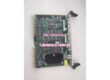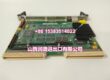
Product Core Brief
- Model: AI03
- Brand: ABB
- Series: Symphony Plus SD Series Singular I/O
- Core Function: Captures 8 group-isolated RTD temperature signals, converts resistance readings to digital bus data for HN800 DCS controllers.
- Product Type: Rack-mount RTD analog input I/O module
- Key Specs: 8 multi-wire RTD channels | 16-bit A/D resolution | 1500 VAC group isolationNote: Obsolete EOL OEM spare, limited new surplus inventory available; no native HART support.
Key Technical Specifications
- Operating supply: 24 V DC ±10 %, 90 mA typical power draw
- Supported RTD sensors: Pt100 US/Euro, Ni120, Cu53; 2-wire, 3-wire, 4-wire wiring modes per channel
- A/D hardware: 4 dual-channel converters, 16-bit resolution with sign bit
- Full 8-channel scan cycle: 450 ms total refresh rate
- Measurement accuracy: ±0.1 % full scale over 0–500 Ω resistance span
- Galvanic isolation: 1500 VAC 1-minute group-to-backplane isolation, IEC 61010-1 certified
- Fault detection: RTD wire-break detection triggers within 5 seconds; channel current limiting prevents sensor burnout
- Calibration: Onboard auto-calibration logic, no manual offset adjustment required
- PCB coating: Full acrylic conformal coating for dust, humidity and light industrial fume resistance
- Status indicators: Individual LED per input channel, global POWER and COMM fault lamps
- Mechanical form: Slide-in Singular card for VBS01-CJC DIN rail mounting base, no hot-swap capability
- Operating ambient: -25 °C to +70 °C, linear performance derating above 65 °C
- Storage range: -40 °C to +85 °C, non-condensing 5–95 % relative humidity
- Dimensions: 254 mm L × 58 mm W × 28 mm D
- Net weight: 0.40 kg
Product Introduction
This I/O card is a dedicated temperature acquisition component built exclusively for Symphony Plus SD DCS racks. It interfaces directly with resistance temperature devices used for boiler, bearing and process vessel temperature monitoring.Group isolation blocks common-mode noise from variable frequency drives, limiting temperature reading drift to less than 0.1 °C during large motor load transients. Auto-calibration circuitry eliminates routine trim adjustments required on older discrete RTD interface hardware.
QA & Testing SOP
- Incoming Inspection: Cross-reference serial numbers against ABB Symphony spare part databases. Inspect conformal coating for delamination, terminal block spring tension and full LED channel functionality. Reject units with damaged factory anti-static packaging to eliminate counterfeit stock.
- Live Testing: Seat the module in a VBS01-CJC test base paired with a HN800 controller simulator. Run a continuous 24-hour cyclic scan test across all 8 channels while logging stable 24VDC supply via Fluke 115 multimeter. Simulate open-circuit and short-circuit RTD wiring faults to validate alarm reporting timing.
- Electrical Testing: Use a 500V Megger to measure insulation resistance between field channel groups and backplane logic; pass threshold set at ≥10 MΩ. Inject 50Hz differential ground-loop noise to confirm no false wire-break fault flags.
- Firmware/Config Backup: Record factory RTD type preset values via Control Builder M software. Capture high-resolution photos of all mechanical keying tabs and terminal pin labels for field commissioning reference.
- Final QC & Packaging: Fit plastic dust caps over the front terminal header. Place the PCB inside foam-lined anti-static shielding bag, affix a dated QC pass label before sealing in original factory carton.
Installation Pitfalls & Guide
❗Firmware Rev Mismatch Risk: HN800 controller firmware older than v6.0.5 lacks register mapping for multi-wire RTD compensation logic. Post-replacement, the DCS will show skewed temperature values and throw intermittent AI COMM LOSS alarms. Remediation: Flash matching firmware revision to the main controller before rack insertion.❗Mechanical Keying Errors: The mounting base uses plastic key pins to block incompatible I/O cards. Always photograph key tab positions on the old unit before removal and replicate exact cutout alignment; miskeying causes partial backplane contact and missing channel temperature data.❗Wiring Incompatibilities: Unshielded field wiring introduces mains interference into resistance inputs, creating ±0.3 °C reading drift. Use OEM shielded twisted pair cable with single-point chassis ground at the I/O rack terminal bar, follow 0.8 N·m torque specs for terminal screws.❗Backplane Power Draw Changes: A degraded rack 24VDC supply with less than 20% current headroom cannot support the unit plus multiple analog output cards during controller startup, triggering repeated backplane resets and total I/O data loss. Recalculate total rack load before swapping the card.❗ESD Dangers: Ungrounded handling exposes resistance measurement analog traces to static discharge from dry control room air. Field records show unprotected handling burns input signal circuits; full process unit downtime labor cost exceeds $1,550. Remediation: Place anti-static mat under the I/O rack, wear grounded wrist strap, touch bare chassis ground for 3 seconds before handling the PCB.
4-step replacement guide
- Pre-install: Lock out and tag all rack 24VDC auxiliary power. Photograph old unit mechanical key positions and field RTD wiring layout per channel.
- Removal: Release the rack slide latch, pull the old card free and disconnect terminal wiring one channel at a time to avoid cross-channel miswiring.
- Install: Transfer wiring harness to the new unit’s terminal header, match photographed mechanical key settings, slide the card fully into the VBS01-CJC base and lock the latch.
- Power-on Test: Restore 24VDC auxiliary power first; verify all channel LEDs activate correctly, connect a precision RTD simulator to confirm accurate temperature readings before restoring full DCS bus communication.
FAQ
Q: Can this unit be hot-swapped while the Symphony rack remains powered?A: No. It shares a common HN800 backplane data bus with critical control I/O. Removing it live creates voltage transients that corrupt controller scan tables and can permanently damage adjacent analog modules. Full lockout of rack auxiliary power is mandatory for replacement.Q: Does this card carry original OEM factory warranty when purchased as new surplus?A: ABB factory warranty expired at product end-of-life. All surplus inventory passes full in-house QA testing and carries a 12-month internal stock replacement warranty, limited to manufacturing defects detected during bench validation.Q: Can AI02J serve as a direct drop-in replacement for the module?A: Mechanical fit only. The AI02J is a 16-channel HART current/voltage input board with no RTD excitation circuitry. Swapping without reworking field sensor wiring and DCS control logic will disable all plant temperature monitoring loops.Q: What minimum controller firmware version enables full multi-wire RTD compensation support?A: HN800 DCS controller firmware v6.0.5 or newer. Older builds lack register addresses for 3/4-wire lead resistance compensation, only returning uncorrected raw resistance values with significant temperature offset.Q: Will the unit retain RTD type and wiring mode settings after power loss?A: No calibration or configuration data stores on-board. All channel RTD parameters reside in the HN800 controller’s non-volatile memory. No re-calibration of the device itself is needed post-swap.Q: Is the unit compatible with System 800xA AC 800M controllers?A: No. The card uses the proprietary Symphony I/O backplane bus, which is electrically incompatible with AC 800M CI8xx I/O fieldbus interfaces.Q: How often should the conformal coating be inspected in a power plant boiler control room environment?A: Under continuous moderate flue gas and dust exposure, the coating maintains full insulation performance for roughly 6 years. Annual visual inspection of the PCB surface is recommended to track coating cracking or discoloration from airborne contaminants.