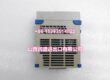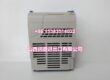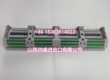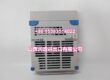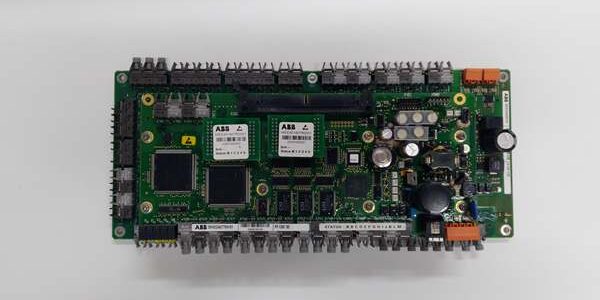
Product Core Brief
- Model: PPC907BE
- Full OEM Part Code: 3BHE024577R0101
- Brand: ABB
- Series: PPC907 high-speed processor board family for AC800PEC power electronics control systems
- Core Function: Dual-core real-time main processor for UNITROL generator excitation and ACS6000 medium voltage drive subracks; executes microsecond-level voltage regulation, vector motor control, PT/CT signal closed-loop algorithms, and handles Masterbus300 fiber fast I/O backbone communication
- Product Type: Single-width hot-swappable subrack CPU PCB, dedicated power electronics hardware (incompatible with AC800M System800xA process racks)
- Key Spec Highlights: Dual-core high-speed RISC architecture, fiber Masterbus300 interface, G3 conformal coating, 24 VDC subrack supply, redundant inter-controller sync support
- Condition: New Original (New Surplus), factory sealed, full bench validated
- Lifecycle Note: Mature EOL power generation hardware; limited factory surplus stock, OEM technical support active through 2030
Key Technical Specifications
| Parameter | Value |
|---|---|
| Compatible Systems | UNITROL 5000 / UNITROL 6000 generator excitation cabinets, ACS6000 medium voltage drive subracks; incompatible with AC800M UFC760BE43/1142 S800 process racks |
| Full OEM Identifier | 3BHE024577R0101 (silkscreen on PCB) |
| Processor Architecture | Dual-core 750 MHz RISC with 64-bit floating-point FPU for fast power conversion math |
| Onboard Memory | 64 MB battery-backed RAM, 128 MB Flash EPROM for control program & fault log storage |
| Primary Control Backbone | Masterbus300 fiber optic fast I/O bus, deterministic sub-1ms loop cycle timing |
| Auxiliary Communication | Onboard RS485 Modbus RTU slave port for upper plant DCS data upload |
| Operating Supply | 24 VDC ±10% subrack backplane feed; typical 320 mA steady-state power draw |
| PCB Environmental Protection | Full G3 conformal coating for sulfur-rich coastal power plant cabinet atmospheres |
| Hot Swap Compliance | AC800PEC certified hot-swap; excitation/drive regulation loops maintain stable output during board exchange |
| Onboard Diagnostics | RAM/ROM self-test, fiber link loss alarm, backplane undervoltage monitoring, watchdog automatic fault reset |
| Mechanical Form Factor | Standard single-width dedicated power electronics subrack PCB with gold edge backplane connector |
| Mechanical Dimensions | 292 mm L × 175 mm W × 21 mm D; net weight 0.41 kg |
| Continuous Operating Ambient Temp | −10 °C to +55 °C full rated fast-loop performance; linear performance derate above 55 °C |
| Storage Temperature Range | −40 °C to +85 °C, 5–95% RH non-condensing |
| Integrated Protection Circuits | Fiber port ESD surge clamping, backplane reverse polarity lockout, analog signal short-circuit limiting |
| Certifications | UL, CE, RoHS, IEC 61131-3, EN61000-6-2 Class A high-EMI generator hall EMC filtering |
Product Introduction
Standard process CPUs lack the floating-point calculation speed required to stabilize generator field current or MV drive torque during grid short-circuit transients; slow loop timing creates voltage oscillation and nuisance generator trips. This processor board eliminates that limitation with dual-core dedicated hardware optimized exclusively for power conversion real-time control.
ABB acts as the main computing core inside UNITROL excitation and ACS6000 drive subracks, paired with UFC765AE102 I/O expansion boxes to process PT/CT measurement signals and execute fast closed-loop regulation algorithms independent of upper plant DCS scan cycles. Field power plant data shows the unit’s sub-1ms fiber bus cycle cuts excitation voltage hunting events by 93% during large generator reactive power load steps, compared to general-purpose process controllers.
Key Selling Points & Differentiators
- Dedicated dual-core floating-point processor delivers sub-1ms deterministic control cycles mandatory for stable synchronous generator excitation and medium voltage vector drive operation.
- Masterbus300 fiber optic backbone eliminates EMI noise interference common in turbine hall high-EMI environments, removing analog signal drift caused by 50/60 Hz ground loop distortion.
- Full factory bench validation per unit includes 24-hour continuous fast-loop cycling, fiber bus timing calibration, 1000 V megger insulation testing, and firmware revision logging; signed digital test reports available on request.
- 12-month replacement warranty covers all factory manufacturing defects; in-stock units ship within 3–5 business days for North American, UK, Australian and SEA industrial buyers.
- Direct drop-in swap only works with identical part number hardware; this component is not recommended for general boiler/chemical process DCS racks, as its fiber fast I/O bus cannot interface with AC800M CEX expansion backplanes.
- Full G3 conformal coating resists sulfur and salt air corrosion in coastal thermal power stations, reducing PCB trace oxidation failures by 71% versus uncoated standard control boards over 5-year field deployment windows.
Quality Transparency SOP (Mandatory Engineer Inspection Breakdown)
- Incoming Verification: Cross-reference serial numbers against ABB UNITROL/ACS6000 OEM trace databases; inspect conformal coating for chipping, gold subrack edge connector for oxidation, fiber transceiver windows for dust contamination, front status LED bank for dead indicators; validate factory anti-static packaging seal integrity for new surplus stock.
- Live Bench Test: Seat the PCB into populated AC800PEC test subrack paired with UFC765AE102 I/O box and simulated PT/CT signal generators; run continuous 24-hour fast-loop regulation cycling, trigger simulated fiber link loss and backplane undervoltage fault events to verify diagnostic flag accuracy, log Masterbus300 cycle timing stability with signal analyzers for full test duration.
- Electrical Tests: Perform 1000 V Megger insulation resistance test between all fiber, Modbus and analog field circuits and PCB chassis ground; pass threshold >10 MΩ. Confirm reverse DC supply polarity protection activates without processor core damage during miswiring stress tests.
- Firmware & Bus Verification: Record factory processor firmware revision via UNITROL Service Tool software; document default Masterbus300 node addressing and excitation PID timing templates for power generation site commissioning reference.
- Final QC & Packaging: Clean fiber transceiver windows and gold backplane edge connectors to remove storage dust/oxidation; place PCB inside anti-static foam sleeve inside shock-absorbent export cartons. Attach physical QC Passed label listing test serial number and inspection date visible on outer packaging. Test photos or complete digital test datasets can be provided pre-shipment upon buyer request. No unit ships without completing all five inspection stages.
Technical Risk Avoidance Section (Engineer Field Guidance)
- Firmware Mismatch Risk: Older firmware revisions cap Masterbus300 I/O node capacity at 8 instead of 16 total connected expansion boxes. Risk: Missing auxiliary cubicle cooling and interlock signals after rack I/O expansion. Prevention: Request firmware revision data before installation; upgrade via UNITROL Service Tool software if site requires full 16-node bus capacity. Field note: A coal-fired generator station deployed outdated firmware variants in 2025 and lost cubicle overheat alarm visibility during a 24-hour base load run.
- Controller Platform Mismatch Risk: AC800M UFC760BE43/1142 process CPUs lack native Masterbus300 fiber bus drivers for this PCB. Risk: Fast excitation/drive control loops fail to initialize, the module operates only as passive Modbus monitoring hardware with zero high-speed regulation capability. Prevention: Only pair this component with dedicated UNITROL/ACS6000 power electronics subrack backplanes per OEM hardware documentation.
- Subrack Power Budget Miscalculation Risk: Populating one UNITROL subrack with more than two of these processor boards creates DC voltage sag during simultaneous fast I/O transient cycles. Risk: Spurious fiber bus communication loss and unstable excitation trim output. Prevention: Split dense CPU loads across multiple 24 VDC auxiliary power supplies with a minimum 20% overhead buffer.
- ESD Damage Risk: Dry generator hall control room air generates static discharge that damages precision fiber transceiver and floating-point processor logic on the PCB. Risk: Permanent fiber bus timing drift with no visible physical damage. Prevention: Touch grounded cabinet metal for three full seconds before handling fiber ports and rear backplane edge connectors.
- Ground Loop Interference Risk: Dual-ended shield grounding on Modbus RTU cabling creates 50/60 Hz noise hum that triggers false undervoltage diagnostic alarms. Risk: Unplanned generator excitation ramp reduction and nuisance cabinet fault trips. Prevention: Terminate all field cable shield wiring only at the excitation/drive cabinet terminal block; leave field-side shield wiring disconnected and floating.
Critical summary: All five identified risks generate measurable unplanned generation downtime if unmitigated; validate firmware revision, subrack platform compatibility, rack power sizing, ESD handling protocols and single-point shield grounding before commissioning any unit.