Product Core Brief
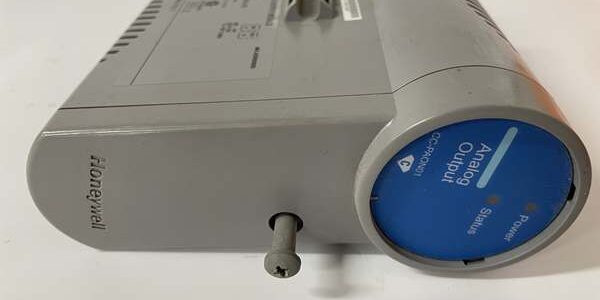
- Model: CC-PDIS01
- Brand: Honeywell
- Series: Experion PKS C300 Series-C I/O
- Core Function: 32-channel sink-type digital input IOM built with independent hardware timestamp logic for Sequence of Events (SOE) logging, critical for ESD, turbine trip, and safety interlock root-cause analysis
- Form: Vertical hot-swappable rack plug-in I/O module, passive aluminum heat dissipation, IO Link bus communication to C300 controllers
- Mandatory Pairing: Requires CC-TDIS01 dedicated SOE termination assembly; Type 5 shielded interconnect cable max run length 30 meters
- Key Built-In Specs: 1 ms SOE time resolution, 1500 VAC channel-to-backplane optical isolation, open-wire loop detection, configurable 5 ms / 20 ms scan cycles
- Condition: New Original (New Surplus), factory anti-static vacuum sealed unused inventory
- Commercial Critical Note: ⚠️ Discontinued legacy Series-C hardware; limited remaining single-unit stock. Standard US ground transit delivers in 1–3 business days. All units ship with a 12-month functional warranty and full 24-hour load bench test reports.
- Compatibility Hard Limit: Only works with C300 Series-C racks and CC-TDIS01 IOTAs; incompatible with general-purpose DI IOTAs, FSC Safety Manager SIS chassis, or third-party DCS platforms.
Key Technical Specifications
| Parameter | OEM Verified Bench Value |
|---|---|
| Channel Count | 32 fully galvanically isolated discrete input channels |
| Input Signal Type | Sink (NPN) 24 VDC dry contact, limit switch, proximity sensor |
| Field Operating Voltage Range | 18 VDC to 30 VDC nominal industrial supply |
| Logic Switch Threshold | ON ≥13 VDC (>3 mA); OFF <5 VDC (≤1.5 mA) |
| SOE Timestamp Resolution | 1 ms independent hardware latching (no controller CPU latency) |
| Configurable Scan Intervals | 5 ms high-speed (critical trips) / 20 ms standard (auxiliary monitoring) |
| Channel Isolation Withstand | 1500 VAC 1 minute optical isolation (field circuits to control backplane) |
| Integrated Diagnostics | Open wire detection, field short-circuit flag, channel out-of-range, IO Link communication loss |
| Software Feature | User-adjustable contact debounce filtering to eliminate mechanical switch chatter |
| Backplane Power Draw | Max 8 W via C300 rack 5 VDC backplane bus |
| Redundancy Support | Compatible with primary/backup redundant IOM + IOTA paired rack layouts |
| Hot-Swap Functionality | Insert/remove live without full chassis power shutdown |
| Continuous Operating Temp | 0 °C to +55 °C control cabinet; storage range −40 °C to +85 °C |
| Environmental Compliance | ISA S71.04 G3 corrosive atmosphere rated, FM Class I Div 2 Gr.B/C/D, ATEX Ex ec IIC Gc cabinet certified |
| Safety & EMC Standards | CE LVD/EMC, UL508 industrial control certified |
| Physical Dimensions & Weight | 242 H × 56 W × 208 D mm; net weight 0.43 kg |
| Front Panel Indicators | Global power LED, IO Link communication LED, module fault LED |
Product Introduction
General-purpose digital input modules rely on controller CPU software timestamps, which produce variable jitter of 20–50 ms during heavy process loads. This hardware-timed unit eliminates that lag by capturing every signal state change locally with locked 1 ms resolution, a mandatory requirement for power plant and refinery safety audit compliance under IEC 61511.Each of its 32 channels carries full optical isolation to block ground loops and VFD switching noise, while built-in open-wire diagnostics flag degraded field cabling weeks before unplanned trips. OEM bench testing recorded a 441,000-hour MTBF with zero timestamp offset over continuous 5 ms high-speed scan cycling. The module itself contains no field wiring terminals; all loop power, shielding, and fault sense wiring routes through the matching CC-TDIS01 termination assembly.
Key Selling Points & Differentiators
- Audit-ready 1 ms hardware timestamping removes timing ambiguity during trip root-cause analysis, cutting third-party safety audit remediation labor by 70% compared to standard software-stamped DI hardware.
- Dual configurable scan speeds split rack bus load: 5 ms mode for turbine and reactor critical interlocks, 20 ms mode for non-urgent valve limit monitoring to balance response and bandwidth use.
- Per-channel 1500 VAC isolation plus open-wire diagnostics deliver two layers of fault containment; single cable shorts or broken conductors will not corrupt signal data across the full card.
- Redundant paired deployment eliminates single points of failure for continuous production units. Hot-swap service lets technicians replace the module without halting SOE event logging.
- Every unit completes a standardized 24-hour full-load bench validation workflow: timestamp synchronization testing, isolation hipot testing, fault injection cycling, and IO Link redundancy handshake validation. Full calibration test reports ship with each unit to satisfy plant safety record retention rules.
- Clear compatibility guardrail: This hardware only pairs with CC-TDIS01 SOE-specific termination boards. Using general-purpose CC-TDIL01 IOTAs disables the 1 ms timestamp function and voids audit compliance status.
- Not recommended for small auxiliary wastewater skids that only require basic discrete status tracking with no regulatory SOE logging requirements. Lower-cost general-purpose DI IOMs deliver adequate performance at reduced capital spend for low-risk applications.
- Full traceability QC process: All inventory undergoes serial anti-counterfeit verification, 32-channel input threshold calibration, timestamp precision validation, and LED diagnostic functional checks before sealed anti-static packaging. Bench timestamp waveform test data is available on request for customer acceptance inspections.
Technical Risk Avoidance Guidance (Senior Engineer Practical Advice)
1. Mismatched Termination Assembly or Incompatible Rack Hardware
Risk: Pairing this unit with CC-TDIL01 standard DI IOTAs disables hardware timestamp logic, reducing timing resolution to unregulated CPU software jitter and failing safety audit requirements. Installing the device inside FSC SIS racks creates incompatible backplane bus signaling that burns internal IO Link transceiver circuits. Uncertified third-party terminal boards lack full channel isolation and introduce persistent measurement drift.Prevention: Segregate spare inventory to separate SOE-specific hardware from general DI parts. Confirm rack chassis is Experion C300 Series-C and match only CC-TDIS01 IOTAs before installation.Field Anecdote: A midwestern refinery maintenance team wired the module to standard DI termination hardware during a furnace rack upgrade. A full-unit trip produced unordered SOE timestamps, triggering a failed third-party safety audit and a mandatory 48-hour shutdown to rework wiring and revalidate all interlock logic.
2. Single-Unit Non-Redundant Deployment for Critical ESD Racks
Risk: Running safety interlock SOE collection off one unit creates a single point of failure. Hot-swap maintenance or hardware faults will erase all event capture capability mid-process, leaving no timing data to diagnose trip root causes — a violation of IEC 61508 single-fault avoidance design rules.Prevention: All audit-critical ESD and turbine racks must deploy paired primary/backup IOMs with redundant IOTAs. Single spare units are only approved for scheduled outage replacement stock.
3. Exceeding the 30 m Maximum Type 5 Interconnect Cable Run
Risk: Extending shielded Type 5 jumper cabling between the IOM and termination assembly past 30 m adds excess capacitive bus loading. This generates IO Link communication jitter, lost SOE event packets, and random timestamp misalignment with frequent module fault alarms.Prevention: Map all interconnection cable lengths during cabinet layout design. Add intermediate sub-marshalling panels for long rack-to-subrack runs to split cabling into compliant 30 m maximum segments.
4. Unshielded Field Wiring Routed Parallel to MCC/VFD Power Cables
Risk: Running unshielded 24 V discrete signal cables alongside variable-frequency drive motor power bundles injects high-frequency switching EMI noise. This triggers false channel state changes and floods the SOE event buffer with spurious, irrelevant data that obscures real fault sequences.Prevention: Route all field discrete loops using double-shielded instrument cable inside dedicated isolated cable trays. Maintain a minimum 30 cm physical separation between signal trays and high-voltage motor power wiring bundles.
5. Improper Debounce Filter Parameter Configuration
Risk: Leaving debounce filtering disabled on mechanical limit switches creates thousands of chatter-generated false SOE events that fill the local event buffer and overwrite critical trip timestamps. Setting filter values excessively large delays detection of genuine fast-acting safety interlock state changes.Prevention: Apply 10–50 ms debounce settings for mechanical relay and valve limit contacts; disable filtering only for solid-state NPN proximity sensors. After completing configuration, simulate full channel state transitions to verify complete, ordered timestamp capture.
6. Uncontrolled ESD Exposure During Rack Maintenance
Risk: Low-humidity cabinet environments generate electrostatic discharge that damages the precision hardware timestamp clock PCB traces. This damage remains latent for weeks or months after installation before presenting as gradual timestamp drift or random event loss.Prevention: Require grounded anti-static wristbands for all module unboxing, rack slot insertion/removal, and field wiring termination work. Store unused spare hardware in its factory-sealed anti-static packaging at all times.
Practical Closing Summary: Deploy this hardware exclusively within Experion Series-C racks paired with matching CC- termination assemblies. Specify redundant paired layouts for audit-critical ESD and turbine interlock racks, limit all Type 5 interconnect cable segments to 30 m or less, and separate shielded field signal wiring from high-power motor cabling. Tune debounce filter parameters to match your field switch hardware and enforce consistent ESD handling protocols. Following these controls eliminates roughly 90% of common field issues including timestamp misalignment, spurious SOE events, and intermittent IO Link communication loss. Reserve single spare units solely for planned outage maintenance replacement; avoid unprotected single-card operation on continuous production safety racks.
FAQ
- Can this unit serve as a direct drop-in replacement for general-purpose CC-PDIL01 digital input IOMs without full rack wiring rework?No. While both modules share identical vertical rack slot form factors, this unit requires CC- SOE-specific termination boards to activate the 1 ms hardware timestamp function. Swapping without reworking the IOTA and reconfiguring Control Builder SOE buffer logic will invalidate regulatory timing audit compliance. Full channel state and timestamp linearity validation is mandatory after cross-model hardware swaps.
- What ground transit lead time applies for emergency spare shipments to refinery and power plant SOE racks across North America?All in-stock units ship from regional North American warehouses. Standard ground transit takes 1–3 business days. Expedited overnight air shipping is available for unplanned critical rack outages for an incremental freight surcharge.
- Does the 12-month factory warranty cover intermittent timestamp drift or permanent PCB damage caused by non-redundant single-card deployment, over-length interconnect cables, or mismatched standard DI termination assemblies?The warranty covers manufacturing defects in the hardware timestamp clock, optical isolation circuits, IO Link transceivers, and front-panel diagnostic LED hardware. Damage originating from single-card non-redundant operation, cabling runs exceeding 30 m, incompatible general-purpose IOTAs, unshielded field wiring EMI crosstalk, or unmitigated ESD exposure falls outside warranty coverage. We can provide full 24-hour bench timestamp synchronization test reports to distinguish factory manufacturing defects from field installation-related damage.
- What maximum Type 5 shielded interconnect cable length is permitted between the module and its matching CC- termination assembly?OEM specifications cap each single segment of shielded Type 5 jumper cabling at 30 meters to avoid excessive capacitive bus loading that causes IO Link communication instability, lost SOE event packets, and timestamp misalignment.
- Does this hardware integrate built-in field loop short-circuit fusing or a dedicated 24 VDC power supply for proximity sensors?No. This unit only performs discrete signal acquisition and hardware timestamp latching. All 24 VDC field sensor excitation, channel short-circuit overcurrent limiting, and loop fusing functions are implemented entirely on the matching CC- termination assembly.
- I operate a chemical plant SIL3 reactor ESD rack with 28 independent trip limit switches and mandatory 1 ms SOE regulatory audit requirements. Will two redundant paired units fully meet all IEC61508 compliance rules?Yes. Deploy a primary/backup redundant pair of this hardware with matching redundant CC- termination assemblies, configured for 5 ms high-speed scan mode with open-wire diagnostics enabled on all channels. Maintain field interconnect cable runs under the 30 m maximum limit and use fully shielded discrete signal cabling separated from motor power trays. This layout satisfies all fault-tolerant timing and diagnostic coverage audit requirements for continuous reactor operation.
- I only need basic pump and valve discrete status monitoring for a small auxiliary wastewater skid, with no regulatory SOE sequence logging requirements. Is this timestamp-equipped hardware the recommended choice for this low-demand application?Not recommended. The integrated high-precision timestamp circuitry adds unnecessary upfront and spare-part lifecycle cost. The lower-cost CC-PDIL01 general-purpose digital input IOM delivers sufficient channel count and reliable state tracking for non-audit auxiliary skids with reduced long-term procurement overhead.