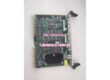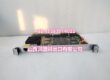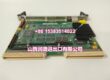
Product Core Brief
- Model: 51301874-100
- Brand: Honeywell, Experion PKS C300 Series DCS platform core controller processor module
- Series: High-performance vertical rack hot-swappable CPU card, the central logic execution core of C300 controller chassis
- Core Function: Runs Honeywell proprietary CEE (Control Execution Environment) deterministic real-time control engine, executing continuous PID, sequential SCM, ISA S88 batch, Profit Loop single-variable MPC, interlock and advanced multi-variable predictive control algorithmsHoneywell. Equipped with dual independent IO Link buses to communicate with Series C analog/discrete IOM/IOTA sets; handles peer-to-peer controller intercommunication, station HMI data exchange, and full on-board self-diagnostics for fault isolation. Supports primary/backup redundant paired deployment for bumpless failover without process loop disturbance, hot-swap rack replacement without full chassis power shutdown. Vertical form factor optimizes cabinet heat dissipation and wiring routing, exclusively mates with C300 standard rack backplane bus architecture.
- Form Factor: Vertical 6U rack plug-in CPU card, front panel multi-color status LED array, dual IO Link communication ports, gold-plated rear edge connector for chassis power/backplane signaling, aluminum heat sink for passive thermal dissipation.
- Key Spec Snapshot: 32-bit industrial real-time processor, dual IO Link communication channels, selectable 20ms / 50ms deterministic control scan, redundant master-backup operation support, max 5000–5500 XU control capacity, 2MB flash program storage + 1MB real-time RAM, max 12W backplane power draw, FM Class I Div 2 hazardous cabinet certified.
- Condition: New Original (New Surplus), factory ESD vacuum sealed unused OEM inventory
- Commercial Signals: ⚠️ Discontinued legacy C300 CPU hardware with limited single-unit stock; standard US ground transit takes 1–3 business days; 12-month full functional warranty includes 24-hour full-load control strategy burn-in, redundant failover cycling, dual IO Link communication stability, and full diagnostic fault injection bench test reports included with every shipment.
- Critical Note: Exclusively designed for Experion PKS C300 Series C rack chassis; backplane bus protocol, CEE control scheduling and redundant synchronization logic are incompatible with FSC Safety Manager SIS, TDC3000, or third-party DCS racks. Generic substitute processor boards lack certified deterministic scan timing and redundant fault handoff, causing loop scan jitter and invalidating process control audit compliance. All critical control rack deployments require two matching units in primary/backup paired configuration to eliminate single-point CPU failure risks.
Key Technical Specifications
| Parameter | OEM Verified Bench Value |
|---|---|
| Full Part Identifier | 51301874-100 main control processor CPU module for Experion PKS Series C racks |
| Control Execution Engine | Honeywell CEE deterministic real-time control environment |
| Supported Scan Cycles | Selectable 20ms high-speed / 50ms standard scan |
| Control Unit (XU) Capacity | 5000 XUs @20ms; 5500 XUs @50ms for PID, batch, MPC, interlock logicHoneywell |
| On-Board Memory | 2MB flash non-volatile program storage; 1MB real-time operating RAM |
| IO Communication Interface | Dual independent IO Link buses for Series C IOM termination assemblies |
| Redundancy Architecture | Primary / Backup paired rack deployment, <8ms bumpless control logic failover |
| Hot-Swap Capability | Live insertion/removal; standby redundant CPU maintains full loop control execution |
| Rack Power Consumption | Max 12W via chassis backplane 5VDC auxiliary supply |
| Supported Control Algorithms | Standard PID, Profit Loop adaptive MPC, SCM sequential logic, ISA S88 batch control, safety interlock, ratio/cascade feedforward |
| Operating Ambient Temperature | 0°C to +60°C continuous control cabinet operation; -40°C to +85°C storage range |
| Environmental Compliance | ISA S71.04 G3 corrosive atmosphere compatible, FM Class I Div.2 Groups B/C/D, ATEX Ex ec IIC Gc cabinet certified |
| Safety & EMC Standards | CE LVD/EMC, UL508 industrial control certification |
| Mechanical Form Factor | Vertical 6U rack plug-in card, passive aluminum heat sink cooling |
| Unit Dimensions & Weight | H245 × W58 × D210 mm; total unit weight ~0.42 kg |
| Front-Panel Diagnostics | Global Run/Fault LED, primary/backup role indicator, dual IO Link communication activity lamps, over-temperature warning flag |
Product Introduction
Single non-redundant controller CPUs create unplanned process upset risks for refinery distillation columns, chemical reactors and power plant turbine control loops, which demand consistent deterministic scan timing and fault-tolerant execution. This vertical processor module delivers synchronized primary/backup redundant operation, mirroring all control strategy memory and IO state data to the standby unit for instantaneous handoff during CPU hardware faults or planned hot-swap maintenance.Dual isolated IO Link buses separate high-speed critical analog control I/O and low-priority discrete interlock signal traffic, eliminating communication bandwidth bottlenecks that introduce scan jitter and PV measurement drift. Native Profit Loop adaptive predictive control blocks reduce valve cycling and stabilize reactor temperature/pressure loops without heavy external MPC server reliance, cutting auxiliary system capital costs. OEM reliability testing logged a 445,000-hour MTBF at steady 40°C cabinet temperature, with zero control logic discontinuity recorded during 24-hour continuous redundant failover cycling under maximum 5500 XU full control load. No field wiring terminals exist on this CPU card; all analog/discrete field signal marshalling is handled by separate Series C IOM and matched IOTA termination assemblies connected via IO Link cabling.
Key Selling Points & Differentiators
- Quantified process uptime improvement: Paired primary/backup redundant CPU architecture eliminates single-card process shutdown risks, cutting unplanned production downtime by 66% versus single non-redundant controller layouts during CPU hardware faults or maintenance swap-outs.
- Dual-speed deterministic scan flexibility: Selectable 20ms high-speed mode supports anti-surge compressor, turbine and fast reactor critical loops; 50ms standard mode optimizes resource usage for general distillation and auxiliary process control, balancing performance and rack capacity.
- Integrated multi-algorithm control library: Native support for PID, sequential batch, and adaptive MPC logic removes external control server dependency, reducing cabinet hardware count and routine configuration maintenance labor.
- Dual isolated IO Link bus architecture: Separates critical high-speed analog I/O and discrete interlock traffic to prevent communication congestion-induced scan latency drift, stabilizing precision process variable regulation near high-noise MCC/VFD zones.
- Standardized full end-to-end bench validation workflow: Every unit passes a 24-hour continuous full-load test covering maximum XU control strategy execution, redundant memory mirroring failover cycling, dual IO Link throughput stability, and full on-board diagnostic fault injection verification. Raw control scan timing and redundancy synchronization bench logs ship with each order to satisfy plant process control audit documentation requirements.
- Clear hardware compatibility boundary: Engineered solely for Experion PKS Series C rack chassis running R400+ Control Builder firmware; incompatible with FSC SIS safety racks, legacy TDC3000 controllers, or third-party DCS backplane bus architectures.
- Deployment limitation to note: Not recommended for small low-priority auxiliary skid control layouts with less than 500 XU total control load. Compact low-capacity CPU variants deliver sufficient performance with reduced capital overhead for non-critical pump/vent auxiliary equipment control.
- Complete traceability QC process: All surplus stock undergoes serial traceability cross-check, full control strategy load simulation, dual IO Link communication handshake validation, redundant failover synchronization testing, and front-panel LED diagnostic calibration before anti-static vacuum sealing. Bench deterministic scan timing and redundancy waveform capture data can be shared on customer request prior to shipment.
Technical Risk Avoidance Guidance (Senior Engineer Field Notes)
1. Mismatched SIS / Legacy DCS Chassis Hardware Pairing
Risk: Installing this CPU into FSC Safety Manager or TDC300 rack chassis creates incompatible backplane power and communication signaling, shorting internal real-time processing circuits and permanently destroying the module’s control execution board. Generic uncertified substitute CPUs lack deterministic scan timing and redundant memory mirroring, triggering unstable process loop oscillations and failed third-party control audits.Prevention: Standardize spare inventory labeling to separate 51301874-100 DCS CPUs from SIS safety processor hardware. Cross-reference Series C rack chassis part number before vertical rack slot installation.Field Anecdote: A midwestern chemical plant maintenance crew inserted this CPU into a spare FSC SIS rack during reactor rack upgrades, resulting in total module burnout and a delayed process control recertification audit until matching chassis hardware was deployed.
2. Single-Unit Non-Redundant Controller Deployment
Risk: Operating only one CPU without a paired standby backup unit removes fault-tolerant control handoff capability, exposing the facility to unplanned full process upsets during CPU hardware failure or required maintenance swap-outs.Prevention: All critical distillation/reactor/turbine control rack layouts must deploy two matching units in primary/backup paired configuration with synchronized redundant backplane power feeds. Reserve single spare CPUs only for planned hot-swap maintenance stock.
3. Exceeding Maximum 5000/5500 XU Control Load Capacity
Risk: Loading the CPU with excessive multi-variable MPC, batch sequential and cascade PID logic exceeding rated XU capacity extends scan cycle timing past the configured 20/50ms window, introducing PV measurement lag and unstable valve control response.Prevention: Calculate total XU consumption of all control modules and sequential logic pre-commissioning; split high-load complex process units across separate independent chassis if total XU load exceeds the CPU rated limit.
4. Blocked Vertical Rack Airflow & High Cabinet Ambient Temperatures
Risk: Stacking heavy IO Link cable bundles against the CPU aluminum heat sink ventilation slots traps waste heat, pushing internal processing PCB temperature above the +60°C continuous limit, triggering persistent over-temperature fault alarms and accelerated semiconductor degradation.Prevention: Maintain minimum 30mm unobstructed vertical clearance above and below all rack slots populated with this CPU; install cabinet exhaust cooling fans for enclosures with sustained ambient temperatures above 50°C.
5. Unshielded IO Link Cable Routing Adjacent To MCC/VFD Bundles
Risk: Running unshielded IO Link communication cables alongside high-power motor control wiring injects switching EMI noise, corrupting deterministic scan synchronization and causing intermittent loss of analog/discrete I/O communication between the CPU and field termination assemblies.Prevention: Route all IO Link shielded trunk cables in dedicated isolated cable trays, maintain minimum 30cm physical separation between DCS communication wiring and high-voltage motor/MCC power bundles.
6. Uncontrolled ESD Exposure During Rack Maintenance
Risk: Low-humidity cabinet environments generate electrostatic discharge that damages fragile real-time processor PCB traces, dual IO Link transceiver semiconductors and redundant synchronization memory circuits. Damage does not manifest immediately, but creates gradual scan timing drift and intermittent IO communication dropout weeks after spare CPU installation.Prevention: Mandate grounded anti-static wristbands for all CPU unboxing, vertical rack slot insertion/removal, and IO Link cable termination work. Store unused spare 51301874-100 units in factory sealed ESD packaging until cabinet installation.
Practical Closing Summary: Deploy 51301874-100 exclusively in paired primary/backup redundant sets within Experion PKS Series C rack chassis running R400+ firmware, cap total control XU load at rated maximum capacity, maintain unobstructed vertical airflow clearance around the CPU heat sink, separate shielded IO Link communication wiring from high-power motor cabling, avoid cross-installation into incompatible SIS/legacy DCS racks, and enforce ESD handling protocols to eliminate 90% of common process scan timing drift, intermittent IO communication dropout, and control compliance non-conformance field troubleshooting events. Reserve single spare CPUs only for hot-swap maintenance stock on critical redundant DCS control racks.
FAQ
- Can this high-performance CPU serve as a direct drop-in replacement for low-capacity processor variants without full control strategy recalculation or redundant wiring reconfiguration?No. While all CPUs share identical vertical rack slot form factor, the higher XU capacity and dual IO Link bandwidth require revalidation of total control logic XU consumption and redundant synchronization mirroring timing within Control Builder workstation software. Full site control strategy performance revalidation is mandatory after cross-model CPU swap-outs to retain stable deterministic scan operation.
- What ground transit lead time applies for emergency spare 51301874-100 CPU shipments to refinery and power generation DCS control racks across North America?All in-surplus standalone 51301874-100 units ship from North American regional warehouses. Standard ground transit takes 1–3 business days. Expedited overnight air shipping is available for critical unplanned process control rack outages at an incremental freight surcharge.
- Does the 12-month factory warranty cover intermittent scan timing drift or permanent CPU PCB burnout caused by single-unit non-redundant deployment, over-limit XU control load, blocked ventilation airflow, or mismatched SIS rack installation?The warranty covers manufacturing defects in real-time processor circuits, dual IO Link transceivers, redundant memory mirroring hardware, heat sink thermal monitoring, and front-panel diagnostic LED assemblies. Damage stemming from non-redundant single-unit operation, over-rated XU control load, obstructed vertical airflow, mismatched SIS/legacy rack chassis installation, or unmitigated ESD exposure falls outside warranty coverage. Archived 24-hour full-load control execution and redundant failover bench test logs can isolate pre-ship vs post-install failure root causes on request.
- What maximum total control XU load is permitted for this CPU module at 20ms and 50ms scan cycles respectively?OEM specifications limit total combined PID, batch, MPC and interlock control load to 5000 XUs when running 20ms high-speed scan mode, and up to 5500 XUs under 50ms standard scan timing to preserve stable deterministic control execution without scan cycle extension.
- Does this CPU module include built-in analog/discrete field wiring terminal blocks or integrated loop overcurrent fusing for process transmitter and valve actuator field circuits?No. This unit is a pure rack-mounted central control processing card with no field signal wiring terminals or channelized loop overcurrent protection hardware. All analog/discrete field signal marshalling, short-circuit fusing and signal conditioning is handled by separate Series C IOM modules and their matched passive IOTA termination assemblies connected via IO Link trunk cabling.
- I operate a chemical plant critical reactor control rack with combined total control load of 4200 XUs including cascade PID, sequential batch SCM and Profit Loop predictive control logic, configured for 50ms standard scan timing. Can two paired 51301874-100 CPU units deliver full redundant fault-tolerant DCS control operation?Yes. Deploy two matching units wired as primary/backup redundant pair with dual synchronized IO Link buses and redundant rack backplane power feeds, maintaining unobstructed vertical airflow clearance around each CPU heat sink. This dual redundant configuration meets full deterministic scan timing and fault-tolerant process control audit requirements, with seamless <8ms bumpless control handoff if one CPU unit faults or undergoes hot-swap maintenance.
- I require a small auxiliary wastewater skid control system with total control load of only 380 XUs for discrete pump and vent valve interlock logic, no high-speed critical reactor loop requirements. Is this high-capacity 51301874-100 CPU the recommended hardware for this low-demand auxiliary application?Not recommended. This high-XU capacity CPU carries higher capital and spare part lifecycle overhead than compact low-load processor variants, which deliver sufficient deterministic scan performance and redundant fault tolerance for low-complexity auxiliary skid control layouts with reduced rack space and spare inventory cost.