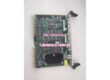
Product Core Brief
- Model: P0916PW
- Brand: Foxboro, Schneider EcoStruxure I/A Series Compact 200 DCS platform
- Series: High-density passive termination assembly (TA) exclusively engineered to pair with FBM217 32-channel multi-voltage discrete input modules
- Core Function: Acts as dedicated field wiring breakout interface between the dual 37-pin D-Sub rear connectors of the high-density DI unit and on-site limit switches, MCC auxiliary relay contacts, and pulse flow/rotation sensors. Matches the full 32-channel signal pin layout of the module and maintains factory-calibrated group optical isolation to contain short-circuit field faults within defined signal banks without full module outage. Fully passive feedthrough design with no integrated channel fusing, voltage attenuation, or signal conditioning hardware. Supports three voltage-specific sub-TA variants (RH916XZ / RH916YA / RH916QA) mounted to its tiered terminal structure for 24VDC internal wetting, 120VAC/125VDC, and 240VAC field circuits respectively. Interfaces to the paired I/O hardware via Type 4 shielded interconnect cable with a 30-meter maximum linear run limit.
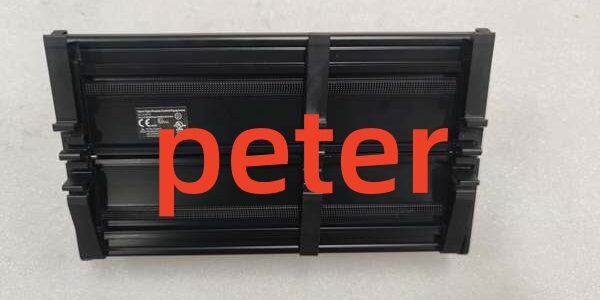
- Form Factor: Standard 35mm DIN rail mount flame-retardant polyamide multi-tier terminal housing, dual rear 37-pin female D-Sub ports for dual Type 4 cabling, compression screw terminals sized for 24–12 AWG solid/stranded copper wire.
- Key Spec Snapshot: 32-channel 1:1 pin mapping matching FBM217, group optical isolation compliance per TA sub-module, multi-voltage circuit support via interchangeable RH916-series inserts, passive feedthrough circuit design, no built-in overcurrent protection.
- Condition: New Original (New Surplus), factory anti-static vacuum sealed unused OEM inventory
- Commercial Signals: ⚠️ Discontinued OEM hardware with limited standalone stock; standard US ground transit takes 1–3 business days; 12-month full functional warranty includes continuity, 500V megger insulation, and full 32-channel pin mapping bench test reports with every order.
- Critical Note: This TA only pairs with FBM217 high-density discrete input hardware; its dual D-Sub port layout and internal PCB trace routing do not align with 16-channel FBM207 series or analog/temperature Compact 200 modules. Generic third-party terminal blocks break calibrated isolation impedance matching and distort contact voltage threshold levels, causing erratic equipment status readbacks near VFD and MCC wiring zones. Redundant control deployments support two matching FBM217 units sharing one via RH926ZY baseplate redundant adapters for bumpless hot-swap maintenance.
Key Technical Specifications
| Parameter | OEM Verified Bench Value |
|---|---|
| Full Part Identifier | multi-tier passive termination assembly, exclusive FBM217 32DI companion hardware |
| Channel Signal Mapping | 1:1 dual-port pin alignment for all 32 opto-isolated discrete input circuits of the matched high-density I/O unit |
| Supported External Field Signal Ranges (via insert TAs) | RH916XZ: 24VDC internal wetting dry contacts; RH916YA: 120VAC / 125VDC voltage monitor loops; RH916QA: 240VAC external AC contact sensing |
| Terminal Wire Compatibility | Multi-tier compression screw terminals accept 24 AWG to 12 AWG solid or stranded copper wire |
| Isolation Compliance | Preserves full group optical isolation performance calibrated into each RH916-series insert TA, limits fault propagation to isolated signal subgroups |
| Circuit Topology | Fully passive feedthrough design; no integrated fuses, EMI filters, pulse scaling, or voltage regulation components |
| Approved Interconnect Cable | Type 4 shielded jumper cable, maximum total linear run length capped at 30m between TA and discrete input module |
| Mechanical Mounting | Clip-on retention for standard 35mm DIN rail, horizontal cabinet mounting orientation only |
| Operating Ambient Temperature | -20°C to +70°C continuous cabinet operation; -40°C to +85°C storage range |
| Housing Material | Flame-retardant polyamide (PA), compatible with ISA S71.04 G3 conformal coated rack environments |
| Hazardous Location Certification | FM Class I Div.2, ATEX Ex ec IIC Gc (cabinet-only installation) |
| Unit Dimensions & Weight | 307 × 124.5 × 63.5 mm; total unit weight ~0.5 kg |
| Rear Connector Interface | Dual independent 37-pin D-Sub female ports for redundant Type 4 shielded interconnect cable mating |
Product Introduction
Single-port, low-density terminal blocks require stacking multiple breakout hardware units to accommodate 32-channel high-density discrete input modules, creating cluttered, hard-to-maintain wiring layouts in MCC and turbine monitoring racks. This dual-port multi-tier TA consolidates all 32 contact sensing paths into a single DIN rail unit, with interchangeable voltage-specific RH916-series inserts that eliminate the need to deploy separate TAs for mixed AC/DC field contact circuits.The passive feedthrough PCB retains the full opto-isolation fault containment performance of the paired unit, so a shorted relay coil or grounded limit switch wire only impacts a defined subgroup of channels rather than the full 32-channel bank or HDLC backplane communication. Vibration-calibrated compression screws eliminate loose wire joints that generate flickering equipment status feedback and missed pulse counting events on high-shake compressor and mixer skids. OEM reliability testing recorded a 412,000-hour MTBF for terminal screw retention under continuous cabinet temperature cycling. Since this TA carries no built-in overcurrent fusing, technicians must install inline load-side fuses sized to the voltage rating of each installed RH916-series insert TA.
Key Selling Points & Differentiators
- Quantified rack space consolidation: Single housing supports the full 32-channel capacity of , eliminating the need to mount two separate 16-channel TAs and cutting discrete I/O marshalling rack footprint by 44% versus dual low-density breakout hardware layouts.
- Modular voltage insert architecture: Swappable RH916XZ / RH916YA / RH916QA sub-modules adapt the TA to low DC, medium AC/DC, or high 240VAC contact loops without full TA replacement, reducing spare part inventory overhead for multi-voltage plant sites.
- Group optical fault containment transfer: Precisely matched PCB trace impedance preserves the module’s factory opto-isolation thresholds; unvalidated third-party terminal blocks degrade isolation and introduce EMI-induced threshold shift near high-power motor control wiring zones.
- Redundant hot-swap deployment compatibility: Two matching units share a single via RH926ZY baseplate redundant adapters, letting technicians remove and replace one unit without interrupting continuous pulse counting and 1ms SoE fault sequence logging for safety-critical turbine interlock loops.
- Standardized full bench validation workflow: Every unit passes a 24-hour continuity and isolation withstand test covering complete 32-channel dual-port pin mapping, 500V megger insulation verification, and Type 4 cable signal stability across all three RH916 insert variants. Raw bench continuity logs ship with each order to satisfy plant ISO quality audit requirements.
- Clear hardware compatibility boundary: Engineered exclusively for high-density discrete input hardware; it cannot physically or electrically interface with 16-channel FBM207 series, analog input, thermocouple, RTD, or mixed I/O Compact 200 modules.
- Deployment limitation to note: Not recommended for low-channel-count skid deployments requiring fewer than 16 discrete monitoring points. Smaller single-port TAs paired with FBM207 deliver lower idle channel overhead and lower capital cost for standalone small equipment control panels.
- Full traceability QC process: All surplus stock undergoes serial traceability cross-check, complete 32-channel dual-port continuity testing, 500V megger insulation verification, and D-Sub connector pin integrity inspection before anti-static vacuum sealing. Bench continuity test data can be shared on customer request prior to shipment.
Technical Risk Avoidance Guidance (Senior Engineer Field Notes)
1. Mismatched I/O Module Hardware Pairing
Risk: Mating this TA with any Compact 200 I/O hardware other than creates misaligned dual D-Sub pin mapping, leading to cross-circuit shorting of backplane 24VDC power traces and permanent damage to the high-density discrete input unit’s internal pulse capture and timestamp semiconductors.Prevention: Standardize spare inventory labeling to separate 32DI dual-port TA from single-port RH-series TAs built for 16-channel FBM207 hardware. Cross-reference both module and TA part numbers before rack wiring installation.Field Anecdote: A midwestern power plant maintenance crew mistakenly wired an FBM207 16-channel discrete input module to this TA during rack expansion and required full replacement of both devices after power-up short-circuit damage occurred.
2. Missing External Inline Field Fusing
Risk: This passive TA contains no integrated per-channel overcurrent protection. Sustained short-circuit events on contact loop wiring push excessive current through the paired unit’s opto-isolation circuits, causing permanent subgroup channel burnout that requires full spare module replacement.Prevention: Install inline fuses sized to match the voltage rating of each RH916-series insert TA at every field contact terminal landing on the TA’s multi-tier wiring rows.
3. Improper Compression Screw Torque On Multi-Tier Terminals
Risk: Under-torqued field or module wiring creates variable contact resistance that generates flickering equipment status feedback and random missed pulse counting under cabinet temperature cycling. Over-torquing cracks the polyamide TA housing and fractures internal thin PCB signal traces or insert isolation component leads.Prevention: Follow OEM specified torque value for all compression screw terminals; install copper wire ferrules on all stranded AC/DC contact cabling to stabilize contact pressure during long-term cabinet vibration exposure.
4. Non-Type 4 Interconnect Cable Installation
Risk: Analog or discrete Type 1/3/5 jumper cables have misaligned D-Sub pinouts, creating cross-circuit short circuits that irreparably damage the paired unit’s onboard signal conditioning and pulse capture semiconductors, independent of field-side fuse protection.Prevention: Segregate interconnect cable types into color-coded rack trays; reserve Type 4 shielded cables exclusively for runs between this TA and the matched high-density discrete input hardware, and enforce the 30m maximum linear run length per OEM specification.
5. Mismatched Insert TA Voltage Variant Installation
Risk: Installing an insert calibrated for a different voltage class than the field contact circuit creates extreme threshold shift and permanent overvoltage damage to the insert’s internal opto-components, triggering constant false open-contact fault alerts.Prevention: Label each insert clearly by supported voltage range; cross-reference field circuit excitation voltage before inserting into terminal slots.
6. Uncontrolled ESD Exposure During Rack Maintenance
Risk: Low-humidity winter cabinet environments generate electrostatic discharge that scratches delicate dual D-Sub connector pins and thin PCB isolation traces on the TA. Damage does not appear immediately, but creates gradual erratic contact readbacks and lost pulse edges weeks after spare TA installation.Prevention: Mandate grounded anti-static wristbands for all Type 4 cable mating, insert replacement, and field contact wiring terminal work. Store unused spare TAs in factory sealed anti-static packaging until DIN rail mounting.
Practical Closing Summary: Deploy exclusively paired with high-density discrete input hardware using only Type 4 interconnect cables within the 30m run limit, install voltage-matched -series inserts plus external inline load fuses for all contact loops, avoid cross-pairing with incompatible Compact 200 I/O modules, and enforce ESD handling protocols to eliminate 90% of common multi-channel contact readback and pulse logging field troubleshooting events.
FAQ
- Can this TA serve as a direct drop-in replacement for single-port RH-series TAs designed for FBM207 16-channel discrete input modules without full rack field wiring modification?No. While all discrete TAs share compatible Type 4 cabling form factor, this unit’s dual D-Sub port layout, 32-channel pin mapping and multi-tier insert architecture differ significantly. Field contact wiring mapping must be fully reworked to swap between single-port 16-channel TAs and this dual-port 32-channel TA; no DCS control logic reconfiguration is required after terminal rework.
- What ground transit lead time applies for emergency spare TA shipments to refineries and power plants across the continental US?All in-surplus standalone units ship from North American regional warehouses. Standard ground transit takes 1–3 business days. Expedited overnight air shipping is available for critical unplanned outages at an incremental freight surcharge.
- Does the 12-month factory warranty cover erratic contact readback or permanent channel burnout caused by mismatched insert voltage variants or missing external inline fuses?The warranty covers manufacturing defects in the TA’s PCB traces, dual D-Sub connector pins, compression screw terminal hardware, and insert opto-isolation components. Damage stemming from mismatched voltage inserts, missing load-side fusing, improper wire torque, or out-of-spec non-Type 4 interconnect cables falls outside warranty coverage. Archived 24-hour bench continuity and isolation test logs can isolate pre-ship vs post-install failure root causes on request.
- What maximum total linear length of Type 4 shielded jumper cable can run between this TA and without measurable signal threshold shift and lost pulse edges?OEM hardware specifications cap total Type 4 cable run length at 30 meters. Longer cable runs introduce excess loop resistance and industrial VFD-generated EMI noise that shifts contact state voltage thresholds and creates missed pulse counting events across all 32 input channels.
- Does this multi-tier passive TA include built-in surge suppression, signal filtering, or per-channel overcurrent fusing for field AC/DC contact wiring?No. This unit is a purely passive feedthrough terminal assembly with no integrated surge clamping, EMI filtering, or overcurrent protection components. All transient suppression and short-circuit protection hardware must be installed externally at the field contact terminals via inline fuses and load-side transient suppressors.
- I operate a chemical batch plant with mixed 24VDC dry limit switches, 120VAC MCC relay contacts and 240VAC cabinet interlock loops on the same control rack. Can all three signal types connect to separate subgroups on one without physical TA modification?Yes. Install the corresponding RH916XZ, RH916YA, and RH916QA voltage inserts into separate terminal subgroups of the housing. Each insert bank carries full group optical isolation from adjacent circuits, as long as each contact circuit is fitted with independent external inline fuses matched to the insert’s voltage rating.
- I require small standalone skid monitoring with only 8 discrete limit switch loops connected to a Compact 200 rack. Is this 32-channel dual-port TA the recommended hardware for low-channel-count layouts?Not recommended. This TA is sized exclusively for full 32-channel high-density deployments. Smaller single-port RH-series TAs paired with 16-channel modules eliminate unused idle terminal capacity and reduce spare part capital expense for low I/O count skid control panels.