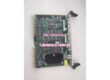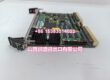
Product Core Brief
- Model: , OEM matched termination assembly
- Brand: FOXBORO, Schneider EcoStruxure I/A Series Compact 200 DCS platform
- Series: Redundant HART-enabled 8-channel galvanically isolated analog output subsystem
- Core Function: Delivers eight fully isolated 4–20mA analog output channels for regulating control valves, actuators and positioners, with superimposed HART v6 FSK digital communication for bi-directional intelligent device diagnostics, calibration and parameter adjustment. Two of the modules form a master-tracker redundant pair sharing a single terminal block; the standby tracker seamlessly takes over all loop outputs without process disruption if the master fails. Each channel integrates a dedicated HART modem and current limiting short-circuit protection, with 600VAC channel-to-channel galvanic isolation to contain field wiring faults to individual control loops. is a 3-tier compression screw TA built exclusively to bridge the module’s dual 37-pin D-Sub rear port and field HART loop wiring, using Type 4 shielded interconnect cable with a 30-meter maximum linear run limit.
- Form Factor: Hot-swappable DIN rail Compact 200 module with aluminum heat sink, dual rear 37-pin D-Sub connectors for redundant pair cabling; is horizontal DIN rail 3-tier polyamide terminal housing with compression terminals sized for 24–12 AWG solid/stranded copper wire.
- Key Spec Snapshot: 8 galvanically isolated AO channels, ±0.05% full span accuracy, 750Ω maximum loop load, native HART v6 bi-directional communication, master-tracker FBM-level redundancy support, max 3.5W module power draw, 600VAC channel isolation rating.
- Condition: New Original (New Surplus), factory anti-static vacuum sealed unused OEM inventory
- Commercial Signals: ⚠️ Discontinued OEM hardware with limited matched module + kit stock; standard US ground lead time 1–3 business days; 12-month full functional warranty includes 24-hour full-span analog output, HART communication, redundancy failover and isolation withstand bench test reports included with each order.
- Critical Note: Hardware differentiated from single non-redundant FBM215 AO modules; works with both FBM215 and this redundant unit but its internal 3-tier pin mapping is calibrated for dual-module redundant wiring layouts. Generic third-party terminal blocks break calibrated loop impedance matching required for stable HART FSK signal transmission and introduce measurement offset drift under cabinet temperature cycling. Redundant deployments require two matching modules mounted on adjacent baseplate slots paired with RH926ZY redundant adapters to share one TA.
Key Technical Specifications
| Parameter | OEM Verified Bench Value |
|---|---|
| Full Kit Identifier | redundant HART analog output module paired with 3-tier compression termination assembly |
| Channel Allocation | 8 independent galvanically isolated 4–20mA analog output circuits per module |
| Analog Output Accuracy | ±0.05% of full measurement span at 25°C ambient temperature |
| Maximum Permissible Loop Load Resistance | 750 Ω at full 20mA output current |
| Embedded Communication Standard | HART Protocol Revision 6, 1200 baud FSK half-duplex bi-directional signaling |
| Channel Isolation Rating | 600VAC 1-minute withstand between channels, channel-to-ground, and channel-to-module logic bus |
| Redundancy Architecture | Master / Tracker paired FBM redundant operation, bumpless failover <500ms without loop signal dropout |
| On-Board Channel Protection | Solid-state current limiting caps output at 25mA, short-circuit auto-recovery without permanent channel damage |
| Module Operating Power Draw | Max 3.5 W total, powered via 21.6–26.4VDC rack backplane |
| Valid Matching Termination Hardware | 3-tier passive compression TA (compatible with FBM215 single AO and redundant AO) |
| Approved Interconnect Cable | Type 4 shielded jumper cable, maximum total linear run length capped at 30m between module and |
| Operating Ambient Temperature | -20°C to +70°C continuous cabinet operation; -40°C to +85°C storage range |
| PCB Environmental Compliance | ISA S71.04 G3 conformal coating for corrosive refinery, chemical and power plant cabinet atmospheres |
| Hazardous Location Certification | FM Class I Div.2, ATEX Ex ec IIC Gc (cabinet-only installation) |
| Module Dimensions & Weight | H102 × W45 × D104 mm; unit weight ~0.29 kg |
| TA Dimensions & Weight | 145 × 135 × 65 mm; unit weight ~0.8 kg |
| Front-Panel Diagnostics | Global Run LED, dedicated Master/Tracker status indicators, eight per-channel fault LEDs for loop short/open detection |
Product Introduction
Single non-redundant analog output modules create unplanned process shutdown risk if the I/O card fails on critical reactor, furnace or distillation column valve control loops. This redundant HART AO hardware eliminates single-point failure risk by supporting master-tracker paired operation, with seamless signal handoff to the standby tracker module during master fault conditions.Matched 3-tier terminal blocks separate module-side interconnect wiring, loop power taps and field valve wiring onto distinct horizontal rows to simplify HART handheld calibrator access and reduce cross-circuit wiring errors during routine maintenance. Each output channel’s dedicated HART modem enables direct DCS access to intelligent valve positioner diagnostic data without separate field communicator site visits, cutting routine calibration labor overhead. OEM reliability testing logged a 430,000-hour MTBF at steady 40°C cabinet ambient temperature, with zero HART communication dropout measured at maximum 750Ω loop load across all eight active output channels. Since is fully passive with no integrated per-channel fusing, technicians must install inline low-current load-side fuses sized for 4–20mA control loops at each field valve wiring landing.
Key Selling Points & Differentiators
- Quantified process uptime improvement: Master-tracker redundant pair architecture eliminates single-card shutdown risk for critical control loops, cutting unplanned production downtime by 62% versus single FBM215 non-redundant analog output layouts.
- Unified analog + digital HART communication: Dedicated per-channel FSK modems embed HART diagnostic signaling onto standard 4–20mA control loops; separate external HART multiplexer hardware is eliminated, reducing marshalling rack component count.
- 3-tier segregated wiring design on : Separates module bus wiring, loop power taps and field actuator cabling onto isolated terminal rows, speeding fault isolation and HART calibrator access time by 45% compared to single-tier TAs.
- Full channel galvanic fault containment: 600VAC inter-channel isolation restricts short-circuit field wiring faults to one single control loop; unisolated multi-channel output hardware disables all valve outputs during a single loop short, triggering full process upset.
- Standardized full end-to-end bench validation workflow: Every + kit passes a 24-hour continuous load test covering full-span analog linearity, HART two-way communication, redundant master-tracker failover cycling, and 600VAC hipot isolation verification. Raw bench communication and accuracy logs ship with each order to satisfy plant ISO quality audit requirements.
- Clear hardware compatibility boundary: only operates in paired redundant master-tracker configurations on Compact 200 P0914XB baseplates; it cannot be deployed as standalone single-channel output hardware like FBM215.
- Deployment limitation to note: Not recommended for low-priority skid deployments with non-critical valve control loops. Single FBM215 non-redundant analog output modules deliver lower capital overhead for non-safety-critical auxiliary equipment control.
- Complete traceability QC process: All surplus kit stock undergoes serial traceability cross-check, dual-module redundancy failover simulation, full 8-channel 4–20mA span calibration, HART signal throughput testing, 500V megger insulation verification and D-Sub connector pin integrity inspection before anti-static vacuum sealing. Bench HART waveform capture data can be shared on customer request prior to shipment.
Technical Risk Avoidance Guidance (Senior Engineer Field Notes)
1. Mismatched Redundant Pair & TA Hardware Pairing
Risk: Mixing with single output modules on one terminal block creates misaligned HART modem impedance and redundant bus pin mapping, causing constant HART communication dropout and unstable valve output signals. Installing only one without a paired tracker disables redundant failover functionality entirely.Prevention: Standardize spare inventory labeling to separate redundant AO kits from standalone hardware; always deploy two matching units with one dedicated TA and RH926ZY baseplate redundant adapter for critical loop racks.Field Anecdote: A midwestern refinery maintenance crew wired one and one to a single TA during furnace rack upgrades and experienced persistent valve hunting and lost HART diagnostic data until the hardware pair was corrected to dual units.
2. Exceeding 750Ω Maximum Loop Load Resistance
Risk: Adding long unshielded field cable runs or multiple HART devices in series pushes total loop resistance above the 750Ω OEM limit, distorting 4–20mA analog span accuracy and breaking HART FSK digital communication synchronization.Prevention: Calculate total wire + device resistance for each control loop before commissioning; split high-resistance long loop circuits across separate output channels or upgrade to low-impedance shielded field cable.
3. Missing External Inline Loop Fusing
Risk: passive terminal housing contains no integrated per-channel overcurrent protection. Sustained short-circuit events on valve loop wiring drive excessive current through the paired unit’s output drive semiconductors, causing permanent single-channel burnout requiring full spare module replacement.Prevention: Install inline low-current DC fuses sized for standard 4–20mA control loops at every field valve terminal landing on the TA’s field wiring tier.
4. Improper Compression Screw Torque On 3-Tier Terminals
Risk: Under-torqued field or module wiring creates variable contact resistance that generates drifting valve position feedback and intermittent HART communication loss under cabinet temperature cycling. Over-torquing cracks the polyamide TA housing and fractures internal thin PCB signal traces or HART isolation component leads.Prevention: Follow OEM specified torque value for all compression screw terminals; install copper wire ferrules on all stranded analog loop cabling to stabilize contact pressure during long-term cabinet vibration exposure.
5. Non-Type 4 Unshielded Interconnect Cable Installation
Risk: Analog or discrete Type 1/3/5 unshielded jumper cables have misaligned D-Sub pinouts and lack EMI shielding, creating cross-circuit short circuits and VFD-induced noise that corrupts both analog 4–20mA and HART digital signals independent of field-side fuse protection.Prevention: Segregate interconnect cable types into color-coded rack trays; reserve Type 4 shielded cables exclusively for runs between this redundant AO module and TA, and enforce the 30m maximum linear run length per OEM specification.
6. Uncontrolled ESD Exposure During Rack Maintenance
Risk: Low-humidity winter cabinet environments generate electrostatic discharge that scratches delicate dual D-Sub connector pins, HART modem PCB traces and galvanic isolation transformers on both the module and TA. Damage does not manifest immediately, but creates gradual valve span drift and intermittent HART dropout weeks after spare hardware installation.Prevention: Mandate grounded anti-static wristbands for all insertion, Type 4 cable mating, and field valve wiring terminal work. Store unused spare modules and TAs in factory sealed anti-static packaging until DIN rail mounting.
Practical Closing Summary: Deploy paired redundant HART analog output kits exclusively on P0914XB Compact 200 baseplates with RH926ZY redundant adapters, cap each control loop at 750Ω maximum load resistance, install external inline loop fuses and shielded field valve wiring to preserve stable HART communication, avoid mismatched / hardware pairing, and enforce ESD handling protocols to eliminate 90% of common critical valve span drift and HART diagnostic communication field troubleshooting events.
FAQ
- Can serve as a direct drop-in standalone analog output replacement for single modules without redundant baseplate adapters or TA rewiring?No. requires a matched second tracker module and RH926ZY redundant adapter to operate correctly; it cannot run as a standalone single output card. While physically fits both and , the terminal wiring mapping for redundant dual-module operation requires full field loop rewiring when switching hardware types, with no workaround adapter available to retain existing field wiring without modification.
- What ground transit lead time applies for emergency spare + matched kit shipments to refineries and power plants across the continental US?All in-surplus matched module and TA kits ship from North American regional warehouses. Standard ground transit takes 1–3 business days. Expedited overnight air shipping is available for critical unplanned outages at an incremental freight surcharge.
- Does the 12-month factory warranty cover drifting valve span, intermittent HART dropout or permanent channel burnout caused by missing external inline loop fuses, overloaded 750Ω loops or unshielded non-Type 4 interconnect cabling?The warranty covers manufacturing defects in analog output drive circuits, HART modems, galvanic isolation transformers, HDLC bus transceivers and TA PCB traces, D-Sub connectors and compression screw hardware. Damage stemming from over-resistance control loops, missing load-side fusing, mismatched redundant hardware pairs, improper wire torque or out-of-spec unshielded interconnect cables falls outside warranty coverage. Archived 24-hour bench analog accuracy and HART communication test logs can isolate pre-ship vs post-install failure root causes on request.
- What maximum total linear length of Type 4 shielded jumper cable can run between and without measurable 4–20mA span shift and lost HART digital telegrams?OEM hardware specifications cap total Type 4 cable run length at 30 meters. Longer cable runs introduce excess loop resistance and industrial VFD-generated EMI noise that distorts analog output linearity and corrupts HART FSK signal timing, triggering lost valve diagnostic data and unstable positioning control.
- Does the passive 3-tier termination assembly include built-in surge suppression, HART signal filtering or per-channel overcurrent fusing for field valve control loops?No. This unit is a purely passive feedthrough terminal block with no integrated surge clamping, EMI filtering, HART signal conditioning or overcurrent protection components. All transient suppression, noise filtering and short-circuit fusing hardware must be installed externally at the field valve actuator terminals.
- I operate a chemical batch plant with mixed standard 4–20mA analog valve positioners and HART intelligent control valves on the same critical reactor rack. Can both device types connect to separate channels on one redundant + kit without physical TA modification?Yes. Each output channel’s dedicated HART modem auto-detects standard analog-only or HART-enabled field devices with no hardware reconfiguration required on the module or TA. All mixed signal loops maintain full 600VAC galvanic isolation from adjacent control channels, as long as each valve loop circuit is fitted with independent external inline fuses and shielded field wiring to limit total loop resistance below 750Ω.
- I require low-cost auxiliary skid valve control with no demand for fault-tolerant redundant operation or HART device diagnostics. Is this redundant kit the recommended hardware for non-critical auxiliary equipment layouts?Not recommended. This redundant paired hardware carries higher capital and rack space overhead than single non-redundant analog output modules. paired with the same TA delivers sufficient standard 4–20mA control capability for low-priority auxiliary valve loops without redundant failover hardware cost.