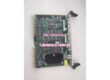
Product Core Brief
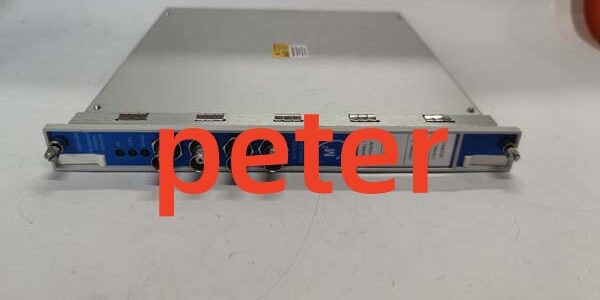
- Model: 3500/42M, Front Card PWA 176449-02
- Brand: Bently Nevada (Baker Hughes)
- Series: 3500 Turbine Supervisory Instrumentation (TSI) Protection Platform
- Core Function: Four-channel universal monitor that accepts both eddy-current proximity probes and seismic transducers to measure shaft position, radial vibration, casing acceleration, and rolling element bearing wear for safety interlock and diagnostic reporting
- Product Type: Full-height hot-swappable split front/rear base M-series mixed I/O monitor
- Key Specs: Paired software-configurable channels | −24 VDC proximity excitation | 7.7 W typical power draw | 4 isolated 4–20 mA recorder outputs
- Condition: New Original (New Surplus), active OEM production part with no obsolescence timeline
Key Technical Specifications
表格
| Parameter | Value |
|---|---|
| Channel Layout | 4 inputs grouped into two independent programmable pairs (Ch1/Ch2, Ch3/Ch4) |
| Supported Transducers | All 3300 XL eddy-current probes; Velomitor velocity sensors; piezoelectric accelerometers |
| Measurable Variables | Radial vibration, thrust position, eccentricity, differential expansion, REBAM, circular acceptance orbit plots, shaft absolute vibration |
| Frequency Response | DC to 10 kHz; DC static band for slow thermal displacement readings |
| Probe Excitation | Regulated −24 VDC high-frequency oscillator for eddy-coil drive |
| Analog Recorder Output | Per-channel isolated 4–20 mA signal, maximum 600 Ω load resistance |
| Front Diagnostic Tap | Short-circuit protected BNC buffer output for oscilloscope field testing |
| Power Consumption | 7.7 W steady-state draw from rack 24 VDC backplane bus |
| Channel-to-Ground Isolation | 1500 VAC isolation barrier for all field input circuits |
| Standard Operating Temp | −30°C to +65°C; coated extended range −40°C to +85°C offshore rated |
| Physical Dimensions | 241.3 mm H × 24.4 mm W × 241.8 mm D; front card weight 0.91 kg |
| Compliance Standards | API 670, CE EMC, UL Class I Div 2, ATEX Zone 2 Ex nC IIC T4, SIL 2 functional safety |
| Front Panel Indicators | OK (module health), TX/RX (backplane bus traffic), BYPASS (channel inhibit state) |
Product Introduction
This mixed I/O monitor eliminates the need to deploy separate proximity-only and seismic-only cards within a single rack slot. It generates synchronous orbit and polar plot data using rack-wide Keyphasor timing signals for early rub, misalignment, and shaft bow detection on gas turbines and multi-stage compressors.
The split rear terminal base lets technicians rework transducer cabling without removing the front measurement hardware during scheduled shutdowns. The unit cannot process RTD, thermocouple, or raw 4–20 mA process signals; dedicated thermal and PV monitors handle those measurement tasks. It delivers hardware-supported TMR voting to satisfy API 670 single-point failure elimination rules for critical machine shutdown logic.
Firmware/Software Versions & Upgrade Notes
Minimum compatible module firmware revision: 2.10; minimum System 1 rack configuration software version: 3.20. All installed rack modules must run matching M-series firmware builds; mixed legacy and M-series revisions break orbit calculation and TMR redundant voting functions.Downgrades below v2.10 disable circular acceptance region orbit filtering and reduce transient waveform sampling resolution. Firmware flashes over the rack backplane bus via System 1 software. Always export full channel configuration (transducer sensitivity, alarm delays, trip thresholds) before initiating any firmware update to avoid complete rework of measurement setpoints. No firmware resides on rear terminal bases; all signal processing logic lives on the front board assembly.
Frequently Asked Questions (FAQ)
- Is hot-swapping the front measurement card safe while the 3500 rack remains energized?Yes, the front card supports hot-swap without full rack power loss. Active alarm states hold their last valid reading during replacement, so machine trip interlocks do not drop out mid-service. The paired rear terminal base cannot be detached while powered, as this breaks field transducer isolation and triggers permanent channel fault flags.
- Is this part scheduled for obsolescence, and are direct drop-in hardware upgrades available?This monitor remains an active OEM catalog part with no published end-of-life date. The only cross-part variant is 176449-01, which uses a standard safe-area rear base; 176449-02 pairs with internal IS barrier terminals for classified hazardous zones and requires wiring validation post-install to meet ATEX compliance.
- Will channel scaling, alarm delays, or orbit configuration erase if the full rack loses power?No, all transducer sensitivity values, Alert/Danger time delays, circular acceptance region boundaries, and TMR voting parameters store in non-volatile flash memory on the unit itself. Full rack power loss does not permanently erase any channel configuration data. The rear terminal base holds zero user-programmable settings.
- What warranty terms separate New Surplus inventory from refurbished alternatives?New Surplus stock carries a 12-month functional warranty covering oscillator circuits, analog isolation, backplane transceivers, and 4–20 mA output scaling hardware. Refurbished units typically offer only 3–6 month limited coverage and carry hidden risks of aged electrolytic capacitors, untested channel isolation, and undocumented prior field fault exposure that cause unplanned process downtime.
- Why does New Surplus pricing sit higher than generic used/refurbished marketplace listings?All New Surplus inventory completes mandatory QC validation: serial traceability cross-check against OEM production logs, 24-hour continuous thermal load bench testing with simulated proximity and seismic waveforms, 500 V megger insulation testing verifying >10 MΩ channel-to-ground isolation, full firmware backup, and anti-static sealed foam packaging. Refurbished lots skip this multi-step validation workflow, introducing avoidable operational risk for safety-critical turbine and compressor protection racks.
- Can raw RTD temperature probes or 4–20 mA process transmitters wire directly to the input channels?No, the unit only processes eddy-current proximity and seismic velocity/acceleration signals. Thermal monitoring requires 3500/60 or 3500/61 modules; analog process variable trending uses the 3500/62 monitor. Verify with the OEM datasheet before modifying field wiring to prevent permanent channel circuit damage.
- Does the unit locally store high-frequency vibration fault waveforms or long-term machine trending logs?No, all transient orbit snapshots, spectral fault data, and historical amplitude trending logs are captured and retained exclusively by the Slot1 3500/20 TDI master communication module. The unit performs real-time signal conditioning and alarm comparison only, with no on-board data storage memory.