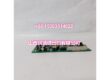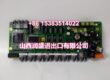
Component Snapshot At-a-Glance
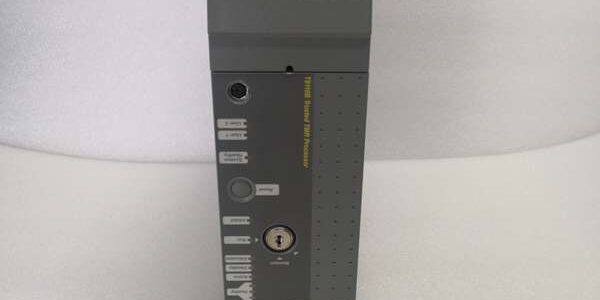
- Model: T8110B; harsh environment coated variant T8110BC
- Alt. P/N: No cross-compatible non-T8110B drop-in CPU substitutes
- Product Series: ICS Triplex Trusted 8000 TMR Safety Instrumented System, T8100 chassis only
- Hardware Type: Lock-step triple redundant main safety processor rack card
- Key Feature: Three independent PowerPC cores running identical safety logic with hardware 2oo3 voting; triplicated Inter-Module Bus (IMB) for all I/O/CI modules
- Primary Field Use: Execute SIL3 ESD, burner management and process safety logic; poll all T8403/T8431 I/O cards and T8151B communication modules; generate millisecond SOE event timestamps for refinery, power and offshore safety racks.
Hard-Numbers: Technical Specifications
- Protocol Support: Trusted triplicated IMB backplane bus; IRIG-B time sync; native interface to T8151B CI comms modules
- Port Count: Front panel key lock run/program switch; local RS232 diagnostic port; rear triple redundant IMB edge connector; IRIG-B serial header
- Baud/Data Rate: IMB full rack scan cycle 0.5ms; IRIG-B sync 1PPS timestamp resolution; serial port 300–115200 baud
- Operating Temperature: 0°C to +60°C standard T8110B; T8110BC rated -40°C to +70°C salt fog/oil mist enclosures
- Isolation Rating: 2500VAC opto-isolation between IMB backplane and internal TMR core logic
- Power Draw: 70–80W maximum full chassis I/O load; rack supply 20–32VDC nominal 24V
- Processing Hardware: 3x 100MHz PowerPC lock-step cores; ECC DRAM; non-volatile flash for safety application logic
- Diagnostic Storage: 1000 onboard SOE event buffer, offloaded to T8151B for historian archiving
- Safety Rating: IEC 61508 SIL3 certified; Class I Div 2 / ATEX Zone 2 non-incendive approval
- Physical: 266mm H × 303mm D × 93mm W; unit weight 2.94kg; dedicated left primary CPU slot in T8100 chassis; hot-swap capable
- Cooling: Passive finned convection cooling; minimum 80mm vertical airflow clearance required
The Real-World Problem It Solves
Simplex single-core safety CPUs create single-point logic failure risk that triggers unplanned unit ESD trips. Offloading safety scan logic to secondary communication cards stretches deterministic scan timing and breaks SIL3 voting compliance.
- Where you’ll typically find it:
- Refinery hydrocracker and crude unit T8100 SIS chassis running high-pressure vessel emergency shutdown logic
- Combined-cycle power plant burner management safety racks polling T8431 analog vibration/pressure safety transmitters
- Offshore platform hazardous zone ESD control cabinets using T8110BC coated hardware to resist salt fog corrosionLock-step triple core hardware voting eliminates single-core drift failures, centralizes all safety logic execution on a dedicated hot-swappable CPU and maintains fixed 0.5ms I/O scan cycles required for SIL3 safety audits.
Hardware Architecture & Under-the-Hood Logic
This card houses three fully isolated lock-step processor slices on one PCB; every safety logic calculation, I/O read and trip evaluation runs simultaneously on all three cores, with dedicated hardware voting before any output command is sent to field I/O modules.
- Dual redundant 24VDC backplane power splits to three electrically isolated power rails, one dedicated to each PowerPC core slice to eliminate cross-slice electrical noise.
- Triplicated IMB backplane connector pulls three identical sets of sampled analog/digital data from every T8403/T8431 I/O module in the chassis.
- Three lock-step PowerPC cores execute identical safety application logic in parallel; hardware comparator performs continuous 2-out-of-3 voting to discard divergent faulty calculations from a single failed slice.
- Any slice mismatch, IMB bus timeout or core watchdog trip latches a module FAULT LED; voting logic continues operating on the two healthy slices with no interruption to active safety trip logic.
- IRIG-B time sync input calibrates millisecond SOE timestamps for all safety events; fault and alarm data offloads over IMB bus to T8151B CI cards for Modbus TCP historian upload.
- Front panel key switch locks the CPU into RUN mode during live plant operation; PROGRAM mode restricts safety logic edits to avoid unvalidated logic changes mid-process run.
Field Service Pitfalls: What Rookies Get Wrong
Insufficient Airflow Around T8110B Heat Vents
New techs stack power supply modules or I/O cards flush against the CPU’s finned heat sink, blocking convection cooling. Internal core temperature exceeds 60°C rating, triggering slice thermal drift, persistent mismatch faults and stretched I/O scan cycles.
- Field Rule: Reserve minimum 80mm empty vertical space above and below the T8110B; blow dust from heat fins every 90 days in oily refinery cabinets.
Mismatched T8110B Firmware With All Chassis I/O & CI Cards
Rookies flash updated CPU firmware without updating T8403, T8431, T8151B modules to matching revisions. Version incompatibility breaks triplicated IMB voting, lights steady FAULT LED and disables all safety trip evaluation.
- Quick Fix: Load unified matching firmware bundles for every card in the T8100 chassis; run full IMB bus scan and forced safety trip functional test before returning SIS online.
Disabling IRIG-B Time Sync For Nuisance Timestamp Drift Alarms
Techs disconnect IRIG-B wiring to clear minor timestamp offset faults. Without centralized time sync, SOE event logs lose cross-system alignment, making post-trip root-cause analysis impossible during safety audit reviews.
- Field Rule: Maintain hardwired IRIG-B sync at all times; repair loose shielded time sync wiring instead of disabling the clock input.
Commercial Availability & Pricing Note
Please note: The listed price is for reference only and is not binding. Final pricing and terms are subject to negotiation based on current market conditions and availability.