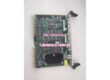
Quick Sizing & Sourcing Snapshot
- Manufacturer: Schneider Electric (Legacy Invensys Foxboro, USA origin, base part code P0926EQ core variant)
- Part Number: FBM202; Matching Termination: DIN Rail TA + Baseplate Mounted dual-style terminal bases (baseplate TA serves paired 2×)
- System Platform: Foxboro Classic I/A Series + Foxboro Evo DCS, compatible with CP60, FCP280, FCP270 rack controllers over redundant Nodebus HDLC backplane
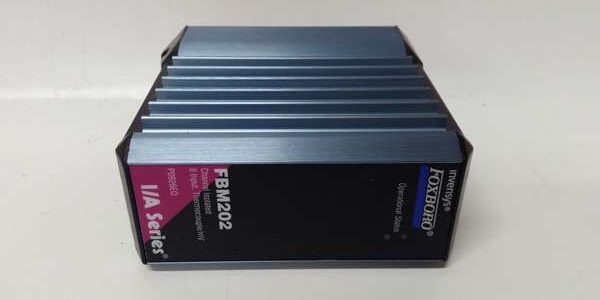
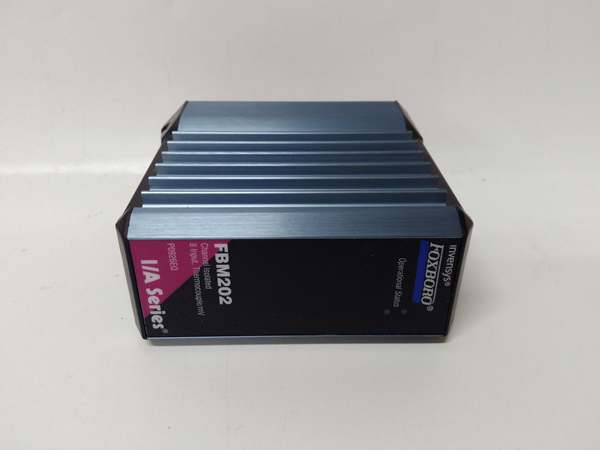
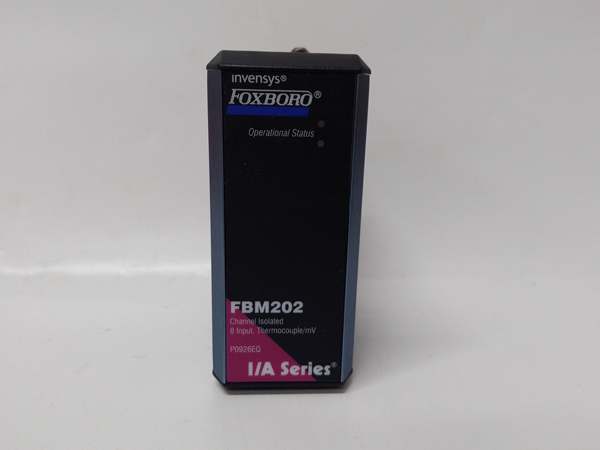
- Hardware Type: Single-slot rack-mounted 8-channel isolated Thermocouple/mV analog input FBM card with integrated cold-junction compensation processing
- Architectural Role: Captures raw millivolt output from field thermocouples, applies terminal RTD-based cold junction correction, linearizes TC curves locally before uploading scaled temperature data to rack controller via Nodebus bus
- Key Specifications: 8 galvanically isolated TC/mV input channels, built-in open TC burnout detection, terminal-integrated Pt100 cold-junction RTD compensation, -10.5~+69.4mV native input range
Foxboro FBM202
System Architecture & Operational Principle
sits at field I/O tier within Purdue automation hierarchy, installed on standard I/A Series dual-redundant Nodebus baseplate alongside FBM217 discrete I/O and CM400YN RTD input modules. Upstream, it pulls preconfigured setup parameters—TC type selection, noise integration period, burnout direction, high/low alarm thresholds—from rack CP/FCP controllers during offline Control Builder download and cyclic backplane polling at 2Mbps HDLC bus speed.
Downstream, all field thermocouple homeruns terminate onto dedicated passive termination assemblies; terminal-mounted 3-wire Class B Pt100 RTD continuously samples terminal ambient temp to offset cold-junction drift, onboard sigma-delta ADC converts raw mV readings into digital engineering values before data buffering for backplane transmission. Redundant Nodebus architecture prevents single backplane trace damage from disabling full module communication, critical for uninterrupted furnace and reactor thermal monitoring in continuous-process facilities.
Core Technical Specifications
- Physical Interface: Gold-finger rear connector for baseplate plug-in; front multi-pin header for cable link to DIN rail TA or direct baseplate terminal base docking
- Signal Type: Multitype Thermocouple(B/E/J/K/N/R/S/T/C) + general low-level mV analog input
- Channel Density: 8 independent electrically isolated input channels per single rack slot + 1 dedicated cold-junction compensation RTD per paired terminal base
- Communication Bus: Dual redundant 2Mbps HDLC Nodebus backplane, I/A Series native rack bus
- Environmental Tolerance: -20°C ~ +60°C operational, -40°C ~ +85°C storage, ISA S71.04 G3 corrosive cabinet rated
- Power Draw: Nominal 3.0W total, fully powered via baseplate 24VDC SELV rack supply, ~125mA typical operating draw
- Isolation Rating: 600VAC channel-to-channel + field-to-backplane galvanic isolation per individual input circuit
- Sampling Speed: Fixed 25ms per-channel raw sampling, user configurable digital integration time to suppress 50/60Hz mains noise
- Burnout Detection: Upscale default open-TC fault indication, software switchable to downscale per loop requirements
- Wiring Compatibility: Accepts 18~22AWG stranded TC-grade thermocouple extension wire exclusively
Customer Value & Operational Benefits
Cut Spurious Process Trips From Broken Thermocouple WiresBuilt-in per-channel open-circuit burnout detection flags broken TC wiring instantly instead of drifting measured temperature; site operators eliminate unplanned safety trips triggered by cracked furnace thermocouple cabling common on non-diagnostic legacy input cards.
Reduce Monthly Calibration Labor HoursTerminal-integrated factory-calibrated cold-junction RTD removes need for external ice-bath calibration checks for junction offset; maintenance crews slash routine TC loop calibration workload by roughly 40% during quarterly unit inspections.
Optimize DCS Cabinet Rack DensityEight high-precision TC inputs per single rack slot cuts required I/O rack quantity versus older 4-point legacy Foxboro TC modules, lowering new cabinet procurement cost during plant instrumentation expansion upgrades.
Field Engineer’s Notes (From the Trenches)
I’ve replaced dozens of drifting or erratic reading units across refining and coal-fired power plants from two recurring field mistakes I’ve seen hundreds of times. First, field crews substitute generic copper instrument wire for matched-type TC extension cable; dissimilar metal junctions create parasitic thermovoltage that creeps readings 3~8°C randomly with cabinet temperature swings, which takes weeks to trace. Second, routing TC cabling within 8cm of 480V motor power cables induces heavy 60Hz noise that overwhelms low-level mV signals; always separate TC trays minimum 15cm from high-current AC wiring and run dedicated shielded TC cable with single-point ground at DCS terminal bar only. Never reuse terminal bases from FBM12 RTD cards—mismatched internal RTD compensation circuit skews all cold-junction correction permanently.
Real-World Applications
- Crude Oil Refinery FCC Reactor Bed Temperature Monitoring: paired with baseplate termination base samples dozens of K-type reactor bed thermocouples; corrected temperature data feeds reactor catalyst circulation PID control logic on FCP280 to avoid over-temperature catalyst sintering and unplanned FCC shutdowns.
- Coal Power Plant Boiler Superheater Tube Surveillance: Module terminates J-type surface thermocouples mounted across boiler superheater banks; DCS uses compensated TC readings to flag localized tube hot spots and initiate gradual boiler load turndown to prevent tube rupture from overheating.
Foxboro FBM202
High-Frequency Troubleshooting FAQ
A: Basic Nodebus communication links but outdated firmware triggers inconsistent cold-junction compensation and missing open-TC fault alarms; upgrade onboard firmware to match host controller revision before full rack energization per Foxboro compatibility matrix.
A: Root cause nearly always wrong TC extension wire material or dual-ended cable shield grounding creating ground loops; swap to correct grade TC cable and isolate shield grounding exclusively at DCS terminal strip to eliminate parasitic mV drift.
A: Not recommended; live card extraction disrupts active backplane scan cycle and can glitch closed-loop thermal control; disable all 8 input channels inside Foxboro Control Builder software prior to power down and card replacement.
Commercial Availability & Pricing
Please note: The listed price is not the actual final price. It is for reference only and is subject to appropriate negotiation based on current market conditions, quantity, and availability.