Quick Sizing & Sourcing Snapshot
- Manufacturer: Schneider Electric (Legacy Invensys Foxboro, USA origin)
- Part Number: P0916NG; direct aftermarket cross replacement = RH916YY
- System Platform: Foxboro Classic I/A Series + Foxboro Evo DCS, pairs exclusively with FBM242 solid-state discrete output FBM card
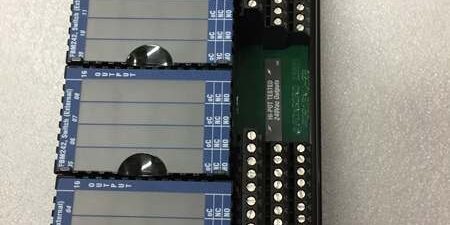
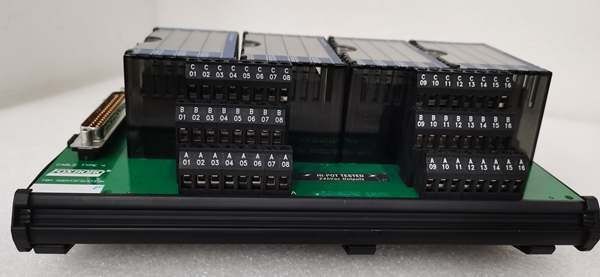
- Hardware Type: Passive field termination terminal base, front-mounted screw terminal wiring assembly
- Architectural Role: Acts as physical wiring intermediary between FBM242 rear gold finger connector and field solenoid/indicator/MCC load wiring, distributes isolated channel power and provides overcurrent passive protection per circuit
- Key Specifications: 16 galvanically isolated output channels, max 2A@60VDC per channel, dual-layer compression screw terminal layout
Foxboro P0916NG
System Architecture & Operational Principle
sits at field I/O boundary layer of Purdue automation stack, mechanically latched to front face of rack-mounted FBM242 module on standard Nodebus I/A baseplate alongside FBM217/FBM12 analog/RTD cards and CP/FCP rack controllers. Upstream, it receives digital on/off switching commands from ’s onboard logic chip; itself fetches setpoint and interlock commands via dual redundant 2Mbps HDLC Nodebus backplane from rack CPU during DCS scan cycles.
Downstream, all field load cabling terminates directly onto ’s front two-tier screw terminals; each channel’s isolated trace routes control voltage out to site-mounted solenoid valves, panel pilot lights and MCC breaker trip coils. The terminal base’s built-in channel separation blocks cross-circuit leakage if adjacent wiring shorts, eliminating cascaded output failure across multiple plant equipment loads, a core design benefit for continuous-process refining and power plant rack design.
Core Technical Specifications
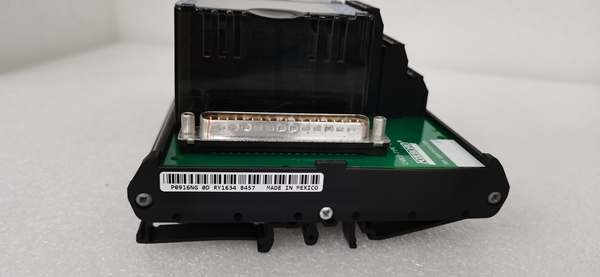
- Physical Interface: Rear 50pin female receptacle for direct plug-in with front header; dual-row front compression screw terminals for field wiring
- Signal Type: Isolated solid-state discrete DC/AC switching output routing, no onboard signal conversion (passive termination only)
- Channel Density: 16 independent electrically separated output circuits per single terminal base
- Communication Bus: No onboard bus circuit; all digital comm handled by paired over Nodebus backplane
- Environmental Tolerance: -20°C ~ +60°C operational; -40°C ~ +85°C storage; ISA G3 corrosive gas certified for petrochemical cabinet installation
- Load Rating: Per channel max 2A continuous @60VDC, surge peak up to 8A short-duration inrush
- Isolation Rating: 1500VAC channel-to-channel and field-to-backplane galvanic isolation barrier per circuit
- Wiring Spec: Accepts 14AWG ~22AWG stranded copper instrument wire per terminal lug
- Mount Style: Snap-lock mechanical latch onto front housing, no additional DIN rail hardware required
- Weight & Dimension: 820g net weight; 170×120×70mm overall footprint
Customer Value & Operational Benefits
Cut Unplanned Load Trip Failures From Wiring ShortsPer-channel electrical isolation confines single terminal short or field cable fault to only one connected field device, preventing full 16-channel bank dropout that’s common on non-isolated compact terminal strips, reducing unplanned equipment downtime triggered by wiring damage.
Trim Field Wiring Turnaround During Turnaround MaintenanceTwo-tier split terminal layout lets technicians disconnect field wiring without unpulling entire harness from rack, cutting field rewiring time for valve interlock loops by nearly 38% during annual plant turnaround upgrades.
Lower Spare Part Inventory ExpenseDirect drop-in RH916YY cross replacement eliminates need to stock obsolete factory-only OEM spares; facilities can source modern equivalent terminals at reduced unit cost for legacy I/A rack refresh projects.
Field Engineer’s Notes (From the Trenches)
I’ve replaced dozens of heat-damaged across refinery and combined-cycle power sites from two avoidable field errors. First, maintenance crews regularly overtorque compression screw terminals, crushing internal copper bus traces inside the terminal base and creating intermittent high-resistance hot spots that slowly burn out channel traces over 6–12 months of runtime; stick to 0.8–1.0 N·m torque spec for all terminal screws. Second, routing high-current AC load wiring alongside low-voltage DC solenoid cables on adjacent terminal rows creates capacitive cross-talk, triggering random false valve chattering on idle output channels; group AC and DC loads on separate terminal bank sections and maintain minimum 5mm spacing between differing voltage circuits. Never force non- variant FBM cards onto , mismatched pinout will permanently crack internal PCB traces.
Foxboro P0916NG
Real-World Applications
- Crude Refinery CDU Feed Furnace Safety Interlock Rack: paired with controls furnace purge gas solenoid valves and burner permissive pilot lights; DCS safety interlock logic cuts solenoid power via this terminal assembly to shut off fuel feed during abnormal furnace temperature excursions, avoiding furnace overpressure hazard.
- Natural Gas Compressor Station MCC Control Cabinet: Terminal base terminates compressor anti-surge bleed valve coil wiring and motor feeder breaker trip pilot outputs; channel-isolated design ensures single faulty bleed valve wiring cannot trip adjacent compressor unit’s MCC protection circuits.
High-Frequency Troubleshooting FAQ
A: Yes, pin mapping, terminal layout and physical latch dimensions are identical; direct drop-in swap with zero field cabling modification, only verify terminal torque values post-install.
A: Most often overtorqued terminal screw damaged internal PCB copper trace or corroded terminal barrel from cabinet condensation; strip and re-terminate field wire, replace terminal base if internal circuit trace is discolored from overheating.
A: Not recommended; accidental short between exposed terminal pins during removal can pull down channel driver circuit; disable corresponding output channels inside Foxboro Control Builder software before detaching terminal assembly.
Commercial Availability & Pricing
Please note: The listed price is not the actual final price. It is for reference only and is subject to appropriate negotiation based on current market conditions, quantity, and availability.