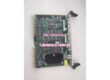
Quick Sizing & Sourcing Snapshot
- Manufacturer: Schneider Electric (Invensys Foxboro legacy)
- Part Number: FBM217; paired field terminal = P0916PW (24V internal wetting), P0916PX (external high voltage input)
- System Platform: Foxboro I/A Series Classic + Foxboro Evo DCS, compatible with CP30, CP60, FCP280 host controllers
- Hardware Type: Single slot backplane mounted 32-point galvanically isolated discrete input FBM card
- Architectural Role: Collects field contact/NAMUR switch status locally, aggregates binary data and communicates cyclic scans to rack master CPU over redundant Nodebus HDLC
- Key Specifications: 32 isolated DI channels, per-channel 1500VAC opto-isolation, internal 24VDC wetting source with P0916PW terminal assembly
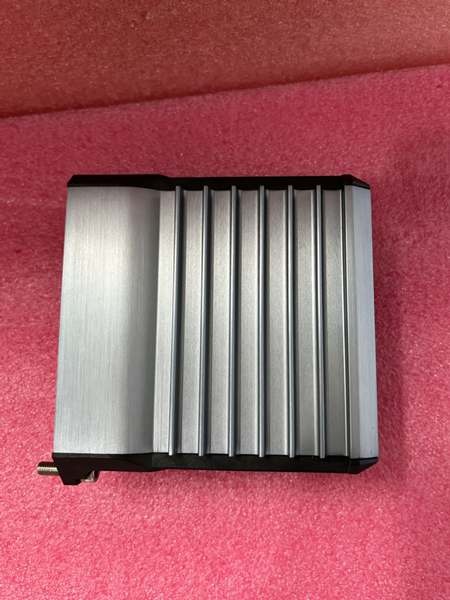
Foxboro FBM217
System Architecture & Operational Principle
resides at the field device control level of the Purdue automation stack, nested directly on the I/A Series baseplate alongside host controllers and additional FBM I/O modules. Upstream, it receives cyclic poll commands and configuration parameters from rack CP30/CP60/FCP280 via the backplane’s dual redundant 2Mbps Nodebus bus. The controller dictates scan rates, channel debounce values, and fault threshold settings loaded during DCS download.
Downstream, the card pulls raw open/closed contact signals routed through either P0916PW or P0916PX field termination assemblies. Internal optocoupler barriers decouple noisy field wiring transients from the module’s core logic circuitry. After digitizing binary channel states, buffers status data before packaging payloads into standard Nodebus HDLC frames for scheduled upload to the rack CPU. Redundant dual-bus Nodebus wiring limits single cable damage from knocking out full card communication, a core benefit of Foxboro’s original backplane bus design over single-point proprietary I/O buses seen on competing DCS platforms.
Core Technical Specifications
- Physical Interface: Gold finger rear backplane connector; front snap-lock header for direct P0916PW/P0916PX terminal mounting
- Signal Type: Dry contact closure, NAMUR proximity sensor input, 24VDC wet-sourced discrete input
- Channel Density: 32 independent isolated input channels per single module slot
- Communication Bus: Dual redundant 2Mbps HDLC Nodebus
- Environmental Tolerance: -20°C ~ +60°C operating; -40°C ~ +85°C storage; ISA S71.04 G3 corrosive environment rated
- Power Draw: Nominal 3.1W powered exclusively via baseplate 24VDC SELV supply
- Isolation Rating: 1500VAC channel-to-channel and field-to-backplane galvanic opto-isolation
- Wetting Current: ~2.2mA per channel from internal 24V source when paired with P0916PW terminals
- Hot-Swap Rating: Permitted only on redundant Nodebus baseplate configurations; single simplex rack requires software scan disable before card removal
- Debounce Configuration: Software adjustable 0ms to 32ms per individual input via DCS control builder
Customer Value & Operational Benefits
Reduced Unplanned Interlock TripsPer-channel galvanic isolation confines shorted field wiring or AC surge damage to individual DI points instead of taking down entire 32-point banks. Field wiring insulation failure no longer cascades false open/closed status across adjacent channels, cutting spurious safety trip events common with non-isolated compact DI alternatives.
Lower MTTR During Field RepairsIndividual channel LED status indicators eliminate repeated multimeter point testing during troubleshooting; technicians spot open/short field circuits directly at cabinet without pulling HMI trending data. Site maintenance teams average 30% faster fault isolation vs hardwired custom terminal setups.
Minimized Cabinet Real Estate Consumption32 points per single rack slot cuts required rack space by half compared to 16-point legacy DI FBM hardware, reducing auxiliary cabinet procurement costs during plant I/O expansion projects.
Field Engineer’s Notes (From the Trenches)
I’ve replaced dozens of damaged units across refinery and coal-fired boiler sites after rookie techs mismatched and P0916PX terminals. ’s internal 24V wetting circuit cannot tolerate 120VAC field control wiring; even momentary miswiring blows the channel optocoupler with no visible front-panel fault LED until weeks later when thermal cycling triggers intermittent floating input states. Another frequent oversight is grounding cable shield at both instrument and cabinet ends for field DI wiring; induced 60Hz ground-loop noise creates ghost contact closure indications that plague trending logs for months. Always reserve P0916PX terminals exclusively for externally sourced AC/DC high-voltage contact inputs, limit strictly to passive dry contacts/NAMUR sensors, and ground instrument shielding only at the DCS cabinet terminal bar.
Real-World Applications
- Coal-Fired Utility Boiler Safety Interlock Cabinet: with terminals monitors auxiliary contact feedback for forced draft/induced draft fan breakers, burner management flame switches, and feedwater pump run/stop status. All discrete signals feed into furnace safety interlock logic hosted on CP30 controller, triggering fuel cutoff on abnormal equipment state.
- Refinery Crude Distillation CDU Rack: Module terminates emergency shutdown valve limit switches and flare isolation valve mechanical position feedback via NAMUR proximity inputs. Collected DI data enables DCS to flag stuck shut/open valves and initiate unit partial shutdown during abnormal distillation operating conditions.
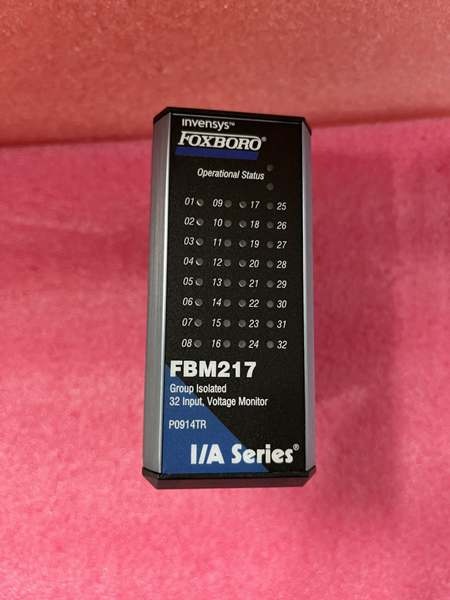
Foxboro FBM217
High-Frequency Troubleshooting FAQ
A: Direct cross-compatibility exists but mismatched firmware builds create sporadic channel dropout and incomplete status uploads. Always cross-reference Foxboro’s compatibility matrix; upgrade firmware to match FCP280’s base runtime revision before rack energization.
Q: Why do random channels show intermittent closed contact status with no field contact closure present?A: Nearly always caused by dual-ended shield grounding or shared cable tray routing alongside 480V motor feeder wiring. Rewire shielding to single-point cabinet ground and separate signal/power cabling minimum 12cm to resolve induced noise false indications.
A: Not recommended. Live removal pulls the module off active Nodebus mid-scan and can trigger momentary bus glitch that toggles safety interlock logic; disable module scan inside DCS configuration software before power-down and replacement.
Commercial Availability & Pricing
Please note: The listed price is not the actual final price. It is for reference only and is subject to appropriate negotiation based on current market conditions, quantity, and availability.