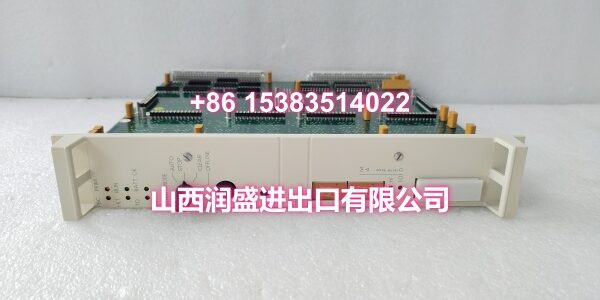
Product Core Brief
- Model: DSQC202
- Order Code: YB560103-AC (common suffix /8)
- Brand: ABB
- Series: ABB S-Series Robot Controllers (S3/S4)
- Core Function: Digital input/output interface module that serves as the signal bridge between ABB robot controllers and external field devices — receives digital input signals from sensors, pushbuttons, and safety circuits, while outputting control signals to actuators, solenoid valves, and indicator lights to enable coordinated operation between the robot and peripheral equipment.
- Product Type: Digital I/O Interface Module
- Key Specs: 16 digital input channels + 16 digital output channels | 24V DC industrial signaling | Galvanic isolation protection | Backplane plug-in form factor | Fast response time (≤1ms) | Onboard status indicators
- Condition: New Original / New Surplus
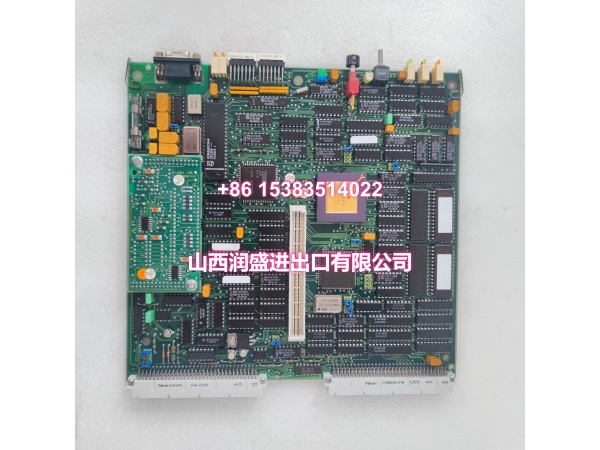
Key Technical Specifications
- Product Type: Digital Input/Output Interface Module for ABB Robot Controllers
- Brand: ABB
- Model Number:
- Order Code: YB560103-AC (reference; common suffix /8)
- Series: ABB S-Series Robot Controllers (S3/S4)
- Core Function: Provides digital signal interaction between the robot controller and external field devices — receives digital input signals from sensors, pushbuttons, and safety circuits, while outputting control signals to actuators, solenoid valves, and indicator lights to enable coordinated operation between the robot and peripheral equipment
- Input Channels: 16 digital input (DI) channels — receives standard 24V DC digital signals from field devices with fast response time (typically ≤1ms), ensuring rapid capture of external equipment state changes
- Output Channels: 16 digital output (DO) channels — provides 24V DC driving voltage to control relays, solenoid valves, indicator lights, and other actuators; each output channel supports up to 0.5A, with total output current not exceeding 8A
- Signal Isolation: Galvanic isolation between field-side I/O and controller-side electronics — protects the robot controller from voltage transients, common-mode noise, and ground loops commonly generated by welders, drives, and conveyors in industrial environments
- Response Time: Input response time typically ≤1ms — ensures that external trigger signals (e.g., part-present sensors, safety interlocks) are captured and processed without delay
- Mounting Method: Backplane plug-in form factor — installs directly into the ABB controller rack without external power wiring or DIN-rail hardware, enabling straightforward like-for-like replacement during maintenance windows
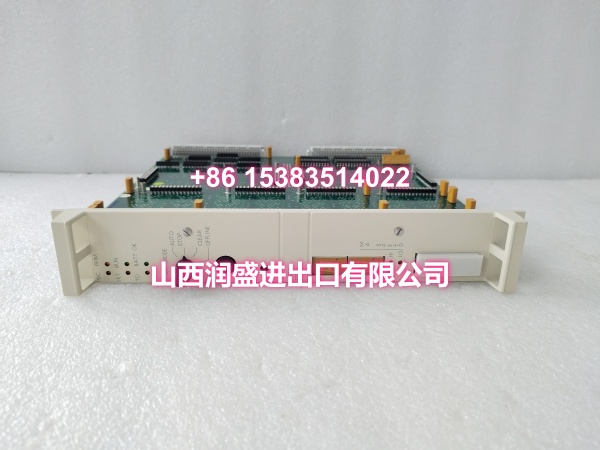
- Status Indicators: Onboard LED indicators for input and output channel status — allows technicians to quickly verify signal states and pinpoint wiring or device faults during troubleshooting
- Communication Interface: Connects to the controller’s internal system bus via the backplane — no external communication cabling required
- Power Supply: Powered from the controller backplane (24V DC)
- Environmental Rating: Designed for industrial control cabinet environments (IP20)
- Product Status: Discontinued (spare parts supply) — compatible with ABB S3/S4 controller ecosystems
- Typical Applications: Digital signal interface for ABB S3/S4 robot cells — connecting part-present sensors, safety interlocks, conveyor signals, gripper controls, solenoid valves, and status indicator lights; serving as a critical spare part for lifecycle support of mature ABB robot installations where I/O module replacement is required
Product Introduction
The ABB DSQC202 (order code YB560103-AC) is a digital input/output interface module designed for ABB’s S-Series robot controllers (S3/S4), engineered to serve as the reliable signal bridge between the robot controller and external field devices. In an automated robot cell, the DSQC202 handles the critical task of translating real-world signals — sensor triggers, safety interlocks, conveyor status, pushbutton commands — into digital data the robot controller can process, and conversely, translating the controller’s output commands into actionable signals that drive solenoid valves, relays, indicator lights, and other actuators.
What distinguishes the DSQC202 in legacy ABB robot installations is its combination of galvanic isolation and noise robustness. Industrial robot cells are electrically noisy environments — welders generate high-frequency transients, variable frequency drives produce common-mode noise, and long cable runs between the controller and field devices are susceptible to ground loops and induced voltages. The DSQC202’s galvanic isolation barrier protects the sensitive controller electronics from these disturbances, helping prevent spurious I/O readings, communication errors, and even controller damage that can result from unisolated field wiring.
The module’s 16DI/16DO channel configuration provides a balanced I/O capacity that meets the signal interaction needs of most standard robot cell applications. The input channels capture external device states with sub-millisecond response times, ensuring that time-critical signals such as safety interlocks and part-present sensors are processed without delay. The output channels deliver sufficient drive current (0.5A per channel, 8A total) to directly control small relays and solenoid valves without requiring intermediate relay boards, simplifying cabinet wiring and reducing component count.
For system integrators and maintenance engineers supporting mature ABB S3/S4 robot installations, the DSQC202 is a foundational spare part. As a discontinued product, availability of genuine units is critical for lifecycle support — an I/O module failure can prevent a robot cell from communicating with its peripheral equipment, resulting in production stoppage. The DSQC202’s backplane plug-in form factor means replacement is a straightforward like-for-like swap: the failed module is removed from the controller rack, the new module is inserted into the same slot, and the system is ready to resume operation after a controller restart, minimizing downtime during maintenance windows.
The onboard LED status indicators are a practical troubleshooting feature that maintenance technicians rely on. When an I/O issue arises — a sensor not triggering, a solenoid valve not activating — the LEDs provide immediate visual confirmation of signal states, allowing technicians to quickly distinguish between field wiring problems, device failures, and module faults without needing to connect a laptop or navigate through controller diagnostics menus.
QA & Testing SOP
Every unit undergoes a standardized verification process before shipment:
- Visual & Anti-Counterfeit Check: Inspect the module housing for proper ABB branding and part number marking (DSQC202, YB560103-AC). Check for physical damage including cracked PCB, damaged connector pins, burnt components, or signs of moisture ingress (corrosion, white residue on contacts).
- Connector Pin Inspection: Examine the backplane connector pins for straightness, corrosion, or bending. Bent pins can cause intermittent connections or short circuits when inserted into the S3/S4 controller rack.
- Backplane Power Test: Insert the module into a test ABB S-Series controller rack and verify that it correctly draws 24V DC power from the backplane with no abnormal current draw or voltage drop.
- Input Channel Test: Apply 24V DC signals to each of the 16 digital input channels and verify that the onboard LED indicators illuminate correctly and that the controller registers each input state change with response time ≤1ms.
- Output Channel Test: Command each of the 16 digital output channels to ON/OFF states from the controller and verify that the onboard LED indicators respond correctly and that each output delivers the expected 24V DC voltage with no channel-to-channel crosstalk.
- Load Test: Connect representative loads (relays, solenoid valves) to the output channels and verify that the module can drive the specified current (0.5A per channel, 8A total) without overheating or voltage drop.
- Galvanic Isolation Test: Verify that the isolation barrier between field-side I/O and controller-side electronics is intact, with no continuity between isolated circuits.
- Noise Immunity Test: Subject the module to simulated electrical noise conditions and verify that input readings remain stable with no false triggering or signal corruption.
- Long-Duration Stability Test: Run the module under continuous I/O cycling for an extended period to verify stable operation with no channel failures, LED indicator faults, or communication dropouts.
- Anti-Static & Mechanical Protection: After passing all tests, the module is placed in anti-static shielding with protective caps on connectors. It is then packed in rigid cardboard with foam cushioning to prevent mechanical shock and ESD damage during transit.
Installation Pitfalls & Guide
Real-World Risks When Replacing This Module:
❗ Controller Compatibility: The DSQC202 is designed for ABB S-Series (S3/S4) robot controllers. It is not compatible with newer IRC5 or OmniCore controllers, which use different I/O module families (e.g., DSQC652, DSQC1030). Always verify your controller model before ordering — installing a DSQC202 in an incompatible controller will result in the module not being recognized.
❗ I/O Configuration Loss: When replacing a failed DSQC202, the controller’s I/O configuration (signal names, DeviceNet addresses, cross-connections, system I/O mappings) is stored in the controller’s memory, not on the module itself. After installing the replacement module, the controller should recognize it automatically if the configuration is intact. However, if the controller memory has been lost or corrupted, you will need to reconfigure the I/O signals from the teach pendant before the module can function.
❗ Incorrect Slot Placement: The DSQC202 must be installed in the correct I/O slot position specified in the controller’s configuration. Installing it in the wrong slot can prevent the controller from recognizing the module, resulting in I/O communication errors. Always verify the slot assignment matches the system documentation before insertion.
❗ Field Wiring Verification: After replacing the module, verify that all field wiring connections are secure and correctly terminated. Loose or miswired connections can cause intermittent I/O failures that are difficult to diagnose. Use the onboard LED indicators to verify that each input and output channel is responding correctly to field signals.
❗ Grounding and Isolation: Ensure that the field-side grounding is properly implemented. While the DSQC202 provides galvanic isolation, improper grounding of field devices can still cause noise issues or damage. Verify that the 24V DC power supply for field devices is properly grounded and that shielded cables are used for long signal runs.
❗ Power-Down Requirement: Always power down the robot controller before inserting or removing I/O modules. Hot-swapping I/O modules in S-Series controllers can cause electrical transients that may damage the module or the controller backplane.
4-Step Replacement Guide:
- Pre-Install: Identify the failed DSQC202 slot position in the controller rack. Document the existing I/O configuration (signal names, DeviceNet address, cross-connections, system I/O mappings) from the teach pendant or backup files. If possible, back up the current controller configuration before proceeding. Power down the robot controller and verify that all power is disconnected.
- Removal: Disconnect any external field wiring connected to the DSQC202 terminal block (if applicable — some versions have wiring via the backplane). Release the module locking mechanism and carefully slide the old DSQC202 out of the controller rack slot. Inspect the backplane connector for damage or debris.
- Install: Insert the new DSQC202 module into the correct controller rack slot, ensuring proper alignment with the backplane connector. Secure the module with the locking mechanism. Reconnect any external field wiring if applicable, verifying correct terminal assignments.
- Power-On Test: Power up the robot controller. Verify that the controller recognizes the DSQC202 module with no I/O communication errors. Use the teach pendant to navigate to the I/O status screen and verify that all 16 input and 16 output channels are accessible. Test each input channel by applying a 24V DC signal and confirming the LED indicator and controller status update. Test each output channel by commanding it ON/OFF from the teach pendant and confirming the LED indicator and field device response. Run a test cycle to verify coordinated operation between the robot and peripheral equipment.
Technical FAQ
What is the difference between the DSQC202 and other ABB I/O modules? The DSQC202 is specifically designed for ABB S-Series (S3/S4) robot controllers, providing 16DI/16DO with galvanic isolation. Compared to newer I/O modules like the DSQC652 (used in IRC5 controllers), the DSQC202 uses a different physical form factor and communication interface — it connects via the controller’s internal backplane rather than DeviceNet. It is not interchangeable with I/O modules from other ABB controller families.
Can the DSQC202 be used in IRC5 or OmniCore controllers? No. The DSQC202 is designed exclusively for ABB S-Series (S3/S4) robot controllers. IRC5 controllers use DeviceNet-based I/O modules such as the DSQC652, DSQC651, and DSQC653. OmniCore controllers use EtherNet/IP-based I/O modules such as the DSQC1031 and DSQC1042. Always verify your controller model before ordering I/O modules.
What are common failure modes for this module? Common failure modes include: backplane connector pin damage from repeated insertion/removal; individual input or output channel failure due to overcurrent or voltage transients from field devices; LED indicator failure; and galvanic isolation degradation from prolonged exposure to electrical noise. In most cases, a failing DSQC202 will trigger I/O communication errors in the controller diagnostics, and individual channel failures can be identified using the onboard LED indicators.
Is the DSQC202 still in production? The DSQC202 is a discontinued product, with supply now limited to spare parts inventory (New Original / New Surplus). For plants maintaining S3/S4 robot installations, having verified genuine DSQC202 modules on hand is critical for lifecycle support, as availability from ABB’s direct supply chain may be limited.
What warranty do you offer on New Surplus parts? We provide a full 12-month warranty on all New Original / New Surplus units. This is fundamentally different from refurbished or pulled modules, which often carry 30–90 day warranties and come with unknown operational history, potential connector wear, and degraded isolation performance. For an I/O module that serves as the signal bridge between your robot controller and field devices, the reliability difference between new surplus and refurbished directly impacts production uptime and the risk of spurious I/O failures.