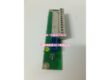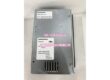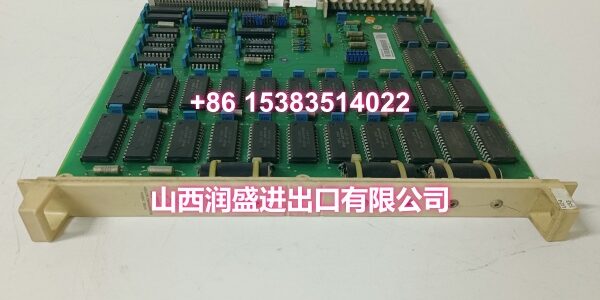
Product Core Brief
- Model: DSQC327A
- Brand: ABB
- Series: ABB Robot Controller I/O Series (IRC5 / S4C+)
- Core Function: Combined digital and analog I/O module for ABB robot controllers, handling discrete I/O signals and analog outputs for process control integration.
- Product Type: Combi I/O Module (Digital + Analog)
- Key Specs: 16 Digital Inputs + 16 Digital Outputs + 2 Analog Outputs | 24VDC | DeviceNet Interface | Front LED Indicators | Hot-Swappable
- Note: Condition: New Original (New Surplus). Specific order code varies by installation configuration.
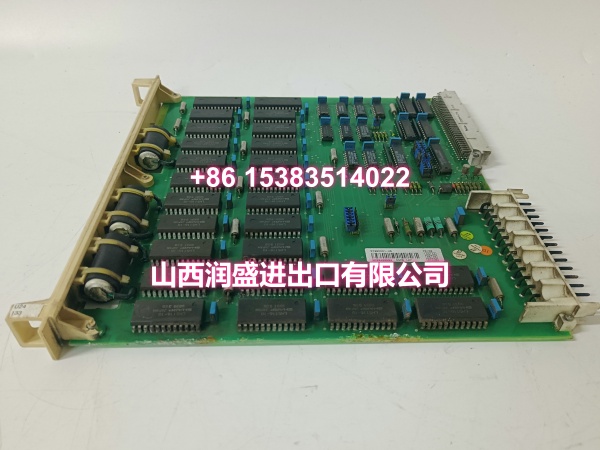
Key Technical Specifications
| Parameter | Value |
|---|---|
| Device Model | |
| Device Type | Combi I/O Module (Digital + Analog) |
| Series | ABB Robot Controller I/O Series (IRC5 / S4C+) |
| Digital Inputs | 16 channels, 24VDC, sinking/source configurable |
| Digital Outputs | 16 channels, 24VDC, 0.5A per channel |
| Analog Outputs | 2 channels, 0-10V or 4-20mA configurable |
| Communication Interface | DeviceNet bus |
| I/O Update Interval | Recommended 1000ms polling rate for standard applications |
| Operating Voltage | 24VDC ±10% (supplied via DeviceNet or external) |
| Operating Temperature | 0°C to +55°C (32°F to 131°F) |
| Storage Temperature | -25°C to +70°C |
| Humidity Range | 5% to 95% RH, non-condensing |
| Mounting | DIN rail mount in robot controller cabinet |
| IP Rating | IP20 |
| Indicators | Front-panel LEDs for power, bus status, and individual I/O channel status |
| Dimensions | Approx. 120 x 100 x 40 mm (module only) |
| Weight | Approx. 0.3 kg |
| Typical Applications | Robot peripheral integration, gripper control, conveyor interfacing, process signal exchange with PLCs |
| Condition | New Original (New Surplus) |
Product Introduction
The ABB DSQC327A is a combined digital and analog I/O module designed for ABB robot controllers, including IRC5 and S4C+ platforms. It serves as a versatile interface between the robot controller and external devices such as grippers, conveyors, sensors, safety circuits, and PLCs, providing both discrete and analog signal handling in a single compact unit.
The module provides 16 digital inputs and 16 digital outputs at 24VDC, covering the majority of standard robot cell I/O requirements. The 16 inputs can accept signals from proximity sensors, photoelectric sensors, pushbuttons, and limit switches, while the 16 outputs can drive solenoid valves, relay coils, indicator lights, and other 24VDC loads. In addition, the DSQC327A includes 2 analog output channels configurable for either 0-10V or 4-20mA signals, enabling direct control of analog devices such as variable-speed drives, proportional valves, or process instrumentation without requiring a separate analog module.
Communication with the robot controller is handled via the DeviceNet fieldbus interface, a widely adopted industrial network protocol that simplifies wiring and enables fast, deterministic data exchange. The DeviceNet connection also carries the module’s 24VDC power supply in many configurations, reducing the need for separate power wiring. The recommended I/O update interval for the DSQC327A is 1000ms for standard applications, balancing responsiveness with controller CPU load.
The module features front-panel LED indicators for power status, DeviceNet bus communication status, and individual I/O channel states. This visual feedback allows maintenance technicians to quickly diagnose wiring issues, sensor failures, or communication problems directly at the cabinet without needing to access the teach pendant or diagnostic software.
The DSQC327A is designed for DIN rail mounting inside the robot controller cabinet or in a separate I/O enclosure. Its compact form factor and standardized DeviceNet interface make it easy to integrate into existing ABB robot cells or to add I/O capacity to expanding automation systems. The module is hot-swappable in many configurations, allowing replacement without powering down the entire controller (though standard safety procedures should always be followed).
For maintenance teams supporting ABB robot installations, the DSQC327A is a direct drop-in replacement for failed or degraded I/O modules. When replacing a DSQC327A, always verify that the DeviceNet address and I/O configuration match the original module to ensure seamless integration with the robot’s existing program and I/O mapping.
QA & Testing SOP
Every unit goes through a structured verification process before shipment:
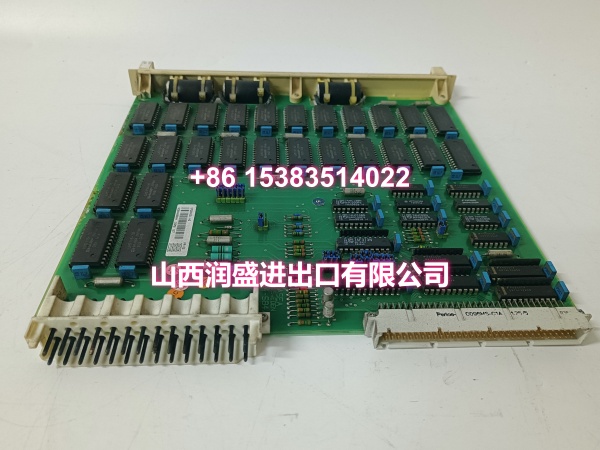
- Visual Inspection: Check the PCB for cracks, burnt components, corrosion on connector pins, and physical damage to the board. Verify that all terminal blocks, connectors, and surface-mount components are securely mounted with no cold joints or solder bridges.
- Connector Pin Verification: Inspect all connector pins (DeviceNet port, terminal blocks, power connectors) for straightness, corrosion, or bending. Bent pins cause poor contact, leading to intermittent communication failures or complete module malfunction.
- Power-On Self-Test: Apply 24VDC power and verify that the module’s power LED illuminates. Check for any abnormal heating of components during the initial power-on. Verify that the module completes its self-diagnostic routine without errors.
- DeviceNet Communication Test: Connect the module to a DeviceNet network and verify that it is recognized by the network scanner. Check that the bus status LED indicates normal communication and that the module responds to network queries.
- Digital I/O Channel Test: Verify each of the 16 digital input channels by applying 24VDC signals and confirming that the corresponding input LED illuminates. Verify each of the 16 digital output channels by commanding them on/off and measuring the output voltage with a multimeter.
- Analog Output Test: Command the 2 analog output channels to known values (e.g., 0V, 5V, 10V or 4mA, 12mA, 20mA) and measure the actual output with a multimeter to verify accuracy and linearity.
- Anti-Counterfeit & Packaging: Verify authenticity markings on the PCB and components. Each unit is shipped in anti-static protective packaging with desiccant to prevent moisture absorption and connector oxidation during transit.
Installation Pitfalls & Guide
Installing or replacing an I/O module requires careful attention to safety procedures and proper handling.
❗ Power-Down Before Installation: Always disconnect power to the robot controller and I/O circuit before removing or inserting the DSQC327A module. I/O modules should be replaced with power off to prevent electrical damage to the module or the DeviceNet network.
❗ Anti-Static Protection: Always wear an anti-static wrist strap when handling the DSQC327A module. The PCB contains sensitive electronic components that can be damaged by electrostatic discharge (ESD). Handle the module by its edges only, avoiding contact with components or connector pins.
❗ DeviceNet Address Configuration: The DSQC327A uses rotary switches or software configuration to set its DeviceNet node address. Before installing the replacement module, verify that the node address matches the original module’s address. A duplicate node address on the DeviceNet network will cause communication conflicts and I/O failures.
❗ Correct Wiring Polarity: Verify that the 24VDC power supply and I/O wiring are connected with correct polarity. Reversing polarity can damage the module’s input/output circuits and connected field devices. Double-check all terminal block connections before applying power.
❗ I/O Configuration Backup: Before replacing the DSQC327A, back up the robot controller’s I/O configuration, including signal names, DeviceNet mapping, and cross-connections. After installing the replacement module, verify that the I/O signals are correctly mapped in the robot’s configuration.
4-Step Replacement Guide:
- Pre-install: Document the existing I/O configuration, including DeviceNet node address, signal names, and wiring connections. Back up the robot controller’s I/O configuration to an external storage device. Verify the replacement module’s model (DSQC327A) matches the original. Prepare anti-static protection, tools, and a multimeter for verification.
- Removal: Disconnect power to the robot controller and I/O circuit. Wear an anti-static wrist strap. Label all wiring connections if not already labeled. Disconnect the DeviceNet cable and terminal block wiring. Release the DIN rail clip and gently pull the module out of the cabinet.
- Install: Set the DeviceNet node address on the new DSQC327A to match the original module. Mount the module on the DIN rail and secure the clip. Reconnect the DeviceNet cable and terminal block wiring, verifying correct polarity and terminal assignments. Double-check all connections before applying power.
- Power-on Test: Apply power to the robot controller and I/O circuit. Verify that the module’s power LED illuminates and the DeviceNet bus status LED indicates normal communication. Use the teach pendant to verify that all digital inputs and outputs are responding correctly. Test the analog outputs by commanding known values and measuring with a multimeter. Monitor the module for several minutes to confirm stable operation.
Technical FAQ
1. What is the difference between DSQC327A and DSQC328A? The DSQC327A is a Combi I/O module with 16 digital inputs, 16 digital outputs, and 2 analog outputs. The DSQC328A is a pure digital I/O module with 16 digital inputs and 16 digital outputs but no analog channels. If your application requires analog output signals (e.g., for controlling a variable-speed drive or proportional valve), the DSQC327A is the appropriate choice. If you only need digital I/O, the DSQC328A is a simpler and potentially more cost-effective option.
2. What communication protocol does the DSQC327A use? The DSQC327A uses the DeviceNet fieldbus protocol for communication with the ABB robot controller. DeviceNet is a widely adopted industrial network protocol based on CAN bus technology, providing deterministic data exchange and simplified wiring compared to point-to-point I/O connections.
3. Can the DSQC327A be hot-swapped? The DSQC327A is designed to be hot-swappable in many configurations, meaning it can be replaced without powering down the entire robot controller. However, standard safety procedures should always be followed: disconnect the I/O power supply before removal, wear anti-static protection, and verify the DeviceNet address before installing the replacement. Always consult your specific robot controller’s maintenance manual for hot-swap procedures.
4. What is the recommended I/O update interval for the DSQC327A? ABB recommends an I/O update interval (polling rate) of 1000ms for the DSQC327A in standard applications. This setting balances I/O responsiveness with controller CPU load. Setting the update interval too low can cause excessive CPU load and potentially lead to scan cycle timeouts, while setting it too high may result in sluggish I/O response. Adjust the update interval based on your specific application requirements.
5. What are common symptoms of a failing DSQC327A I/O module? Common symptoms include: Digital inputs not registering sensor signals; digital outputs not activating connected devices; analog outputs producing incorrect or no signal; DeviceNet communication failures (bus status LED flashing or off); individual channel LEDs not illuminating; and the robot controller reporting I/O communication errors or timeouts. If you’re experiencing any of these symptoms, check the module’s LED indicators and use the teach pendant’s I/O monitoring function to diagnose the issue.
6. What’s the difference between New Surplus and Refurbished for I/O modules? We supply this unit as New Original (New Surplus)—unused, original factory stock. This comes with a standard 12-month warranty. Refurbished I/O modules carry risks including degraded output drivers from prior use, weakened input circuits, and latent failures that may only manifest under full load conditions. For a module that directly interfaces with your production equipment, new surplus is the safer choice.