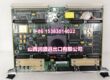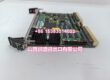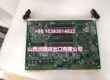
Quick Sizing & Sourcing Snapshot
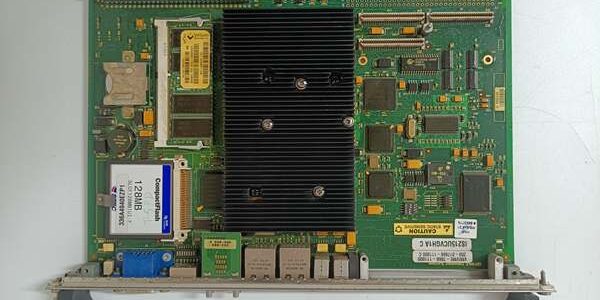
- Manufacturer: GE Multilin (General Electric / Grid Solutions)
- Part Number: URRHH (Also referenced as UR-RHH)
- System Platform: Multilin UR Series Universal Relays (UR, F, G, T, M, L series)
- Hardware Type: Power Supply Module (Active)
- Architectural Role: Plugs into Slot A (or dedicated P/S slot) of the UR chassis, converting wide-range AC/DC field power (100-250V) into regulated low-voltage DC (5V, 24V) for the CPU, CT/VT modules, and dry-contact inputs.
- Key Specifications: 35W Output, 100-240V AC / 125-250V DC Input, 1+1 Redundancy Support.
System Architecture & Operational Principle
The URRHH sits at Purdue Level 1, occupying the primary power slot (usually Slot A, furthest from the CPU) in a UR relay chassis (e.g., UR8CH, UR10CH). It is the “heart” of the hardware stack, interfacing directly with your station battery or AC distribution panel.
Upstream, it takes raw, unregulated site power: 100-240V AC (50/60Hz) or 125-250V DC. It handles “dirty” power—brownouts and swells—better than the smaller URSH. Internally, a switching regulator conditions this to create the isolated DC rails (+5V Logic, +24V for Dry Contacts/Relay Coils) distributed via the UR Backplane (P1/P2 connectors).
Downstream, it feeds the UR9x (CPU), all I/O modules (UR8LH, UR6PH, URRHH), and provides the excitation voltage for field-side dry contacts.
The “HH” variant is the High-Capacity unit. Unlike the standard URSH (approx 20W), this pushes 35W. This matters when you load up Slots 1-6 with power-hungry CT/VT modules (UR8LH) and high-density relay outputs (UR8RH); the smaller supply will fault on overload during a cold startup. It supports 1+1 Redundancy: you populate Slot A and Slot F with two URRHH modules, and the chassis automatically load-shares or fails over if one dies.
Core Technical Specifications
- Input Voltage (HI Range): 100-240V AC (50/60Hz) or 125-250V DC (Standard)
- Input Voltage (LO Range): 24-48V DC (Model dependent/via jumpers)
- Power Output: 35W Continuous (Typical)
- Output Rails: +5V Logic, +24V Aux (Internally Regulated)
- Internal Protection: 4A Slow-Blow Fuse (User Accessible)
- Redundancy: 1+1 (Dual Module Support in UR Chassis)
- Isolation: 2000V AC (Input to Chassis/Logic)
- Indicators: PWR (Green – Healthy), Self-Test (Cycling/States)
- Hot-Swap: Yes (In Redundant Config / With Inhibit)
- Operating Temp: -40°C to +85°C (Full Industrial)
Customer Value & Operational Benefits
High-Density I/O Support (No Derating)
The 35W capacity is the selling point over the URSH. A fully loaded G60 or T60 with 2x UR8LH (CT/VT), 1x UR8RH (Relays), and a UR6PH pulls ~28-30W at startup. A URSH (20W) will trip its internal protection or cause voltage sags on the 5V rail, leading to “CPU Reset” loops during commissioning. The URRHH runs at 80% load, keeping the 5V rail tight and preventing spurious “Power Loss” resets during summer heatwaves when capacitor ESR drops.
Seamless Redundancy (1+1)
Populating Slot A and Slot F with two URRHH units gives you true N+1 Power. If a capacitor dries out on the “A” supply (common failure mode after 10 years), the “F” supply picks up the load instantly. The relay stays “In Service” through the swap. This eliminates the single-point-of-failure for protection schemes in critical substations (Nuclear/Grid Baseloead).
Wide Input Tolerance
It swallows 100V AC to 250V DC without jumpering (on the HI-range model). If your site converts from 125V DC batteries to 120V AC station service, or vice-versa during a retrofit, you don’t rewire the power supply. Land the new source on the same terminals. It handles the transition, saving 8-12 man-hours of panel rework.
Field Engineer’s Notes (From the Trenches)
The “Gotcha” is Inrush Current & Fusing.
The URRHH has a 4A internal slow-blow fuse (visible through the vent slots on top). If you’re powering externaldry contacts (sourcing 24V from the UR terminal block to field switches), you’re drawing off the URRHH’s 24V rail.
Scenario: You wire 20 field contacts (e.g., 52a/52b aux contacts) all pulling 10mA each = 200mA. That’s fine. But if you short the 24V+ to Common during wiring, that fuse pops instantly. Now you have a “PWR FAIL” on a live relay.
Rule: Use the URRHH’s 24V onlyfor signal wiring (<500mA total). For heavy loads (driving a lockout relay coil), use an external 24V PSU landed on the UR’s Form-C outputs. Don’t stress the internal 35W budget.
Redundancy Trap: In a dual-PS setup (Slot A + Slot F), both units share the load (approx 50/50). If you pull the “A” unit live (hot-swap), the “F” unit sees a momentary current spike as it picks up 100% load. Ensure your input voltage (125V DC) is stiff. A weak station battery might sag below 100V during the handoff, causing a total rack reboot. Use the “Inhibit” function in EnerVista before pulling a live PSU in redundant mode.
Real-World Applications
- T60 Transformer Protection (500kV Substation): Chassis loaded with UR8LH (Diff CTs), UR8NH (HV VTs), and UR8RH (Trip/Close Relays). The URRHH in Slot A handles the 30W load easily. A second URRHH in Slot F provides redundant power; during a storm, lightning took out the “A” unit’s input fuse, but the “F” unit held the relay “In Service” until the next maintenance window.
- G60 Generator Protection (Offshore Platform): Space is tight. Using the URRHH (35W) allows packing a UR8LH and UR6PH into one 6-slot chassis without exceeding power budgets. The wide input range (100-240V AC) handled the platform’s dodgy 115V AC supply during diesel generator transitions without rebooting the relay.
High-Frequency Troubleshooting FAQ
Q: “PWR” LED is OFF, but 125V DC is landed at the URRHH terminals and fuses look good.
A: Check the Self-Test Cycle. The URRHH runs an internal diagnostic on power-up (LED might blink/fast-cycle). If it settles to OFF, the output rail has shorted (likely from a failed I/O module downstream).
- Power down the chassis.
- Pull all I/O modules (UR8LH, UR6PH, etc.).
- Power up with onlyURRHH installed. If PWR goes Green, a daughter card is shorting the 5V/24V backplane.
- Re-insert modules one by one to find the culprit (usually a with a fried A/D chip from a CT open-circuit surge).
Q: Can I mix URRHH (35W) and URSH (20W) in the same chassis for redundancy?
A: Technically Yes (1+1 supported), but Not Recommended.
While the UR architecture allows mixing, the load sharing logic expects similar units. The URRHH will carry ~70% of the load, the URSH ~30%. Under high load (30W), the URSH may current-limit, causing voltage droop on the 5V rail and “CPU Reset” faults. If running redundant, use two URRHH units. It’s $200 more for insurance against a midnight wake-up call.
Q: Relay reboots when the Breaker Closes (Heavy Inrush). Is the URRHH bad?
A: Likely Input Voltage Sag, not a bad PSU.
When the station breaker closes (large transformer inrush), the 125V DC station battery can dip to 105-110V for 100ms. The URRHH shouldride through, but if the input cables are undersized (#14 vs required #10) or the battery charger is weak, the voltage at the URRHH terminals drops below the Under-Voltage Lockout (UVLO) threshold (~90V DC).
- Measure input volts at the URRHH terminal during a close test.
- If <100V DC during inrush: Upsize the feed cables or check the battery string. The URRHH is likely fine; the source is sagging.
Please note: The listed price is not the actual final price. It is for reference only and is subject to appropriate negotiation based on current market conditions, quantity, and availability.