Quick Sizing & Sourcing Snapshot
- Manufacturer: GE (General Electric)
- Part Number: IS200EPDMG1B
- System Platform: EX2100 / EX2100e Excitation Control
- Hardware Type: Exciter Power Distribution Module (EPDM)
- Architectural Role: Acts as the primary power entry/distribution hub in the exciter cabinet, converting/filtering 125V DC or 115V AC inputs to feed the EPBP backplane and downstream boards (EGPA, EXT B, EPSM).
- Key Specifications: 125V DC or 115V AC Input, 24V DC Regulated Output, 7 Toggle Switches, Multi-connector Interface to EPBP.
System Architecture & Operational Principle
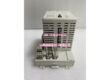
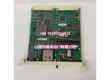
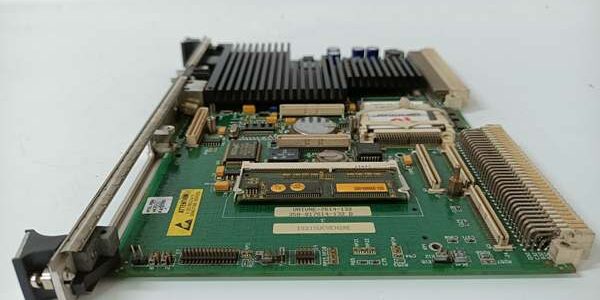
The is a powered distribution module mounted on the side of the EPBP (Exciter Power Backplane) within the EX2100 Exciter Cabinet. It serves as the “Power Entry Point” for the entire control and protection stack.
Upstream (Input):
- It accepts 125V DC from the station battery (primary) and/or 115V AC (secondary/redundant) via the onboard terminal block (TB1).
- If AC is used, it typically interfaces with an external DACA (AC to DC converter) module to rectify it to 125V DC.
- The board includes filtering (capacitors/inductors) and Metal Oxide Varistors (MOVs) to clean the incoming power and suppress transients before distribution.
Internal Processing:
- It creates the P125V and N125V buses (nominally +62.5V / -62.5V with center ground) used by the excitation system.
- It houses 7 Toggle Switches (S1-S7), allowing operators to manually isolate power to specific downstream branches (e.g., EGPA#1, EXT B, EPSM_M1) for maintenance without killing the whole rack.
Downstream (Output):
- It distributes power to the EPBP via multiple plug connectors (e.g., 2x 12-pin, 9x 2-pin, 1x 3-pin).
- The EPBP then fans this power out to the EPSM modules (for 5V/15V/24V logic) and directly to EGPA (Gate Pulse Amplifiers) and EXT B (Terminal Board).
- Each output branch is fused (typically 14 fuses on board) and has a corresponding Green LED to indicate “Power Available” for that specific circuit.
Core Technical Specifications
- Input Voltage: 125 V DC (Station Battery) OR 115 V AC (Rectified via DACA)
- Output Voltages:
- P125 / N125 (Center Grounded: +62.5V / -62.5V relative to GND)
- 24 V DC (Regulated, for control/logic via EPSM)
- Control Elements: 7 Toggle Switches (S1-S7) for branch isolation
- Protection: 14+ Fuses (Branch protection), MOVs (Surge Suppression)
- Indicators: Green LEDs (One per fused output branch)
- Connectors:
- TB1: Screw Terminal (Power Input)
- Backside: 12-pin (x2), 2-pin (x9), 3-pin (x1) mating to EPBP
- Mounting: Chassis Mount (Attaches to side of EPBP frame)
- Revision: G1B (Hardware/Artwork update of G1A, improved durability/components)
Customer Value & Operational Benefits
Centralized Power Control & Safety
The “Gotcha” in excitation systems is high-energy DC bus work. The EPDMG1B provides 7 physical Toggle Switches. You can kill power to the EGPA (Gate Drives) specifically, while keeping M1 Controller (EPSM) alive for diagnostics. This allows Live Maintenance on power stages without a full turbine trip/shutdown, saving $50k+/hour in lost generation.
Transient Protection for Sensitive Logic
The onboard MOVs and Filtering stop voltage spikes from the SCR Bridge (commutation notches, thyristor switching) from traveling upstream to the 125V DC station battery or downstream to the 5V/24V logic (DSPX/EMIO). This prevents “Phantom Reboots” of the controller during heavy excitation events (e.g., Field Forcing).
Branch-Level Fault Isolation
With 14+ independent fuses and LED indicators, a short in the “EGPA Ch 2” power feed only blows thatfuse. The Green LED for that branch goes out, instantly telling you where the fault is. The M1/M2/C controllers and other EGPAs stay online (Degraded Mode), preventing a total excitation failure.
Field Engineer’s Notes (From the Trenches)
The EPDM is the “Gatekeeper.” Never hot-swap this board. It handles raw 125V DC. Pulling it live risks arc flash. LOTO the 125V DC Supply at the breaker before removal.
The Toggle Switch Trap: During outage prep, guys often throw all 7 Switches (S1-S7) to OFF to “be safe.”
Mistake: Forgetting to flip them back ON after reinstalling. The board is seated, LEDs are off, and you wonder why the EGPA has no power. Check the Switches first—they override the fuses.
G1B vs G1A: The “B” revision usually has sturdier connector housings and better MOVs. If upgrading from G1A to G1B, photograph the 7 Switch Positions on the old board. The default state isn’t always “ON.” Mimic the old config exactly.
Input Torque: The 125V DC lugs (TB1) handle high current. Use a torque screwdriver (0.6-0.8 Nm). A loose 125V connection here creates a hot spot that can melt the terminal block insulator over a 6-month run, leading to a cabinet fire risk or unexpected power loss.
Real-World Applications
- 500MW Steam Turbine (EX2100): The EPDMG1B sits on the EPBP. It takes 125V DC from the plant battery, filters it, and distributes P125/N125 to three EGPA boards driving the thyristor bridge. Switch S3 killed EGPA#2 for a gate-lead replacement while M1 controller logged data.
- Frame 9FA Gas Turbine: During a lightning storm, a surge hit the 125V DC bus. The EPDMG1B’s MOVs clamped the spike, sacrificing themselves (visible charring) but saving the $20k M1 controller stack from overvoltage death.
High-Frequency Troubleshooting FAQ
Q: ToolboxST shows “Control Power Loss” or “24V Bus Fail,” but the 125V DC at TB1 is good.
A: Check the Toggle Switches (S1-S7). One might be OFF.
- If switches are ON, check the Green LEDs on the EPDM.
- LED Out = Fuse Blown or Switch OFF.
- If LED is ON but downstream (EPSM) has no 24V, the issue is the EPSM module (plugged into EPBP), not the EPDM distribution.
- Verify the EPBP Backplane connection: The 12-pin/2-pin connectors on the back of EPDM must be fully engaged with the EPBP. Vibration can walk this board up; push it firmly down onto the headers.
A: Yes, functionally they are interchangeable (Form-Fit-Function). The “B” revision has component upgrades (better capacitors, robust connectors). In a pinch, a G1A works, but for new installs or critical units, use the G1B. Ensure the 7 Toggle Switch functions match your system logic (usually printed on the board overlay).
Q: The 125V DC Input is landed, Switches are ON, but all LEDs are dim/flickering.
A: You likely have a Poor 125V DC Source or a high-resistance connection at TB1.
- Measure voltage directly at the EPDM TB1 terminals under load.
- If you see <120V DC or voltage fluctuates when a specific EGPA turns on, the issue is upstream (Plant Battery/Charger or EPDM input wiring resistance), not the EPDM board itself.
- Check for corrosion in the TB1 screw clamp; GE boards of this era used tin-plated clamps that corrode in coastal/humid plants, increasing resistance.
Please note: The listed price is not the actual final price. It is for reference only and is subject to appropriate negotiation based on current market conditions, quantity, and availability.