Quick Sizing & Sourcing Snapshot
- Manufacturer: GE (General Electric)
- Part Number: IS200EPSMG1A
- System Platform: EX2100 / EX2100e Excitation Control
- Hardware Type: Exciter Power Supply Module (EPSM – Group 1)
- Architectural Role: Converts 125V DC from EPDM into regulated +5V, ±15V, +24V, and isolated +70V DC for M1/M2/C controller stacks.
- Key Specifications: 125V DC Input, 6 Regulated Outputs, Single-Slot VME, EPBP Backplane Mount.
System Architecture & Operational Principle
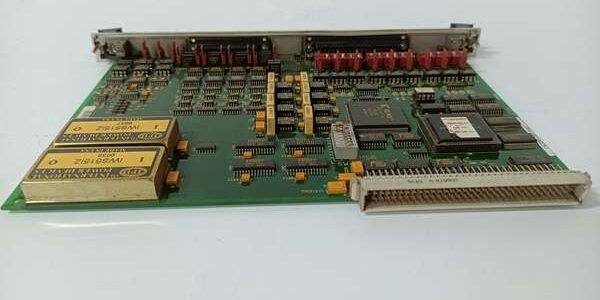
The is an active power conversion module that plugs vertically into the EPBP (Exciter Power Backplane), typically located beneath the controller racks (M1, M2, C) in the EX2100 cabinet.
Upstream (Input):
- It receives 125V DC (nominal) from the EPDM (Exciter Power Distribution Module) via the EPBP backplane connectors.
- Internally, a Buck Regulator first steps this down to an intermediate ~50V DC.
- A Push-Pull Inverter then transforms this to generate the isolated secondary voltages.
Downstream (Output & Distribution):
The module provides the life-blood voltages for the control stack:
- +5V DC: Logic power for DSPX, EMIO, EISB (Core processing).
- +15V / -15V DC: Analog power for signal conditioning (EPCT, EACF).
- +24V DC: External device power (Cooling Fans, EDEX/Crowbar, EDCF).
- Isolated +70V DC: Contact Wetting voltage for ECTB and EXTB terminal boards (ensures reliable dry contact sensing).
- 55V DC: (Select models/configs) for Ground Detector circuits (EGDM).
Architectural Note: The “G1A” suffix denotes Group 1, specifically designed for the Excitation Control system (M1, M2, C cores). This differs from G2A modules, which are used in the Regulator Control section and often include an附加 daughterboard (EPSD).
Core Technical Specifications
- Function: Exciter Power Supply Module (EPSM)
- Input Voltage: 125 V DC (Range typically 100-145V DC from EPDM)
- Key Outputs:
- +5V DC (Logic, high current)
- ±15V DC (Analog/Op-Amp supply)
- +24V DC (Fans, Crowbar, EDCF, EDEX)
- Isolated +70V DC (Contact Wetting for ECTB/EXTB)
- 55V DC / 20V AC(Variants for Ground Detect/Gate Drive)
- Conversion Topology: Buck Regulator + Push-Pull Inverter
- Ripple/Noise: <1% (Critical for stable AVR logic)
- Protection: Over-voltage, Over-current, Thermal Shutdown
- Form Factor: Single-Slot VME (Plugs into EPBP Backplane)
- Indicators: PWR (Green) LED (Indicates module health/regulation)
- Operating Temp: -40°C to +70°C (Ruggedized)
Customer Value & Operational Benefits
Centralized Voltage Precision
The G1A module is the “Heart” of the control rack’s power. By generating stable, low-ripple (+5V, ±15V) rails, it prevents “bit flips” in the DSPX or EMIO during generator load swings. Clean ±15V ensures EPCT (CT/PT) readings are accurate, keeping the AVR loop stable and preventing VAR oscillation.
Contact Reliability via 70V Wetting
The dedicated Isolated +70V DC output is a game-changer for dry contacts (52G, 86G on ECTB). Unlike 24V systems that struggle with oxidized contacts, 70V punches through film buildup. This eliminates “False Open” alarms on Breaker Status during humid summers, preventing nuisance trips.
TMR Fault Isolation
In a TMR setup, you have three modules (M1, M2, C). If a short on the M1 rack fries the M1 EPSM’s +5V rail, the M2 and C EPSMs (and their controllers) remain fully powered and voting. This preserves 2oo3 availability during a localized power fault.
Field Engineer’s Notes (From the Trenches)
The “Gotcha” is EPDM Fusing & Hot-Swap Limits.
This board can be hot-swapped in a redundant (TMR) setup ifthe system is in Degraded Mode (other cores healthy).
However, if you pull it while the associated controller (e.g., M1) is the Active/Primary, you will force a Controller Switch (M1->M2), which might cause a momentary blip in excitation if not configured for bumpless transfer.
Pre-Check: Always verify the EPDM (Upper Cabinet) fuses first if this board’s PWR LED is OFF. A blown fuse on the EPDM (Main 125V feed) kills power to allEPSMs on the EPBP.
Seating: Because it plugs vertically into the EPBP, vibration can “walk” it up slightly. If M1 controller cards have intermittent power but the EPSM LED is on, press the EPSM firmly into the EPBP socket. The +5V pins might be partially mated while the bulk power pins (looser tolerance) stay connected.
Real-World Applications
- 500MW Steam Turbine (EX2100): The M1, M2, and C racks each have an plugged into the lower EPBP. They power the DSPX and EMIO boards. During a lightning storm, a surge on M1’s 125V line popped the EPDM fuse for M1 only; M2/C kept the unit online with full excitation control.
- Gas Turbine Auxiliary Exciter: Providing the +70V Wetting to the ECTBG1A (Trip Terminal Board). This ensured the “Overspeed Trip” contact from the turbine governor was read reliably, even when a layer of oil mist coated the auxiliary relay contacts.
High-Frequency Troubleshooting FAQ
Q: The EPSMG1A “PWR” LED is OFF. All M1 controller cards are dead. EPDM has 125V DC output.
A:
- Reseat the Module: Press firmly on the top of the EPSMG1A to ensure it is seated in the EPBP backplane sockets. Vibration loosens these.
- Check EPBP Power: Verify 125V DC is reaching the EPBP’s input lugs (where EPDM connects).
- Internal Fault: If seated and EPDM is live, the internal regulator/fuse on the EPSMG1A has likely failed. Replace the module. (Safe to hot-swap in TMR if M2/C are healthy).
A: Generally No. While physically similar (VME slot), the G2A is designed for the Regulator Control backplane (ERRB/ERBP) and often includes provisions for the EPSD Daughterboard (handling DC Link power). The G1A is tuned for the Excitation Control stack (EBKP/EPBP). Mixing them can cause voltage mismatches (e.g., missing 70V wetting) or connector keying issues.
Q: +5V is present, but ±15V or +24V is missing on the EMIO/DSPX diagnostics.
A: The EPSMG1A has internal regulators for each rail. If +5V is good but ±15V is 0V, the module has a partial internal failure (e.g., inverter transformer tap issue or secondary regulator short). The board needs replacement; it cannot supply clean analog power to the EPCT/EACF boards, risking AVR inaccuracy.
Please note: The listed price is not the actual final price. It is for reference only and is subject to appropriate negotiation based on current market conditions, quantity, and availability.