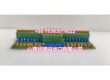
Product Core Brief
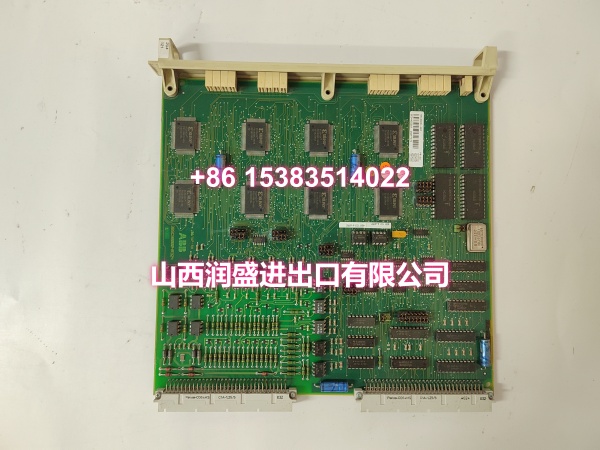
- Model: DSDP170
- Brand: ABB
- Series: ABB Advant Master / Advant OCS
- Core Function: High-speed programmable pulse counting module for position, length, speed, and frequency measurement — receives pulse signals from encoders and sensors, counts/accumulates pulses, and transmits data to ABB controllers for motion control, production monitoring, and process automation.
- Product Type: Pulse Counting Module / Pulse Counter Board
- Key Specs: Maximum pulse frequency 2.5 MHz | Programmable counting parameters (range, direction, polarity) | Multiple input/output interface support | Modular plug-in design | Compatible with ABB Advant Master chassis
- Condition: New Original / New Surplus
Key Technical Specifications
- Product Type: Pulse Counting Module for DCS/PLC Systems
- Brand: ABB
- Model Number: DSDP170
- Order Code: 57160001-ADF
- Series: ABB Advant Master / Advant OCS
- Core Function: High-performance pulse counter — used for position/length measurement and speed/frequency measurement. The module counts clock pulses to perform counting operations, and can also be used for frequency division, timing, and generating beat pulses and pulse sequences
- Maximum Pulse Frequency: 2.5 MHz — suitable for high-speed rotary encoders and other fast pulse-output sensors
- Input Signal Types: Supports multiple input interface types including push-pull, open-drain, and open-source configurations, enabling direct connection to various encoder and sensor types
- Programmable Parameters: Users can configure counting range, counting direction (up/down/reversible), pulse polarity, and input/output modes via programming to match specific application requirements
- Output Interfaces: Supports parallel output, serial output, and PWM output for flexible integration with controllers and other equipment
- Data Transmission: High-speed data transfer of count values and measurement data to the control system or上位机 software for real-time processing
- Mounting Method: Modular plug-in format for installation in compatible ABB Advant Master DCS/PLC chassis — drop-in replacement with minimal downtime
- Physical Dimensions: Approximately 328.5mm (depth) × 238.5mm (width) × 18mm (height), net weight approximately 0.38kg
- Operating Environment: Control room installation; designed for stable operation in industrial environments with high reliability and low failure rate
- Origin: Sweden / Switzerland
- Compatibility: ABB Advant Master series, Advant OCS systems — serves as a dedicated pulse counting interface for applications requiring precise position, speed, and frequency measurement
- Typical Applications: Position and length measurement in manufacturing and packaging lines; speed and frequency monitoring of rotating equipment (motors, turbines, conveyors); encoder signal acquisition for motion control systems; production counting and batching in process industries; serving as a critical spare part for lifecycle support of mature ABB Advant Master installations where pulse counting functionality is required
Product Introduction
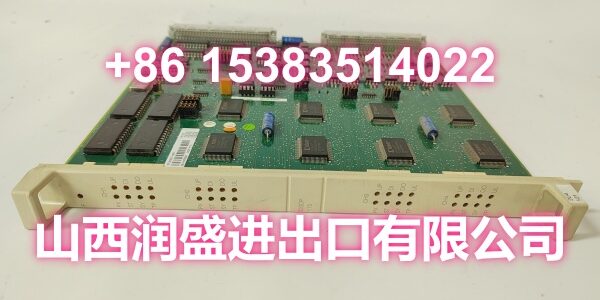
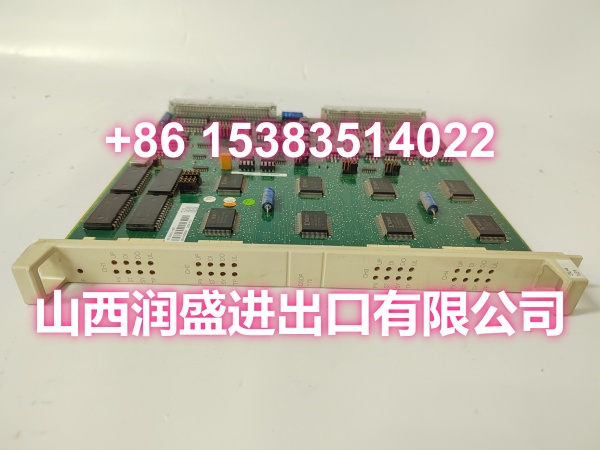
The ABB DSDP170 57160001-ADF is a high-performance programmable pulse counting module from ABB’s Advant Master / Advant OCS series, engineered to provide precise position, length, speed, and frequency measurement in industrial automation systems. As a dedicated counter interface in ABB DCS/PLC architectures, the DSDP170 is responsible for receiving high-speed pulse signals from field devices — rotary encoders tracking shaft position, photoelectric encoders measuring linear displacement, or tachometers monitoring rotational speed — and converting them into accurate count values and frequency data that the controller can use for motion control, production monitoring, and process automation.
What makes the DSDP170 stand out in ABB installations is its combination of high-speed counting capability and flexible programmability. With a maximum pulse frequency of 2.5 MHz, it can accurately capture fast-moving encoder signals that lower-speed counters would miss — critical in applications where position accuracy or speed measurement precision directly impacts product quality or process safety. The module supports multiple input interface types (push-pull, open-drain, open-source), eliminating the need for external signal converters when connecting to different encoder models, and its programmable parameters (counting range, direction, polarity, input/output modes) allow system integrators to tailor the module’s behavior to specific application requirements without hardware modifications.
For system integrators and MRO procurement teams maintaining ABB Advant Master or Advant OCS systems, the DSDP170 is a specialized spare part that becomes critical when position measurement, speed monitoring, or high-speed production counting functions are part of the process. A failed pulse counting module can result in loss of position feedback, inaccurate speed readings, or missed production counts — all of which can lead to product defects, equipment damage, or production downtime. The DSDP170’s modular plug-in design means replacement is a straightforward swap with no rewiring typically required at the module level, allowing maintenance teams to restore counting functionality quickly during a maintenance window.
As plants extend the lifecycle of mature ABB installations, having verified genuine DSDP170 modules on hand ensures continuity of critical measurement and counting functions and reduces the risk of production disruptions caused by pulse counter board failures. The 57160001-ADF order code is a proven hardware variant with a strong reliability track record in installed bases across power, petrochemical, metallurgical, and manufacturing industries.
QA & Testing SOP
Every unit undergoes a standardized verification process before shipment:
- Visual & Anti-Counterfeit Check: Inspect the module housing for proper ABB branding and part number marking (DSDP170, 57160001-ADF). Check for physical damage including cracked PCB, damaged connector pins, burnt components, or signs of moisture ingress (corrosion, white residue on contacts).
- Connector Pin Inspection: Examine the backplane connector pins and pulse input/output connectors for straightness, corrosion, or bending. Bent pins can cause intermittent connections or short circuits when inserted into the Advant Master chassis.
- Backplane Power Test: Insert the module into a test ABB Advant Master chassis and verify that it correctly draws power from the backplane with no abnormal current draw or voltage drop.
- Pulse Input Test: Apply known-frequency pulse signals (up to 2.5 MHz) to the counter input channels and verify that the module accurately counts pulses with no missed or double-counted pulses across the full frequency range.
- Programmable Parameter Test: Verify that the module correctly responds to programmed parameter changes — counting direction reversal, range limits, pulse polarity inversion — confirming that all configurable features function as specified.
- Input Interface Compatibility Test: Test the module with different input signal types (push-pull, open-drain, open-source) to verify correct signal recognition across all supported interface configurations.
- Controller Communication Test: Verify that the module correctly reports count values, frequency data, and status information to the test controller and that the controller can read measurement data without communication errors.
- Long-Duration Stability Test: Run the module under continuous high-frequency pulse input for an extended period to verify stable counting with no drift, overflow errors, or communication dropouts.
- Anti-Static & Mechanical Protection: After passing all tests, the module is placed in anti-static shielding with protective caps on connectors. It is then packed in rigid cardboard with foam cushioning to prevent mechanical shock and ESD damage during transit.
Installation Pitfalls & Guide
Real-World Risks When Replacing This Module:
❗ Encoder Signal Type Mismatch: The DSDP170 supports multiple input types (push-pull, open-drain, open-source), but the module must be configured to match the connected encoder’s output type. A mismatch can cause missed pulses, incorrect counts, or damage to the input circuit. Always verify the encoder’s output specification and configure the module’s input mode accordingly before applying power.
❗ Wiring Polarity and Pinout: Pulse signals from encoders often have specific pin assignments (A phase, B phase, Z phase, common). Incorrect wiring can cause the counter to read in the wrong direction, miss pulses, or fail to count entirely. Always verify wiring against the encoder’s pinout diagram and the module’s terminal assignment before connecting.
❗ Maximum Frequency Exceeded: The DSDP170 supports pulse frequencies up to 2.5 MHz. If the connected encoder or sensor outputs pulses above this frequency, the module will miss counts. Verify that the field device’s maximum output frequency is within the module’s specification.
❗ Incorrect Slot Placement: The DSDP170 must be installed in the designated slot position specified in the system configuration. Installing it in the wrong slot can cause the controller to fail to recognize the counter module, resulting in complete loss of counting functionality. Always verify the slot assignment matches the system documentation before insertion.
❗ Count Value Loss on Replacement: When replacing a failed DSDP170, the accumulated count value stored in the old module will be lost. For applications where the total count or position reference is critical (e.g., position control, production totals), record the last known count value from the controller or SCADA system before replacement, and manually initialize the new module to the correct starting value if the system supports it.
❗ Hot-Swap Risk: While some ABB DCS/PLC chassis support hot-swapping of I/O modules, removing or inserting the DSDP170 while the system is powered can cause momentary loss of counting — potentially missing pulses during the swap. For applications where every pulse matters (e.g., position control, high-speed production counting), always schedule the replacement during a planned maintenance window and hold the process if possible.
❗ Programming/Configuration Mismatch: If the DSDP170 has been programmed with specific parameters (counting range, direction, polarity, output mode), ensure that the replacement module is configured identically. A configuration mismatch can cause unexpected behavior such as reversed counting direction, incorrect range limits, or wrong pulse polarity interpretation.
4-Step Replacement Guide:
- Pre-Install: Identify the failed module slot and document the existing configuration (slot position, encoder wiring, counting parameters, accumulated count value from the controller/SCADA). Back up the current controller configuration including any counter-specific programming. If possible, schedule the replacement during a planned maintenance window and notify operations of potential loss of counting functionality.
- Removal: If hot-swap is supported per the system documentation, follow the proper hot-swap procedure. Otherwise, power down the Advant Master chassis. Disconnect all encoder/pulse input cables from the module, labeling each cable for reconnection. Release the module locking mechanism and carefully slide the old DSDP170 out of the chassis slot. Inspect the backplane connector for damage or debris.
- Install: Insert the new DSDP170 module into the correct chassis slot, ensuring proper alignment with the backplane connector. Secure the module with the locking mechanism. Reconnect all encoder/pulse input cables to the correct terminals, verifying pinout and signal type compatibility. Double-check that wiring matches the I/O documentation.
- Power-On Test: Power up the chassis (if it was shut down). Verify that the module powers up correctly from the backplane. Check the controller for any I/O fault codes related to the pulse counting module. Apply a test pulse signal (or rotate the encoder manually) and verify that the module correctly counts pulses and reports the count to the controller. If applicable, initialize the accumulated count value to the last known value. Verify that any programmed parameters (counting direction, range, polarity) function correctly. Monitor the system for stable operation before returning to full production.
Technical FAQ
What is the difference between the DSDP170 and the DSDP140B? The DSDP170 is a high-speed pulse counting module designed for position, length, speed, and frequency measurement with a maximum pulse frequency of 2.5 MHz and support for multiple encoder input types (push-pull, open-drain, open-source). The DSDP140B is a programmable counter board focused on flow metering, energy monitoring, and production counting applications. While both are counter modules, the DSDP170 is optimized for high-speed encoder signal acquisition and motion control applications, while the DSDP140B is optimized for process metering and batching. They are not interchangeable — select the module based on your specific application requirements.
What types of field devices can connect to the DSDP170? The DSDP170 is designed to receive pulse signals from rotary encoders, photoelectric encoders, tachometers, and other pulse-output sensors used for position, length, speed, and frequency measurement. The module supports multiple input interface types (push-pull, open-drain, open-source), making it compatible with a wide range of encoder models from different manufacturers.
What are common failure modes for this module? Common failure modes include: backplane connector pin damage from repeated insertion/removal; pulse input circuit damage from voltage transients on field wiring (especially if external surge protection is not installed); counting logic corruption due to firmware issues; PCB trace corrosion from moisture ingress in humid environments; and communication failure preventing the controller from reading count values. In most cases, a failing DSDP170 will report incorrect counts, miss pulses, or stop counting entirely, which the controller will flag as an I/O fault.
Is the DSDP170 compatible with ABB 800xA systems? The DSDP170 is designed for ABB Advant Master / Advant OCS series systems. Compatibility with newer platforms (such as 800xA) depends on the specific system architecture and whether legacy counter interfaces are supported. For newer systems, ABB offers alternative counter and I/O modules that may be more appropriate. Always verify compatibility with your specific controller model and firmware version before ordering.
What warranty do you offer on New Surplus parts? We provide a full 12-month warranty on all New Original / New Surplus units. This is fundamentally different from refurbished or pulled modules, which often carry 30–90 day warranties and come with unknown operational history, potential connector wear, and degraded counting accuracy. For a pulse counting module used in position control or high-speed production monitoring, the reliability difference between new surplus and refurbished directly impacts measurement accuracy and the risk of product defects or equipment damage from incorrect position/speed feedback.