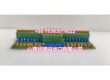
Product Core Brief
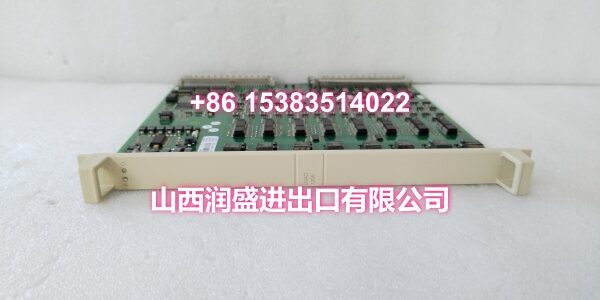
- Model: DSAO120A
- Brand: ABB
- Series: ABB Advant OCS / S100 I/O System
- Core Function: High-precision analog output module that converts digital control signals into standard analog signals (4-20mA / 0-10V) for precise actuator control in industrial automation systems.
- Product Type: Analog Output Module / DCS I/O Card
- Key Specs: 8 independent analog output channels | 16-bit resolution | ±0.1% full-scale accuracy | 4-20mA / 0-10V output | Compatible with control valves, VFDs, servo drives
- Condition: New Original / New Surplus
Key Technical Specifications
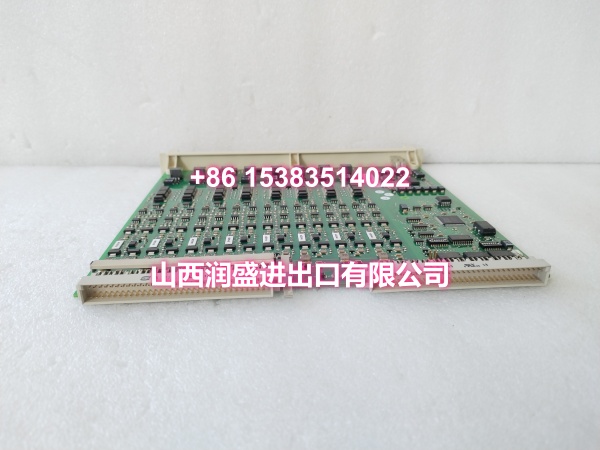
- Product Type: Analog Output Module for DCS Systems
- Brand: ABB
- Model Number:
- Order Code: 3BSE018293R1
- Series: ABB Advant OCS / S100 I/O System
- Output Channels: 8 independent analog output channels — higher density than the 4-channel DSAO110, reducing slot count for large-scale analog control applications
- Output Signal Types: 4-20mA / 0-20mA current output and 0-10V / ±10V voltage output — industry-standard signals compatible with virtually all industrial actuators
- Output Accuracy: ±0.1% of full scale — ensures output analog signals precisely reflect control system instructions
- Resolution: 16-bit — enables fine-grained output signal adjustment for precise actuator positioning and speed control
- Response Time: Fast response to digital input signals, suitable for real-time control applications requiring accurate and reliable operation
- Communication: Interfaces with the Advant OCS/S100 system via the module bus; no standalone communication ports — integrates through the system controller
- Operating Voltage: 24V DC (supplied from the Advant OCS/S100 backplane)
- Mounting Method: Standard modular plug-in design within the Advant OCS/S100 chassis — one independent installation unit per module, easy to install and replace
- Environmental Rating: IP20 protection rating, suitable for indoor industrial control room environments
- Typical Applications: Control valve positioning in process plants (flow, pressure, level control loops); VFD speed reference signals for pump and fan control; servo drive command signals for precision motion control; damper and actuator positioning in HVAC and power generation systems; analog signal output for batch process control in food, pharmaceutical, and chemical manufacturing; test bench and pilot plant analog signal generation
Product Introduction
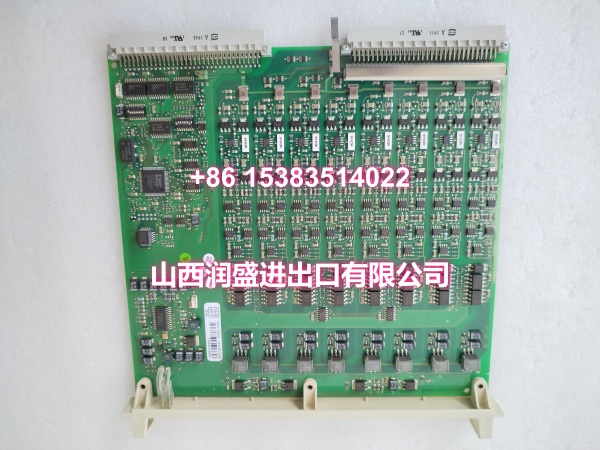
The ABB DSAO120A 3BSE018293R1 is an 8-channel analog output module from ABB’s Advant OCS / S100 I/O system, engineered for industrial automation applications where analog signal accuracy, channel density, and long-term stability are critical. As the bridge between the digital control system and field execution equipment, the DSAO120A converts the controller’s digital output commands into precise 4-20mA or 0-10V analog signals that drive control valves, variable frequency drives, servo motors, and other analog actuators.
What sets the DSAO120A apart is its combination of 8-channel density and 16-bit resolution. In large-scale process control applications — such as a distillation column with multiple reflux, feed, and reboiler control valves, or a boiler system with fuel, air, feedwater, blowdown, and damper actuators — the DSAO120A allows you to consolidate more control loops into fewer chassis slots. This reduces the total number of I/O modules required, simplifies wiring, and lowers the spare parts inventory burden for MRO teams maintaining legacy Advant OCS installations.
The 16-bit resolution provides 65,536 discrete output steps — significantly finer than the 12-bit resolution of the older DSAO120. For applications where valve positioning accuracy is critical (e.g., precision flow control in pharmaceutical batch processes or tight temperature regulation in reactor systems), the DSAO120A’s higher resolution minimizes quantization error and improves closed-loop control performance. Each of the 8 channels can be independently configured through the Advant OCS engineering tool, allowing mixed signal types within the same module to accommodate diverse field device requirements.
For system integrators and MRO procurement teams maintaining ABB Advant OCS or S100 systems, the DSAO120A is a critical spare part. Analog output modules are among the most failure-prone I/O components in a DCS system — they are constantly driving current into field wiring that may be exposed to moisture, corrosion, induced voltage spikes, and ground loops. When an analog output channel fails, the associated control loop goes to manual or failsafe, potentially disrupting production. Having a verified genuine DSAO120A on hand means you can restore the control loop quickly during a maintenance window without waiting for long-lead OEM orders.
QA & Testing SOP
Every unit undergoes a standardized verification process before shipment:
- Visual & Anti-Counterfeit Check: Inspect the module housing for proper ABB branding and part number marking (DSAO120A, 3BSE018293R1). Check for physical damage including cracked PCB, damaged connector pins, burnt components, or signs of moisture ingress (corrosion, white residue on contacts).
- Connector Pin Inspection: Examine the backplane connector pins and field wiring terminal block for straightness, corrosion, or bending. Bent pins can cause intermittent connections or short circuits when inserted into the Advant OCS chassis.
- Channel Continuity Test: Verify electrical continuity on all 8 output channels to confirm no open circuits or short circuits exist in the output stage.
- Output Accuracy Test (4-20mA): Command each channel to output specific current values (4mA, 8mA, 12mA, 16mA, 20mA) and measure the actual output with a precision ammeter. Verify that the error is within ±0.1% of full scale (±20μA for a 20mA span).
- Output Accuracy Test (0-10V): Command each channel to output specific voltage values (0V, 2.5V, 5V, 7.5V, 10V) and measure the actual output with a precision voltmeter. Verify that the error is within ±0.1% of full scale (±10mV for a 10V span).
- Resolution Test: Command small incremental changes in output (e.g., 1 LSB step at 16-bit resolution) and verify that the output changes smoothly without jumps or dead zones, confirming the full 16-bit resolution is functional.
- Fail-Safe Output Test: Simulate a communication loss or controller failure condition and verify that each channel outputs the configured fail-safe value (e.g., 0mA, 4mA, or last known value) as programmed in the Advant OCS configuration.
- Backplane Communication Test: Insert the module into a test Advant OCS chassis and verify that the controller recognizes the module, can write output values to all 8 channels, and reports no fault codes.
- Anti-Static & Mechanical Protection: After passing all tests, the module is placed in anti-static shielding with protective caps on connectors. It is then packed in rigid cardboard with foam cushioning to prevent mechanical shock and ESD damage during transit.
Installation Pitfalls & Guide
Real-World Risks When Replacing This Module:
❗ Incorrect Signal Type Configuration: The DSAO120A supports both current (4-20mA / 0-20mA) and voltage (0-10V / ±10V) output. If the Advant OCS configuration does not match the physical wiring (e.g., the module is configured for 4-20mA but wired to a 0-10V actuator), the actuator will receive the wrong signal level and operate incorrectly. Before installation, verify the signal type configuration in the engineering tool matches the field device requirements.
❗ Ground Loop Issues: Analog output signals are susceptible to ground loops when the DCS chassis ground and the field device ground are at different potentials. This can introduce noise into the analog signal, causing actuator hunting or instability. If ground loops are suspected, use isolated analog output modules or install signal isolators in the field wiring.
❗ Wiring Polarity Reversal: For current loops, reversing the positive and negative wiring will prevent the actuator from receiving the correct signal. Always verify wiring polarity against the terminal diagram before energizing the loop. For voltage outputs, ensure the signal and common connections are correct.
❗ Slot Addressing Conflict: In the Advant OCS/S100 system, each module slot has a fixed address. Installing the DSAO120A in the wrong slot can cause the controller to misidentify the module type, leading to incorrect data mapping or system faults. Always verify the slot assignment matches the system configuration before inserting the module.
❗ Hot-Swap Risk: While some Advant OCS modules support hot-swapping, the DSAO120A may not. Removing or inserting the module while the system is powered can cause transient output signals that may drive actuators to unexpected positions — potentially dangerous in critical control loops (e.g., a control valve suddenly opening or closing). Always follow the manufacturer’s hot-swap procedure — if uncertain, power down the chassis or place the affected control loops in manual mode before replacement.
❗ Output Load Mismatch: Current outputs have a maximum load resistance specification (typically 500-600Ω). If the field wiring resistance plus the actuator input resistance exceeds this limit, the module cannot drive the full 20mA current, resulting in signal clipping at the high end. Verify the total loop resistance is within specification before commissioning.
4-Step Replacement Guide:
- Pre-Install: Identify the failed module slot and document the existing wiring configuration (which terminals connect to which field devices). Back up the current Advant OCS configuration and output scaling parameters from the controller. Place all affected control loops in manual mode to prevent actuator movement during replacement. If possible, schedule the replacement during a planned maintenance window.
- Removal: If hot-swap is supported per the system documentation, follow the proper hot-swap procedure. Otherwise, power down the Advant OCS chassis. Disconnect all field wiring from the module terminal block, labeling each wire pair for reconnection. Release the module locking mechanism and carefully slide the old module out of the chassis slot.
- Install: Insert the new DSAO120A module into the correct chassis slot, ensuring proper alignment with the backplane connector. Secure the module with the locking mechanism. Reconnect all field wiring to the correct terminals, verifying signal type (4-20mA or 0-10V) and polarity for each channel. Double-check that no wires are cross-connected or loose.
- Power-On Test: Power up the chassis (if it was shut down). Verify that the controller recognizes the module and reports no fault codes. Command each channel to output known values (e.g., 4mA, 12mA, 20mA or 0V, 5V, 10V) and measure the actual output at the terminal block with a precision meter. Verify that the field actuators respond correctly to the output signals. Return the control loops to automatic mode and monitor for stable operation.
Technical FAQ
What is the difference between the DSAO120A and the DSAO120? The DSAO120A (3BSE018293R1) is the upgraded version of the DSAO120 (57120001-EY). Both provide 8 analog output channels, but the DSAO120A offers 16-bit resolution compared to the DSAO120’s 12-bit resolution. The DSAO120A also supports a wider range of output signal types (4-20mA / 0-20mA / 0-10V / ±10V) compared to the DSAO120’s ±10V / ±20mA bipolar output. For new installations or replacements where higher precision is needed, the DSAO120A is the preferred choice.
What is the difference between the DSAO120A and the DSAO110? The DSAO120A provides 8 analog output channels with 16-bit resolution, while the DSAO110 provides 4 channels with 16-bit resolution. The DSAO120A is better suited for applications requiring higher channel density, while the DSAO110 may be preferred for smaller control loops where slot count is less of a concern.
Can the DSAO120A output both voltage and current signals simultaneously? Yes. Each of the 8 channels can be independently configured for either voltage (0-10V / ±10V) or current (4-20mA / 0-20mA) output through the Advant OCS engineering tool. This allows a single DSAO120A module to serve mixed actuator types — for example, channels 1-4 driving 4-20mA control valves while channels 5-8 drive 0-10V VFD speed references.
What Advant OCS/S100 controllers is the DSAO120A compatible with? The DSAO120A is compatible with the ABB Advant OCS and S100 I/O system family, including controllers such as the AC110, AC160, AC450, and related system components. It interfaces through the Advant OCS module bus and is recognized by the system configuration software. Always verify compatibility with your specific controller model and firmware version before ordering.
What are common failure modes for this module? Common failure modes include: individual channel failures due to overvoltage or short-circuit damage from field wiring; output drift over time causing calibration errors; backplane connector pin damage from repeated insertion/removal; PCB trace corrosion from moisture ingress in humid environments; and firmware/configuration corruption causing the controller to misidentify the module. In most cases, a failed channel will output a fixed value (stuck at 0mA, 20mA, or mid-range) regardless of the controller command.
What warranty do you offer on New Surplus parts? We provide a full 12-month warranty on all New Original / New Surplus units. This is fundamentally different from refurbished or pulled modules, which often carry 30–90 day warranties and come with unknown operational history, potential connector wear, and degraded output accuracy. For an analog output module that directly controls critical process actuators, the reliability difference between new surplus and refurbished directly impacts loop stability and the risk of process upsets.