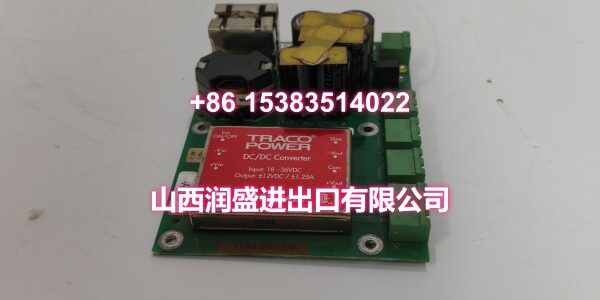
Product Core Brief
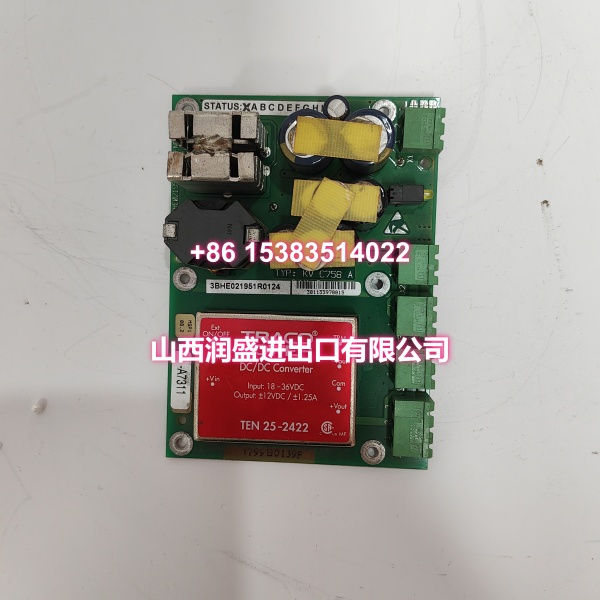
- Model: 3BHE021951R0124 / KVC758A124
- Brand: ABB
- Series: ABB Advant Controller / Symphony DCS System Components
- Integration Role: Dual-port isolated serial communication interface module, enabling peer-to-peer data exchange between DCS controllers and third-party field devices such as turbine governors, protection relays, and serial-enabled instrumentation.
- Product Type: Dual-Port Serial Communication Interface Module
- Key Specs: 2× isolated RS-485/RS-422 serial ports | 2500 V RMS electrical isolation | Baud rate 300 bps–115.2 kbps configurable | Hot-swappable | Modbus RTU / RPWT / SPA / user-defined ASCII protocol support
- Note: Condition: New Original (New Surplus)
Key Technical Specifications
- Product Type: Dual-Port Serial Communication Interface Module
- Brand: ABB
- Model Number: 3BHE021951R0124 / KVC758A124
- Communication Ports: 2× isolated serial ports, configurable as RS-485 or RS-422 via jumper/configuration
- Electrical Isolation: 2500 V RMS isolation between field side and system side, protecting the DCS from ground loops and transient surges
- Supported Protocols: Modbus RTU, RPWT (ABB turbine protocol), SPA (protection relay protocol), user-defined ASCII protocol
- Baud Rate: 300 bps to 115.2 kbps (configurable)
- Data Format: 7/8 data bits, 1/2 stop bits, even/odd/none parity — fully configurable
- Maximum Cable Length: Up to 1,200 m at 9600 bps with shielded twisted-pair cable
- Power Consumption: Approximately 3 W
- Operating Temperature: 0°C to +60°C
- Mounting: Symphony I/O subrack (single module width)
- Hot-Swap: Supported — can be replaced under power in supported racks without system shutdown
- Status Indicators: LED indicators for TX/RX activity and link health
- Compatible Systems: ABB Advant Controller AC 410/450/460, Symphony INFI 90, Symphony Plus (with legacy support)
- Typical Applications: Power generation (turbine governor integration, protection relay communication), oil & gas, heavy industry — bridging intelligent field devices with legacy DCS architectures
Product Introduction
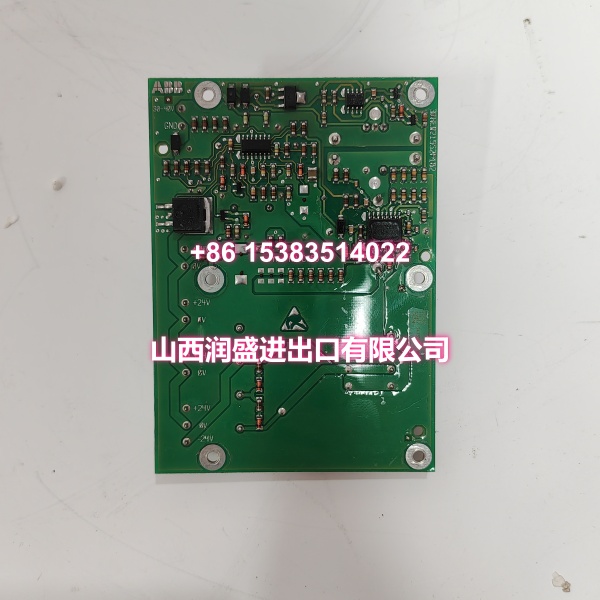
The ABB 3BHE021951R0124 (KVC758A124) is a dual-port isolated serial communication interface module designed for ABB’s Advant Controller and Symphony DCS platforms. It serves as a high-speed serial communication adapter, enabling seamless data exchange between the DCS controller and third-party serial devices — most commonly turbine governors, protection relays, and Modbus-enabled field instruments.
This module is a critical integration component in power generation and heavy industrial automation systems, where legacy DCS architectures must communicate with intelligent field devices that predate Ethernet-based networking. Its 2500 V RMS electrical isolation protects the DCS backplane from ground loops and field-side transients, while its hot-swap capability allows maintenance without process interruption.
Integrators and control engineers specify this module for its multi-protocol flexibility (Modbus RTU, RPWT, SPA, ASCII), configurable baud rates up to 115.2 kbps, and proven reliability in harsh industrial environments. The LED status indicators provide at-a-glance visibility into TX/RX activity and link health, simplifying troubleshooting during commissioning and ongoing operation.
Wiring & Backplane Integration Notes
- Protocol Configuration: Before commissioning, verify the communication protocol (Modbus RTU / RPWT / SPA / ASCII) and baud rate settings in your engineering tool. A mismatched baud rate or protocol selection between the KVC758A124 and the connected field device will result in complete communication failure.
- RS-485/RS-422 Selection: The two serial ports can be configured as either RS-485 or RS-422 via jumper or software configuration. Confirm the physical layer requirement of your connected device before wiring. RS-485 supports multi-drop networks; RS-422 is point-to-point only.
- Termination & Biasing: For RS-485 multi-drop networks, ensure proper termination resistors (typically 120 Ω) are installed at both ends of the bus. Unterminated or unterminated-and-unbiased RS-485 networks are the most common cause of intermittent communication errors in industrial serial links.
- Cable Selection: Use shielded twisted-pair cable for all serial connections. Maximum cable length is 1,200 m at 9600 bps — reduce length or lower baud rate if operating in electrically noisy environments. Shield must be grounded at one end only to prevent ground loops.
- Electrical Isolation: The 2500 V RMS isolation between field and system sides is a key safety feature. Do not bypass or defeat this isolation by improperly grounding the field-side cable shield to the cabinet ground at both ends.
- Hot-Swap Procedure: While the module supports hot-swap in supported racks, always verify that the connected field device can tolerate a brief communication interruption before removing the module. Coordinate with operations to isolate any critical control loops that depend on this communication link.
- Compatibility: This module is designed for ABB Advant AC 410/450/460 and Symphony INFI 90 / Symphony Plus systems. Always cross-reference the full part number (3BHE021951R0124) against your system’s spare parts list, as revision-specific variants may have different firmware or hardware compatibility.
Integrator’s FAQ
Can I hot-swap this module in a live DCS system? Yes — the KVC758A124 supports hot-swap in supported ABB racks. You can remove and replace the module under power without shutting down the DCS controller. However, the connected field device (e.g., turbine governor, protection relay) will experience a brief communication interruption during the swap. Before performing a hot-swap, verify that the affected control loop can tolerate this interruption, and coordinate with your operations team to minimize process impact.
What protocols does this module support? The KVC758A124 supports Modbus RTU, RPWT (ABB’s proprietary turbine protocol), SPA (protection relay protocol), and user-defined ASCII protocols. The protocol is selected via configuration in your ABB engineering tool — there is no physical jumper for protocol selection. Verify the protocol setting matches your connected device before commissioning.
What is the maximum communication distance? Up to 1,200 meters at 9600 bps using shielded twisted-pair cable. At higher baud rates, the maximum distance decreases proportionally. If you need longer distances or are operating in a high-EMI environment, consider using an RS-485 repeater or converting to fiber-optic communication at the DCS boundary.
Will I lose configuration when replacing this module? No. Configuration for ABB DCS communication modules resides in the host controller, not on the module itself. When you insert a replacement KVC758A124, the controller automatically downloads the existing port configuration (protocol, baud rate, data format, node address) to the new module. However, always verify the module firmware revision matches your system’s requirements — a mismatch can cause communication faults.
What warranty do you offer on New Surplus parts? We provide a full 12-month warranty on all New Original / New Surplus units. This is fundamentally different from refurbished DCS communication modules, which often carry 30–90 day warranties and come with unknown thermal cycling history, aged connector contacts, and degraded isolation barriers. For critical turbine governor and protection relay communication links, the cost of an unexpected module failure — measured in unit trip and lost generation — far exceeds any upfront savings from a used part.
Why is your pricing lower than OEM direct but higher than used parts? Our pricing reflects New Original / New Surplus inventory sourced from factory overstock and authorized distributors. You pay less than OEM list because these are surplus units, not current production. You pay more than used/refurbished because the part has zero operating hours, no thermal aging on internal components, and no degradation of the 2500 V RMS isolation barrier. For mission-critical serial communication links in power generation, the reliability difference between new surplus and refurbished is not marginal — it’s the difference between planned maintenance and an emergency unit trip.
Need me to help you verify the protocol configuration or RS-485 termination settings for this module in your specific Advant or Symphony DCS system? If you can share your controller model and the connected field device type (turbine governor, protection relay, etc.), I can help narrow down the integration parameters.