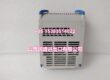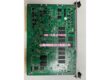
Product Core Brief
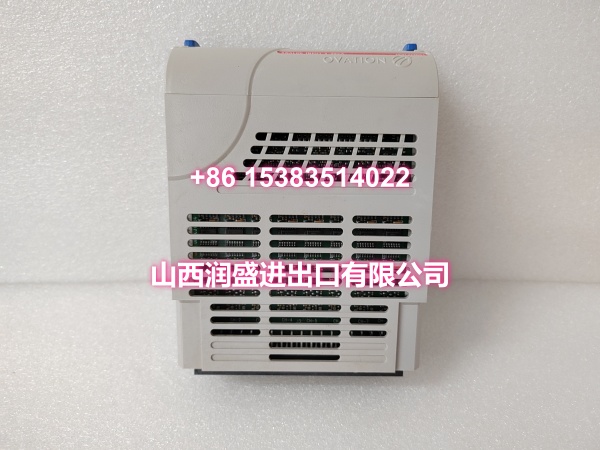
- Model: 1C31224G01
- Brand: EMERSON (Ovation / Westinghouse)
- Series: Ovation DCS
- Core Function: 8-channel analog input electronic module that converts field 0-20mA current signals into digital data for the Ovation controller, with integrated open-circuit diagnostics.
- Product Type: Analog Input Electronic Module (AI EMOD)
- Key Specs: 0-20mA Input Range | 14-Bit Resolution | 8 Channels
- Condition: New Original / New Surplus
Key Technical Specifications
- Input Signal Range: 0-20mA
- Resolution: 14-bit A/D converter
- Number of Channels: 8 independent analog input channels
- Diagnostic Capability: Integrated open-circuit detection per channel
- Surge Protection: Hot-swappable surge protection on all input channels
- Status Indicators: Per-channel LED status indicators for fault identification
- Operating Temperature: 0°C to +60°C
- Storage Temperature: -40°C to +85°C
- Humidity: 5% to 95% RH, non-condensing
- Dimensions (W x H x D): 121mm × 52mm × 166mm
- Weight: 0.56 kg
- Compatibility: Ovation DCS 3.5 and higher; direct replacement for legacy Westinghouse Ovation racks
Product Introduction
The 1C31224G01 is an 8-channel Analog Input Electronic Module (AI EMOD) for the Emerson Ovation DCS. It is the workhorse card for acquiring process variables—temperature, pressure, flow, level—from field transmitters across power plants, water treatment facilities, steel mills, and petrochemical operations. The module converts 0-20mA analog signals into 14-bit digital values that the Ovation controller uses for real-time process monitoring and closed-loop control.
What makes this card a preferred choice for critical loops is its combination of 14-bit resolution, per-channel open-circuit diagnostics, and hot-swappable surge protection. The surge protection circuitry allows technicians to safely replace the module without pulling field wiring or shutting down the I/O rack, while the per-channel LED indicators let you pinpoint a bad transmitter in seconds—not hours. The 14-bit A/D converter provides sufficient resolution for most process control applications where ±0.1% FS accuracy is required.
QA & Testing SOP
AI modules are straightforward, but that doesn’t mean we skip verification. Here’s the exact procedure every unit goes through:
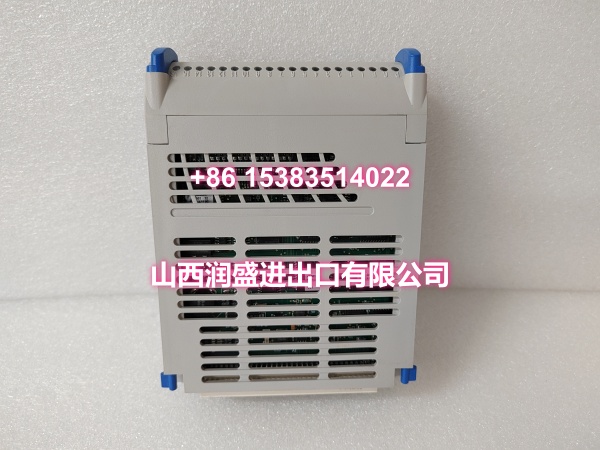
- Visual & Anti-Counterfeit Inspection: We inspect the PCB for cold solder joints, burnt traces around the input conditioning circuitry, and verify the OEM holographic label. Counterfeit AI cards are common in the surplus market and often have degraded A/D converters that drift out of spec under temperature cycling.
- Backplane & Connector Verification: The module is seated into a dedicated Ovation test rack. We inspect the backplane connector pins for bends or corrosion—bent pins on an AI card cause intermittent channel dropouts that are a nightmare to troubleshoot in the field.
- Full-Scale Signal Injection Test: Using a calibrated Fluke 754 process calibrator, we inject a precision 0-20mA signal into all eight channels simultaneously. We verify the 14-bit A/D conversion accuracy across the full range (0mA, 4mA, 12mA, 20mA) and confirm channel-to-channel crosstalk is within spec.
- Open-Circuit Diagnostic Validation: We intentionally disconnect the input on each channel one at a time and verify the module’s internal diagnostic circuit correctly flags the open-circuit fault and illuminates the corresponding channel LED.
- Surge Protection Circuit Check: We verify the hot-swap surge protection circuitry is intact by checking the protection diodes and transient suppressors on each input channel.
- Anti-Static Packaging: Passed units are sealed in static-shielded bags with desiccant, then double-boxed for transit.
Installation Pitfalls & Guide
AI cards seem simple—until they’re not. Here are the mistakes that cause callbacks:
- ❗ Shield Grounding on 4-20mA Loops: The 0-20mA input is susceptible to noise from VFDs and large motor starters. If the transmitter cable shield is grounded at both ends, you create a ground loop that injects 50/60Hz hum into the reading. Ground the shield at the transmitter end only. If noise persists, add a signal isolator.
- ❗ Backplane Pin Damage: The Ovation backplane connectors are fragile. Never force the module into the slot. If you feel resistance, pull it out and visually inspect the pins. A single bent pin on the I/O bus side kills communication with the controller; a bent pin on a channel input kills that channel.
- ❗ Open-Circuit False Alarms: The module’s open-circuit diagnostic works by detecting a break in the current loop. If your field wiring has a high-resistance connection (corroded terminal, loose screw), the module may intermittently flag an open-circuit fault even though the loop appears intact. Always torque terminal screws to spec.
- ❗ Channel Configuration Mismatch: In the Ovation engineer station, each channel must be configured to match the actual field signal range (0-20mA). If the software is set to 4-20mA but the field transmitter outputs 0-20mA, your readings will be scaled incorrectly. Verify the channel configuration before commissioning.
4-Step Replacement Guide:
- Pre-Install: Place any control loops using this module’s channels in Manual mode. Backup the current Ovation controller configuration. Verify the replacement module’s firmware revision matches the system requirements.
- Removal: The 1C31224G01 supports hot-swapping with surge protection. Carefully disengage the locking lever and pull the faulty module straight out of the rack. Do not twist or rock the card.
- Install: Align the new module with the rack guides and slide it in firmly until the backplane connector seats fully. Engage the locking lever. Verify the field wiring is secure on the terminal block.
- Power-on Test: Monitor the Ovation diagnostic screen. Verify the module comes online without faults and all eight channel LEDs indicate normal status. Perform a live signal check: compare the module’s digital reading against a known field transmitter value (e.g., a pressure transmitter at a known process pressure).
Technical FAQ
Q: What’s the difference between 1C31224G01 and 1C31227G01? A: Both are 8-channel 0-20mA analog input modules for Ovation, but they serve different roles in the EMOD/PMOD architecture. The 1C31224G01 is the Electronic Module (EMOD)—it plugs into the Ovation backplane, contains the 14-bit A/D converter, and handles communication with the controller. The 1C31227G01 is the Personality Module (PMOD)—it mates with an EMOD and provides the field terminal block and channel isolation. You typically need both to form a complete AI unit, though the 1C31224G01 can function as a standalone EMOD in certain rack configurations. Always verify your specific rack architecture before ordering.
Q: Can I hot-swap this module while the plant is running? A: Yes. The 1C31224G01 includes hot-swappable surge protection, which means you can remove and replace it without shutting down the I/O rack or pulling field wiring. However, you should still place any control loops that depend on this module’s channels in Manual mode before removal. Pulling an AI card while a loop is in Auto will cause the controller to lose the process variable, which can trigger a bump or trip depending on your control strategy.
Q: Is this module compatible with Ovation 4.0 and newer versions? A: The 1C31224G01 was originally designed for Ovation 3.5 and legacy Westinghouse Ovation systems. It remains supported on Ovation 4.0 and later versions as a legacy-compatible AI module. However, Emerson has introduced newer AI module models with higher resolution (16-bit) and enhanced diagnostics for greenfield 4.0 installations. For brownfield upgrades and replacements, the 1C31224G01 is a direct drop-in replacement. If you’re unsure, verify compatibility with your specific Ovation version in the system documentation.
Q: Why does one channel read zero but the LED is green? A: A green LED with a zero reading typically means one of three things: (1) the field transmitter is outputting 0mA (transmitter fault or loss of power), (2) there’s an open circuit in the field wiring between the transmitter and the module, or (3) the channel is configured incorrectly in the Ovation engineer station (e.g., scaled to a different range). Check the field transmitter first—if it’s outputting 4mA or higher and the module still reads zero, the A/D converter on that channel may be damaged.
Q: What is the warranty on surplus units? A: We provide a 12-month warranty from the date of delivery on both new original and new surplus stock. This covers manufacturing defects, DOA failures, and any A/D converter drift discovered during commissioning. It does not cover damage from improper installation—such as bent backplane pins, ground loop damage from improper shielding, or ESD damage from handling without proper grounding.