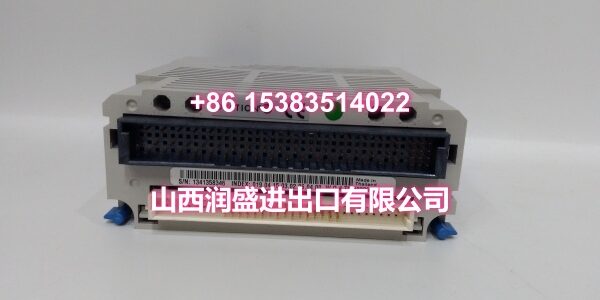
Product Core Brief
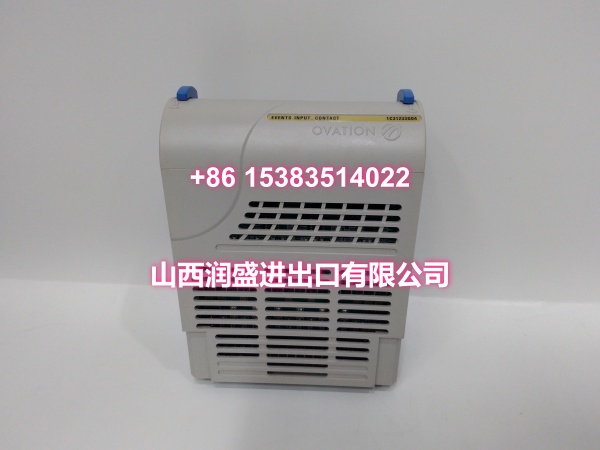
- Model: 1C31233G04
- Brand: Emerson (Ovation System, originally Westinghouse)
- Series: Ovation DCS Sequence of Events (SOE) Subsystem
- Core Function: High-speed sequence of events contact input module that captures time-stamped digital events for post-trip analysis and fault diagnosis in power generation and process control.
- Product Type: SOE Contact Input Module
- Key Specs: 16 Isolated Channels | 48VDC Internal Contact Supply | ≤5ms Response Time
- Condition: New Original / New Surplus
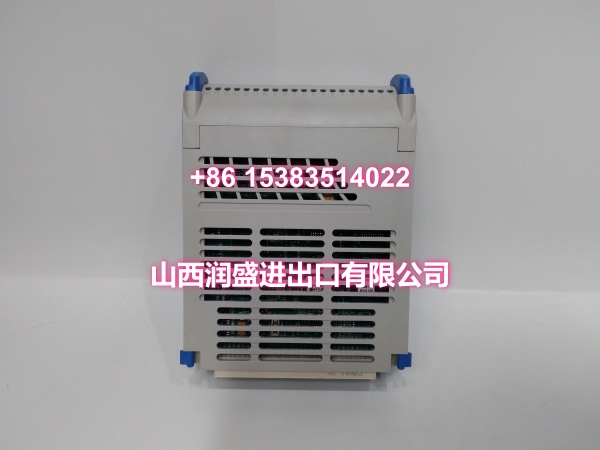
Key Technical Specifications
- Module Type: Sequence of Events (SOE) Contact Input Module
- Channel Configuration: 16 isolated channels, grouped into 4 independent sections
- Input Type: Dry contact input (powered by module’s internal 48VDC supply — no external power required for contacts)
- Input Voltage: 48VDC (supplied internally by the module)
- Logic Thresholds:
- Closed contact: ≤100Ω (recognized as “high”)
- Open contact: ≥10kΩ (recognized as “low”)
- Response Time: ≤5ms (with built-in debounce filtering)
- Isolation: Channel-to-channel and channel-to-chassis isolation (500Vrms)
- Power Supply: 24VDC from the Ovation backplane
- Power Consumption: ~12W (includes 48VDC contact supply)
- Operating Temperature: -40°C to +70°C
- Storage Temperature: -40°C to +85°C
- Humidity: 5%–95% non-condensing
- Protection Class: IP20 (front panel)
- Physical Dimensions: 133mm (W) × 127mm (H) × 76mm (D)
- Weight: ~0.6kg
Product Introduction
The 1C31233G04 is a dedicated Sequence of Events (SOE) contact input module within the Emerson Ovation DCS platform (originally developed by Westinghouse). Unlike standard digital input cards that only report the current state of a contact, this module captures the precise millisecond-level timestamp of every contact state change — critical for post-trip forensic analysis in power plants, turbine protection systems, and safety interlock applications where understanding the exact sequence of events during a fault is essential for root cause determination.
The module features 16 fully isolated dry-contact input channels, each powered by an internal 48VDC supply that eliminates the need for external wetting voltage wiring. The built-in ≤5ms response time with hardware debounce filtering ensures that only legitimate contact transitions are time-stamped, rejecting mechanical chatter and electrical noise. Channel-to-channel and channel-to-chassis isolation (500Vrms) prevents ground loops and cross-channel interference — a must-have in electrically noisy turbine hall and switchyard environments.
Bottom line: if you need to know which protective relay tripped first during a unit shutdown, this is the card that tells you.
QA & Testing SOP
SOE modules are forensic tools — if the timestamps are wrong, you can’t trust your trip analysis. Our validation protocol is rigorous:
- Physical & Anti-Counterfeit Inspection: We verify the OEM chassis integrity, check for authentic Emerson/Westinghouse labeling and correct revision codes, and inspect the terminal block connectors for corrosion or bent pins.
- Internal 48VDC Supply Verification: Using a precision multimeter, we measure the module’s internal 48VDC contact supply voltage at each channel terminal to confirm it’s within spec. A weak or missing wetting voltage is the most common cause of “ghost” SOE events.
- Channel Isolation Test: We apply 500VAC between each channel pair and between each channel and chassis to verify the isolation barrier holds — critical for preventing ground loops in high-voltage environments.
- SOE Timestamp Accuracy Test: The module is mounted on an OEM Ovation test rack. We simultaneously trigger multiple channels with a calibrated pulse generator and verify that the Ovation controller records the correct millisecond-level timestamps in the correct sequence.
- Debounce & Response Time Test: We simulate mechanical contact bounce with a programmable pulse train and verify that the ≤5ms debounce filter correctly rejects chatter while capturing legitimate transitions.
- Logic Threshold Verification: We verify that closed contacts ≤100Ω are recognized as “high” and open contacts ≥10kΩ are recognized as “low” across all 16 channels.
- Anti-Static Packaging: After validation, the module is sealed in industrial-grade ESD shielding bags with terminal protectors installed for transit.
Installation Pitfalls & Guide
SOE wiring mistakes don’t just cause bad data — they create false trip sequences that send your maintenance team chasing ghosts for days.
- ❗ Wiring Polarity — C Column Positive, B Column Negative: Per Ovation wiring standards, SOE card positive terminals connect to the C column (C1–C16), and negative/common terminals connect to the B column (B1–B16). If you have a common wire, it must connect to the negative (B column). Mixing up C and B columns will cause every channel to read inverted or float.
- ❗ Common Signals Must Stay on the Same Card: If multiple contacts share a common return, they must all be wired to channels on the same SOE card. Splitting a common group across two cards will create ground loop paths and false SOE events.
- ❗ Do Not Mix Voltage Levels in Dry Contact Loops: The dry contact回路严禁串入不同电压等级. If you’re mixing 48VDC SOE contacts with 24VDC or 125VDC signals in the same回路, you’ll damage the module’s internal supply and create cross-channel shorts.
- ❗ Shield Grounding — Single Point Only: Shielded cable shields must be grounded at the DCS cabinet terminal side only. The field-side shield must float (insulated). Grounding both ends creates a ground loop that injects 50/60Hz noise into the contact signal and causes false SOE triggers.
- ❗ Trip Protection Circuits Must Use Independent Hard Wiring: Per safety standards, trip protection回路 must use dedicated hard-wired connections — never rely solely on communication buses for safety-critical SOE signals.
Replacement Procedure:
- Pre-Install: Back up the Ovation controller logic and SOE configuration. Document all terminal wiring connections (especially C/B column assignments and common wire groupings).
- Removal: Disconnect all field wiring from the terminal block. Release the module locking mechanism and carefully pull the module straight out of the rack.
- Install: Seat the new module firmly into the rack slot and engage the locking mechanism. Reconnect all field wiring per your documented terminal assignments — double-check C column (positive) and B column (negative/common) assignments.
- Power-On Test: Restore 24VDC backplane power. Verify the module’s status LEDs indicate normal operation. Use the Ovation controller to force-test each of the 16 channels and verify that contact closures are correctly time-stamped in the SOE log.
Technical FAQ
What’s the difference between 1C31233G04 and 1C31234G01? The 1C31233G04 is an SOE (Sequence of Events) module — it captures millisecond-level timestamps of contact state changes for post-trip analysis. The 1C31234G01 is a standard 48VDC digital input (DI) module that only reports the current state of contacts without time-stamping. If you need to know the order of events during a trip, you need the SOE card. If you just need to know whether a valve is open or closed right now, the standard DI card is sufficient.
Can I use this module with external 24VDC wetting voltage instead of the internal 48VDC supply? No. The 1C31233G04 is designed to supply its own 48VDC wetting voltage internally. Applying external voltage to the contact inputs can damage the module’s internal power supply circuit. If your application requires a different wetting voltage, you need a different module variant.
What happens if the internal 48VDC supply fails? The module will lose its ability to detect contact closures — all channels will read “open” regardless of actual contact state. The Ovation controller will report a module health alarm. This is why we recommend keeping a spare SOE module in stock for critical trip analysis applications.
Is this module hot-swappable? The Ovation system supports online module replacement for many I/O cards. However, removing an SOE module during operation will cause a temporary loss of event capture — any contact state changes that occur during the swap window will not be time-stamped. We recommend performing the replacement during a low-activity period or scheduled maintenance window to avoid missing critical events.
Do you offer volume pricing for power plant MRO stocking? Yes. SOE modules are critical spares for any power plant running an Ovation DCS — you can’t do proper trip analysis without them. We offer flexible pricing tiers for bulk MRO orders. Contact our sales team with your required quantity for a competitive quote.
Need the compatible terminal block wiring diagram and Ovation SOE configuration guide for this module? I can pull those up for you.