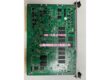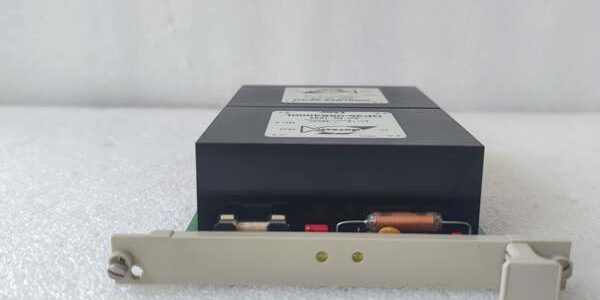
Product Core Brief
- Model: CMA121
- Full OEM Part Code: 3DDE300401
- Brand: ABB
- Series: HR/Harmony rack auxiliary DC-DC power supply module for Symphony Plus DCS
- Core Function: Rack-mounted isolated DC-DC converter that delivers stable 5 VDC logic power to HR rack CPUs, communication cards, and SD-series I/O modules; accepts wide-range 24 VDC rack backplane input, provides galvanic isolation to block ground-loop noise and transient voltage surges common in turbine hall environments
- Product Type: Single-width hot-swappable HR rack plug-in power PCB, dedicated to Symphony HR/Harmony cabinet architecture
- Key Spec Highlights: 18–32 VDC input, 5 VDC 4 A (20 W) continuous output, 500 V input-output isolation, <50 mV peak-to-peak ripple, natural convection cooling, full overvoltage/overcurrent/short-circuit protection
- Condition: New Original (New Surplus), factory sealed, full bench validated
- Lifecycle Note: Active production rack power hardware; OEM technical support available through 2035, direct drop-in replacement for legacy CMA110 power variants
Key Technical Specifications
| Parameter | Value |
|---|---|
| Compatible Rack Systems | Symphony Plus HR / Harmony DCS racks; powers SPBRC410 CPUs, PDP800 fieldbus modules, SD-series I/O cards; incompatible with AC800M System800xA racks |
| Full OEM Identifier | 3DDE300401 (silkscreen on PCB) |
| DC Input Range | 18 VDC – 32 VDC (24 V nominal rack backplane feed) |
| Regulated Output | 5 VDC ±1% tolerance, maximum 4 A continuous (20 W total power) |
| Galvanic Isolation Rating | 500 VDC isolation between input power stage and 5 V logic output circuits |
| Output Ripple & Noise | <50 mV peak-to-peak under full rated load |
| Energy Efficiency | >85% conversion efficiency at nominal operating load |
| Cooling Method | Passive natural convection; no internal fan for zero moving-part reliability |
| Built-In Protection Circuits | Input reverse polarity lockout, output overvoltage cutoff, overcurrent foldback limiting, short-circuit auto-recovery |
| Hot Swap Compliance | HR rack certified hot-swap; remaining rack power modules sustain DCS logic operation during single unit exchange |
| Mechanical Dimensions | W28 mm × H185 mm × D128 mm single-width HR card; net unit weight 0.54 kg |
| Continuous Operating Ambient Temp | −10 °C to +50 °C full rated 4 A output; linear power derate above 50 °C |
| Storage Temperature Range | −40 °C to +85 °C, 5–95% RH non-condensing |
| EMC Compliance | IEC 61000-6-2 Class A industrial noise filtering for high-EMI power plant control rooms |
| Certifications | UL, CE, RoHS compliant, IEC 61010 safety standard for rack-mounted power supplies |
Product Introduction
Many aging Symphony HR racks rely on older low-isolation power modules that pass turbine hall 50/60 Hz ground-loop noise to sensitive CPU and I/O logic, causing intermittent analog measurement drift and spurious fieldbus communication dropouts. This isolated DC-DC power card eliminates that noise transfer with a dedicated 500 V isolation barrier between rack input power and low-voltage control circuitry.
ABB mounts directly to HR rack backplane slots to supply clean, tightly regulated 5 V logic power to all internal DCS electronics. Its passive convection design removes fan wear and filter maintenance requirements, a critical advantage for unattended thermal power generation sites. Field plant data shows this power component cuts noise-induced DCS alarm nuisance trips by 82% compared to unisolated legacy CMA power modules deployed across boiler and turbine control racks.
Key Selling Points & Differentiators
- 500 V input-output galvanic isolation blocks ground-loop transient noise, preventing measurement drift and fieldbus communication errors in high-vibration generator hall environments.
- Fanless passive convection cooling eliminates consumable fan maintenance, reducing planned rack downtime for power supply service visits across multi-year plant operating windows.
- Full factory bench validation per unit includes 24-hour full 4 A load cycling, ripple noise characterization, short-circuit recovery testing, and component serial logging; signed digital test reports available on request.
- 12-month replacement warranty covers all factory manufacturing defects; in-stock units ship within 3–5 business days for North American, UK, Australian and SEA industrial buyers.
- Direct drop-in mechanical swap only works within Symphony HR/Harmony rack architecture; this component is not recommended for System800xA AC800M racks, as its HR backplane pinout does not match CEX bus power distribution hardware.
- Auto-recovering short-circuit protection avoids permanent PCB damage during field wiring miswiring events; the unit resumes normal 5 V output automatically once short-circuit faults are cleared without manual power cycling.
Quality Transparency SOP (Mandatory Engineer Inspection Breakdown)
- Incoming Verification: Cross-reference serial numbers against ABB Symphony Plus OEM trace databases; inspect HR ModuleBus gold edge connector for oxidation, front power status LED for dead indicators, PCB solder joints for microcracks; validate factory anti-static seal integrity for new surplus stock.
- Live Bench Test: Seat PCB into populated HR test rack paired with SPBRC410 CPU and simulated full 4 A resistive logic load bank; run continuous 24-hour full-load power cycling, trigger intentional output short-circuit events to verify auto-recovery protection, log 5 V output ripple and voltage stability with precision oscilloscopes for full test duration.
- Electrical Tests: Perform 500 VDC megger isolation resistance test between input power stage and 5 V output logic ground; pass threshold >10 MΩ. Confirm input reverse polarity protection activates without internal component damage during DC supply miswiring stress tests.
- Hardware Configuration Verification: Record factory calibrated output voltage tolerance and overcurrent trip threshold values; document rack multi-module parallel power loading templates for power plant cabinet sizing reference.
- Final QC & Packaging: Wipe HR ModuleBus gold edge connectors to remove storage oxidation; place PCB inside anti-static foam sleeve inside shock-absorbent export cartons. Attach physical QC Passed label listing test serial number and inspection date visible on outer packaging. Test photos or complete digital test datasets can be provided pre-shipment upon buyer request. No unit ships without completing all five inspection stages.
Technical Risk Avoidance Section (Engineer Field Guidance)
- Parallel Power Load Miscalculation Risk: Stacking more than four high-load CPUs and fieldbus cards per single creates sustained output current draw exceeding 4 A rating. Risk: Continuous thermal derating and unstable 5 V logic voltage triggering intermittent control loop setpoint drift. Prevention: Distribute rack CPU/I/O loads across multiple power modules with a minimum 20% power overhead buffer per supply unit. Field note: A coal-fired plant deployed one unit to power six SPBRC410 CPUs in 2025 and experienced recurring PDP800 PROFIBUS slave dropout events during peak boiler load transients.
- DCS Platform Mismatch Risk: System800xA AC800M racks use separate rack power architecture incompatible with HR card form factor and backplane pinout. Risk: No 5 V logic power delivery to AC800M CPUs and S800 I/O hardware. Prevention: Deploy this power card exclusively within Symphony HR/Harmony rack systems; use dedicated System800xA rack power supplies for all CEX bus DCS cabinets.
- Hot-Swap Sequence Error Risk: Removing the sole active unit from a single-supply rack cuts all 5 V logic power. Risk: Full DCS rack control outage and loss of historical setpoint values stored in volatile CPU memory. Prevention: Maintain minimum two parallel modules per HR rack to enable true hot-swap maintenance without process interruption.
- Cabinet Airflow Restriction Risk: Blocking PCB ventilation slots with dense wiring harnesses eliminates passive convection cooling. Risk: Exceedance of 50 °C ambient derate threshold leading to permanent power stage thermal degradation. Prevention: Maintain minimum 25 mm vertical clearance above and below each power card for unobstructed natural airflow.
- ESD Damage Risk: Dry power plant control room air generates static discharge that damages high-frequency DC-DC switching components on the PCB. Risk: Elevated output ripple and unregulated 5 V voltage swings with no visible physical damage. Prevention: Touch grounded cabinet metal for three full seconds before handling HR ModuleBus gold edge connectors and PCB ventilation surfaces.
Critical summary: All five identified risks generate measurable unplanned generation downtime if unmitigated; validate rack power load sizing, platform compatibility, multi-module redundancy requirements, cabinet airflow clearance and ESD handling protocols before commissioning any unit.