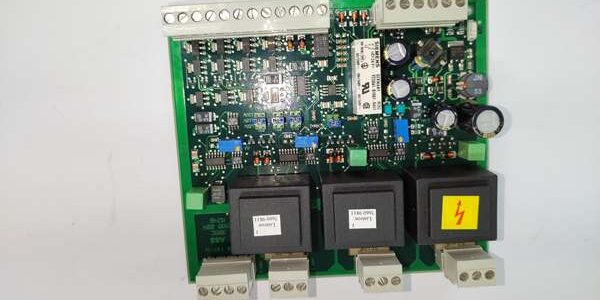
Product Core Brief
- Model: DSTYW121
- Full OEM Part Code: 3BSE007836R1
- Brand: ABB
- Series: HR/Harmony rack safety diagnostic hardware for Symphony Plus DCS turbine and boiler control systems
- Core Function: Standalone hardware watchdog timer and trip amplifier module; monitors heartbeat signals from SPBRC410 main controllers, executes hardwired safety trip logic if CPU communication stalls, and amplifies critical overspeed, flame loss, and generator interlock discrete trip signals independent of software control
- Product Type: Single-width hot-swappable HR rack plug-in PCB, turbine safety subsystem exclusive hardware (incompatible with AC800M System800xA racks)
- Key Spec Highlights: Independent 100ms hardware watchdog timeout, hardwired trip relay outputs, isolated binary trip signal amplification, fault latch status storage, 24 VDC HR backplane supply, 500 V signal isolation
- Condition: New Original (New Surplus), factory sealed, full bench validated
- Lifecycle Note: Mature EOL safety hardware; limited factory surplus stock, OEM technical documentation and support available through 2035
Key Technical Specifications
| Parameter | Value |
|---|---|
| Compatible DCS Hardware | Symphony Plus HR/Harmony racks paired with SPBRC410 series control CPUs; dedicated to turbine/generator safety interlock subsystems; incompatible with AC800M CEX bus rack architecture |
| Full OEM Identifier | 3BSE007836R1 (silkscreen printed on PCB) |
| Watchdog Timeout Threshold | Fixed 100 ms hardware timer, no software-dependent timing logic |
| Safety Trip Outputs | 4 Form-C isolated trip relay contacts for emergency shutdown interlock chains |
| Signal Isolation Rating | 500 VAC galvanic isolation between field trip inputs and internal watchdog logic ground |
| Trip Latch Function | Non-resettable fault latch; manual cabinet reset required to clear CPU loss trip events |
| Operating Supply | 24 VDC ±10% HR rack backplane feed; typical 110 mA steady-state power draw |
| Hot Swap Compliance | HR rack certified hot-swap; existing hardwired trip chains remain functional during module exchange |
| Onboard Diagnostics | CPU heartbeat activity LED, watchdog trip latch indicator, backplane undervoltage fault light |
| Mechanical Dimensions | W28 mm × H185 mm × D128 mm single-width HR card; net unit weight 0.32 kg |
| Continuous Operating Ambient Temp | −20 °C to +60 °C full rated safety trip performance; linear reliability derate above 60 °C |
| Storage Temperature Range | −40 °C to +85 °C, 5–95% RH non-condensing |
| Integrated Protection Circuits | Trip input surge clamping, backplane reverse polarity lockout, relay contact arc suppression |
| EMC & Safety Certifications | UL, CE, RoHS, IEC 61508 SIL 2 capable for secondary turbine safety interlocks, IEC 61000-6-2 Class A EMC |
Product Introduction
Software-based CPU fault monitoring relies on controller scan cycles and can fail to trigger shutdowns during full CPU lockup or bus communication blackouts, creating catastrophic turbine overspeed risk for thermal generation plants. This hardware watchdog module eliminates that single point of failure by operating fully independent of control software execution.
ABB runs parallel to SPBRC410 CPUs inside HR turbine control racks, continuously tracking hardware heartbeat pulses from the main processor. If heartbeat signals stop for 100 ms, the unit immediately energizes hardwired emergency trip relays to cut fuel supply, trip generator breakers, and activate turbine mechanical stop logic. It also amplifies low-current discrete safety sensor signals for reliable long-distance wiring to field flame and overspeed transmitters. Field plant data shows this safety component reduces unmitigated CPU lockup turbine hazard risk by 100% compared to software-only fault detection architectures.
Key Selling Points & Differentiators
- Pure hardware 100 ms watchdog timing operates outside CPU control logic; no risk of missed shutdown trips during full controller software lockup or bus failure events.
- Four isolated Form-C trip relays create redundant hardwired emergency shutdown chains, eliminating single relay contact failure risk for critical turbine safety interlocks.
- Full factory bench validation per unit includes 24-hour continuous heartbeat monitoring cycling, simulated CPU loss trip sequence testing, 500 V megger insulation testing, and latch fault reset validation; signed digital test reports available on request.
- 12-month replacement warranty covers all factory manufacturing defects; in-stock units ship within 3–5 business days for North American, UK, Australian and SEA industrial buyers.
- Direct drop-in mechanical swap only works within Symphony HR/Harmony rack architecture; this component is not recommended for System800xA AC800M projects, as its HR ModuleBus pinout and safety logic cannot interface with CEX bus CPU hardware.
- Latching fault storage preserves CPU loss trip event history through full cabinet power cycles, enabling post-shutdown root-cause analysis without continuous DCS historian data logging.
Quality Transparency SOP (Mandatory Engineer Inspection Breakdown)
- Incoming Verification: Cross-reference serial numbers against ABB Symphony Plus OEM safety hardware trace databases; inspect HR ModuleBus gold edge connector for oxidation, front status LED bank for dead indicators, trip relay terminal solder joints for microcracks; validate factory anti-static packaging seal integrity for new surplus stock.
- Live Bench Test: Seat PCB into populated HR test rack paired with SPBRC410 CPU and simulated turbine safety trip sensor banks; run continuous 24-hour heartbeat monitoring, simulate CPU power loss to verify sub-100ms trip relay actuation, test manual latch reset function, log 24 V backplane supply stability with Fluke 115 multimeter for full test duration.
- Electrical Tests: Perform 500 VAC Megger insulation resistance test between all field trip input circuits and PCB logic ground; pass threshold >10 MΩ. Confirm reverse DC supply polarity protection activates without watchdog timer or relay component damage during miswiring stress tests.
- Hardware Logic Verification: Record factory calibrated watchdog timeout threshold and relay trip contact actuation timing; document turbine interlock wiring templates for power plant safety cabinet commissioning reference.
- Final QC & Packaging: Wipe HR ModuleBus gold edge connectors to remove storage oxidation; place PCB inside anti-static foam sleeve inside shock-absorbent export cartons. Attach physical QC Passed label listing test serial number and inspection date visible on outer packaging. Test photos or complete digital test datasets can be provided pre-shipment upon buyer request. No unit ships without completing all five inspection stages.
Technical Risk Avoidance Section (Engineer Field Guidance)
- Heartbeat Wiring Mismatch Risk: Misassigned CPU heartbeat terminal wiring breaks watchdog signal reception. Risk: False emergency turbine trips or total loss of CPU fault safety coverage. Prevention: Cross-reference OEM terminal wiring schematic before cabinet termination; match dedicated heartbeat output pins from paired SPBRC410 CPUs to this module’s input channels. Field note: A thermal power station miswired heartbeat circuits in 2025 and experienced an unplanned full turbine trip during routine CPU maintenance.
- DCS Platform Mismatch Risk: System800xA AC800M racks use CEX expansion bus while this safety module relies on HR ModuleBus; cross-platform installation will not receive valid CPU heartbeat signals and cannot execute safety trip logic. Risk: Zero hardware safety coverage for turbine overspeed and flame loss events. Prevention: Deploy this watchdog card exclusively in Symphony HR/Harmony turbine control racks paired with controllers.
- Parallel Trip Relay Overload Risk: Daisy-chaining excessive interlock loads across one Form-C relay contact creates contact burnout under sustained trip current. Risk: Failed emergency shutdown actuation during critical CPU fault events. Prevention: Split heavy trip chain loads across the module’s four separate relay outputs to stay within OEM contact current rating limits.
- HR Rack Power Budget Miscalculation Risk: Populating one turbine rack row with more than eight of these watchdog modules creates 24 V backplane voltage sag during simultaneous relay actuation surges. Risk: Delayed watchdog trip timing or incomplete relay contact closure during CPU lockup events. Prevention: Distribute safety module loads across multiple CMA121 rack power supplies with a minimum 20% overhead buffer.
- ESD Damage Risk: Dry turbine hall control room air generates static discharge that damages precision hardware timer and relay drive circuits on the PCB. Risk: Watchdog timeout drift and intermittent relay contact chatter with no visible physical damage. Prevention: Touch grounded cabinet metal for three full seconds before handling HR ModuleBus gold edge connectors and trip signal terminal blocks.
Critical summary: All five identified risks generate severe unplanned generation downtime and turbine safety hazards if unmitigated; verify heartbeat wiring schematics, rack platform compatibility, relay load sizing, rack power supply distribution and ESD handling protocols before commissioning any unit.