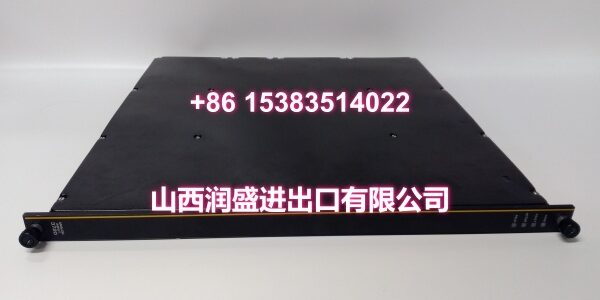
Product Core Brief
- Model: 3720
- Brand: Triconex (Schneider Electric, via Invensys)
- Series: Tricon safety system platform
- Core Function: TMR analog input module — acquires process signals (temperature, pressure, flow) and converts them to digital values for the Tricon controllers, with 2oo3 voting across three independent legs
- Product Type: Safety I/O module (analog input)
- Key Specs: 64 single-ended inputs | 0–5 VDC, 0–5 VDC +6%, or ±5 VDC | 10 ms update rate
- Condition: New Original / New Surplus
Key Technical Specifications
| Category | Parameter | Value |
|---|---|---|
| Identification | Model | 3720 |
| Identification | Brand / Platform | Triconex (Schneider Electric) / Tricon |
| Architecture | Redundancy | TMR — three independent legs, 2oo3 voting |
| Safety | Integrity Level | SIL 3 (TÜV-certified Tricon platform) |
| Inputs | Number of Points | 64 single-ended |
| Inputs | Voltage Ranges | 0–5 VDC, 0–5 VDC +6%, or −5 to +5 VDC (TriStation configured) |
| Performance | Update Rate | 10 ms |
| Performance | Resolution | 12-bit or 14-bit programmable |
| Performance | Accuracy | < 0.15% of FSR, 0°C to 60°C |
| Protection | Input Overrange | 150 VDC / 115 VAC continuous |
| Isolation | Point Isolation / Leg-to-Leg | Yes / 420 kΩ typical |
| Diagnostics | Indicators | PASS, FAULT, ACTIVE, FIELD |
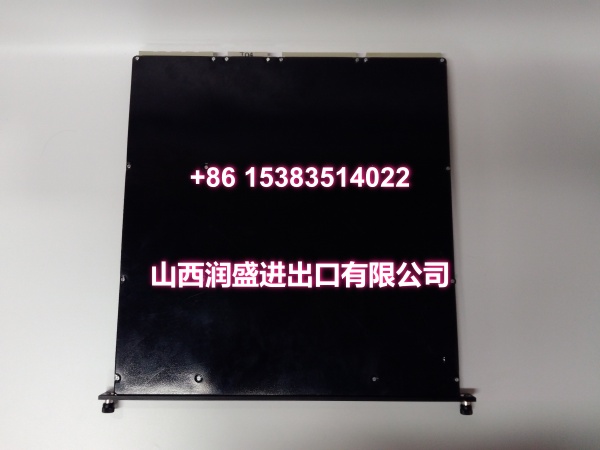
| Mechanical | Color Code / Mounting | Yellow / Tricon rack slot with matching terminal board |
| Compatibility | Sibling Modules | 3721 (32 differential), 3704E (copper code, 75 ms) |
| Supply | Availability Status | Legacy / obsolete stock |
Product Introduction (No Fluff)
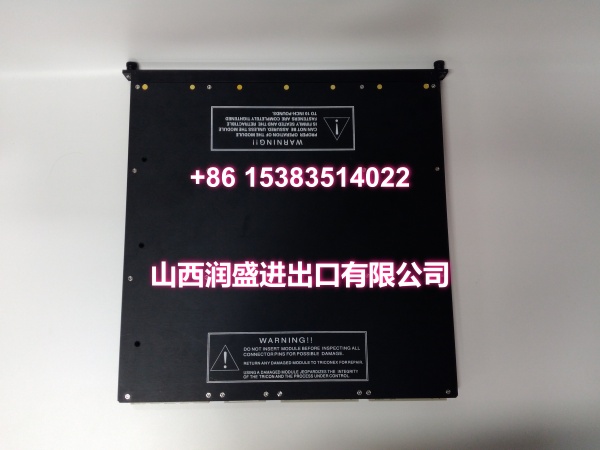
The Triconex 3720 is the analog input layer of a Tricon safety system — the module that reads the field and hands clean, voted data to the controllers before an ESD or F&G function ever has to act. Its TMR architecture runs three independent signal paths and resolves them by 2oo3 voting, so a single failed leg neither stops the process nor produces a wrong reading.
Two things decide whether this module works in your rack. First, the model itself: “3720” is mislabeled in circulation, so verify it against the nameplate. Second, the TriStation configuration — the input range is software-selected, not fixed by hardware. Bottom line: match the part number and reload the engineered configuration, not just the module.
QA & Testing SOP
- Anti-counterfeit intake. Nameplate photographed under raking light; model and revision checked for consistent laser depth. Counterfeits fail on the trailing characters.
- Connector inspection. Every backplane pin checked for bending, oxidation, and heat discoloration. A single damaged pin on a TMR module produces a leg fault that mimics a field problem.
- Rack power-up. Installed in a known-good Tricon test rack. PASS / FAULT / ACTIVE / FIELD LED sequence compared against the manual’s expected startup pattern.
- Channel verification. Calibrated voltage injected at 0%, 50%, and 100% of range across a sample of the 64 points; readback compared to a calibrated reference. Update rate confirmed at 10 ms.
- ESD-safe packing. Anti-static bag, foam cradle, humidity indicator, sealed and photographed before dispatch.
Installation Pitfalls & Guide
❗ Terminal board pairing. The 3720 must be installed with its matching Tricon terminal board — the field wiring does not transfer freely between board revisions. Confirm the board part number before removal.
❗ Configuration is not stored in the module. A replacement boots with defaults. Load the TriStation configuration for the specific slot before energizing, and confirm the input range matches the field transmitters.
❗ Redundancy state. On a live SIS, identify which leg is active before removal. Swapping the wrong module can force an unplanned vote change.
❗ Torque and seating. The module must be fully seated and tightened to specification — a partially seated card will not be assured of proper operation.
❗ Shield grounding. Analog accuracy depends on correct shield termination. Ground at one point only to avoid loops.
Replacement sequence:
- Pre-install — photograph slot position, terminal wiring, and the current parameter list; export the configuration.
- Removal — de-energize the bay or follow the documented online-replacement procedure.
- Install — seat fully, torque to spec, restore shielding and grounding.
- Commissioning — cold boot, load configuration, verify each channel against a known reference, then confirm the module reports PASS on all three legs before returning the safety function to service.
Technical FAQ
Is pricing negotiable on volume? On legacy SIS stock, price follows availability rather than quantity. Tell us your real requirement up front.
What warranty applies? Twelve months on New Original. Six months on New Surplus. We state the difference rather than bury it.
Is 3720 the same as 3721? No. The 3720 provides 64 single-ended inputs; the 3721 provides 32 differential, DC-coupled inputs with stronger common-mode rejection. They are not interchangeable.
Why not upgrade to Tricon CX instead? Tricon CX is compatible with Tricon but changes I/O architecture, wiring, and commissioning. That’s an engineering project with a schedule, not a purchase order. If you want that path, we’ll scope it honestly.
Is this part obsolete? Treat it as legacy. Order spares against your maintenance horizon, not against today’s failure.
Want me to add FAQPage + Product Schema markup, or a nameplate-verification checklist for your QA team? A nameplate photo would let me confirm the module type and remove any remaining uncertainty.