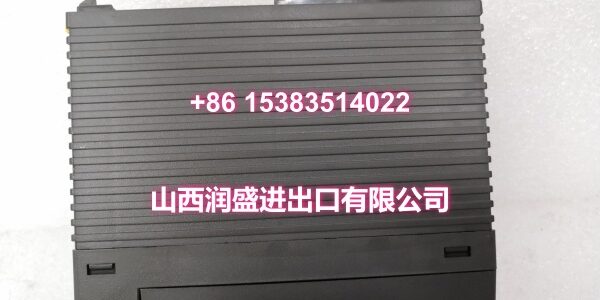
Product Core Brief
- Model: NFAI143-H00
- Brand: YOKOGAWA
- Series: FCN-RTU Analog I/O
- Core Function: 16-channel 4-20mA DC analog input module with HART communication support for FCN-RTU systems.
- Product Type: FCN-RTU Analog Input Module
- Key Specs: 16 channels | 4-20mA DC | HART-enabled | Field-to-circuit isolated
- Condition: New Surplus / OEM Original
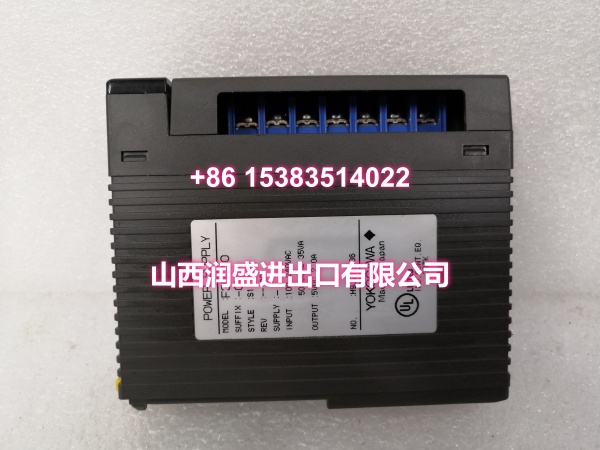
Key Technical Specifications
- Part Number:
- Product Type: Analog Input Module for FCN-RTU
- Number of Channels: 16
- Input Signal: 4 to 20 mA DC
- HART Communication: Available
- Isolation: Field-to-circuit isolated (point-to-point non-isolated)
- Input Resistance (Power ON): 250Ω
- Input Resistance (Power OFF): 500 kΩ or more
- Allowable Input Current: 24 mA
- Withstanding Voltage: 1500 VAC for 1 minute (input to system)
- Overcurrent Protection: Provided
- Accuracy: ±0.1% of full scale
- Data Refresh Cycle: 10 ms
- Input Step Response Time: 100 ms
- Transmitter Power Supply: 24.0 to 25.5 V (output current limit: 25 mA)
- 2-Wire / 4-Wire Setting: Per channel via setting pin
- Temperature Drift: Max. ±0.01%/°C
- Maximum Current Consumption: 230 mA (5 VDC) / 540 mA (24 VDC)
- External Connection: Pressure clamp terminal or MIL connector cable
- Weight: 0.3 kg
Product Introduction
The NFAI143-H00 is a 16-channel 4-20mA DC analog input module for the YOKOGAWA FCN-RTU controller, with HART communication capability for reading additional device diagnostics from smart transmitters. It is commonly deployed in process plants for temperature, pressure, flow, and level monitoring where field-to-circuit isolation is required but point-to-point isolation is not.
What sets the -H00 variant apart is HART support. That means you can pull device health data, calibration status, and tag information from HART-enabled transmitters without adding separate communication hardware. The 10 ms refresh cycle and ±0.1% accuracy make it suitable for most continuous process control loops.
QA & Testing SOP
- Label and suffix verification: Confirm “NFAI143-H00” marking on the module faceplate. The -H00 suffix specifically denotes HART capability — do not substitute with -SE0, -SE1, or -S50 variants if HART is required.
- Connector and pin inspection: Check the MIL connector or pressure clamp terminals for bent pins, corrosion, or loose contacts. These are common failure points on surplus units.
- Backplane contact check: Inspect the module edge connector for oxidation or physical damage before seating it into an FCN-RTU base.
- Channel signal injection test: Apply a calibrated 4-20mA source to sample channels and verify readings in the FCN-RTU configuration software. Check all 16 channels if time permits.
- HART communication test: Connect a HART-enabled transmitter to at least one channel and confirm that device variables and status can be read through the module.
All units are handled with ESD-safe packaging and labeled with received condition, inspection date, and test status.
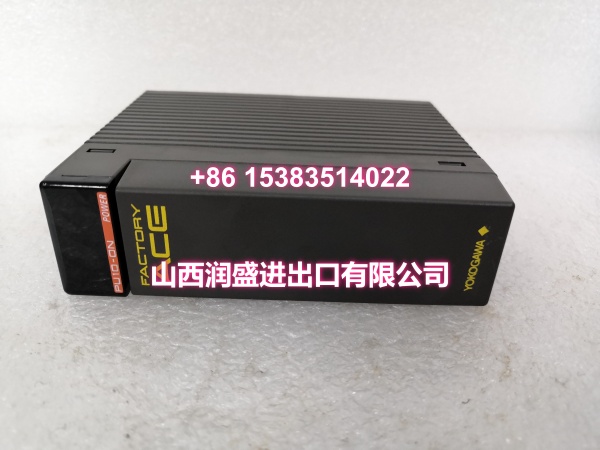
Installation Pitfalls & Guide
- ❗ Do not confuse -H00 with -SE0/-SE1. The -SE0 and -SE1 variants are non-HART. If your application requires HART device diagnostics, substituting a non-HART variant will leave you blind to transmitter health data.
- ❗ Verify 2-wire vs. 4-wire jumper settings. Each channel must be configured correctly via the setting pins. A 2-wire transmitter wired as 4-wire will not receive loop power.
- ❗ Check backplane current budget. At 230 mA on the 5 VDC rail and 540 mA on the 24 VDC rail, this module draws significant power. Adding multiple units without verifying the power supply capacity can cause brownouts.
- ❗ Mind the isolation architecture. The module is field-to-circuit isolated but point-to-point non-isolated. A ground fault on one channel can affect others in the same group.
Replacement steps:
- Log the current FCN-RTU configuration and verify lockout/tagout if performing a cold swap.
- Disconnect field wiring and remove the failed module from the FCN-RTU base.
- Seat the NFAI143-H00 firmly and verify the setting pins match the transmitter wiring (2-wire vs. 4-wire).
- Power up, download configuration if needed, and verify channel readings and HART communication.
Technical FAQ
What is the difference between NFAI143-H00 and NFAI143-SE0? The -H00 supports HART communication; the -SE0 and -SE1 do not. Both are 16-channel 4-20mA input modules with field-to-circuit isolation, but if you need to read smart transmitter diagnostics, you need the -H00 variant.
Can I substitutfor ? Only if HART communication is not required in your application. Electrically, the input specifications are the same, but you will lose the ability to communicate with HART-enabled field devices.
Is this module still in production? The NFAI143 family is listed as discontinued in Yokogawa documentation. Surplus stock is available, but long-term migration planning to a supported platform should be considered.
What transmitter power does it provide? The module supplies 24.0 to 25.5 VDC with a 25 mA current limit per channel, sufficient to power most 2-wire 4-20mA transmitters.
Can I hot-swap this module? The FCN-RTU platform supports hot-swappable I/O in many configurations, but always verify your specific base unit and redundancy setup before removing a live module. Check your system manual first.