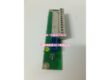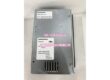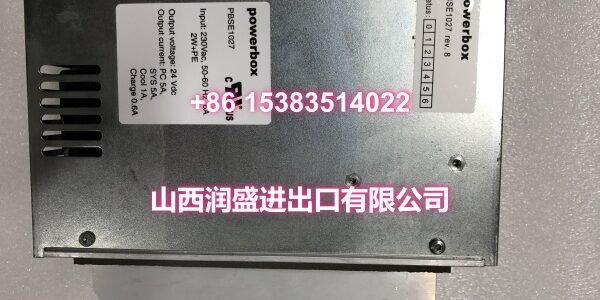
Product Core Brief
- Model: DSQC602
- Brand: ABB
- Series: ABB IRC5 Robot Controller I/O Communication Module
- Order Code: 3HAC12816-1/06 (standard variant)
- Core Function: Standard I/O communication module for ABB IRC5 robot controllers, handling digital input/output signal exchange between the robot controller and peripheral field devices (sensors, actuators, limit switches).
- Product Type: I/O Communication Module / Standard I/O Board
- Key Specs: Digital I/O signal processing | DeviceNet or ABB Robot Communication Bus interface | 24VDC logic level | Galvanic isolation | LED status indicators per channel
- Note: Condition: New Original (New Surplus). Compatible with IRC5 standard and compact controller variants.
Key Technical Specifications
| Parameter | Value |
|---|---|
| Device Model | |
| Device Type | I/O Communication Module / Standard I/O Board |
| Series | ABB IRC5 Robot Controller I/O Module |
| Standard Order Code | 3HAC12816-1/06 |
| Communication Protocol | DeviceNet / ABB Robot Communication Bus |
| I/O Type | Digital Input/Output |
| Logic Voltage | 24VDC |
| Signal Isolation | Galvanic isolation (channel-to-channel and channel-to-bus) |
| Response Time | ≤5ms (typical, dependent on bus scan rate) |
| Physical Interfaces | DeviceNet connector (X5), I/O terminal block |
| Status Indicators | Per-channel LED feedback for I/O state |
| Power Supply | 24VDC from IRC5 controller internal bus |
| Operating Temperature | 0°C ~ +45°C |
| IP Rating | IP20 (inside control cabinet) |
| Mounting | DIN rail or backplane mount in IRC5 control cabinet |
| Weight | Approx. 0.5~0.8 kg |
| Compatible Controllers | ABB IRC5 series (standard and compact variants) |
| Configuration | RobotStudio remote configuration, teach pendant local parameter adjustment |
| Typical Applications | Sensor/actuator interfacing, limit switch monitoring, peripheral device coordination |
| Condition | New Original (New Surplus) |
Product Introduction
The ABB DSQC602 is a standard I/O communication module designed for ABB IRC5 robot controllers. It serves as a critical interface between the robot controller and external field devices, enabling reliable digital signal exchange in industrial automation environments.
In automated production cells, robots must coordinate with a wide range of peripheral equipment—proximity sensors, photoelectric sensors, limit switches, solenoid valves, indicator lights, and other digital devices. The DSQC602 provides the signal pathway for this coordination, converting field-level 24VDC digital signals into data that the IRC5 controller can process, and translating controller output commands into physical signals that drive actuators and indicators.
The module connects to the IRC5 controller via the DeviceNet fieldbus protocol or ABB’s proprietary robot communication bus, ensuring high-speed, reliable data transmission. DeviceNet communication allows multiple I/O modules to share a single network backbone, reducing wiring complexity and simplifying system expansion. The DSQC602’s galvanic isolation design protects the controller from electrical noise, voltage spikes, and ground loop issues commonly encountered in industrial environments—particularly in high-interference applications such as welding cells or near large motor drives.
Per-channel LED status indicators provide immediate visual feedback on I/O state, allowing maintenance technicians to quickly identify which signals are active without relying solely on software diagnostics. This hardware-level visibility significantly reduces troubleshooting time during production interruptions.
The module supports remote configuration through ABB’s RobotStudio software, enabling engineers to define signal mappings, set scan rates, and diagnose issues without physical access to the control cabinet. Local configuration and monitoring can also be performed through the teach pendant interface.
Common applications include:
- Automotive assembly lines: Interfacing with weld gun sensors, part presence detectors, and conveyor synchronization signals.
- Material handling cells: Monitoring limit switches on grippers and position sensors on transfer stations.
- Packaging lines: Coordinating with photoelectric sensors for product detection and solenoid valves for pneumatic actuator control.
- General machine tending: Connecting safety interlocks, cycle start buttons, and status indicator lights to the robot controller.
For maintenance teams supporting IRC5 installations, the DSQC602 is a direct drop-in replacement for failed or degraded I/O modules. When replacing, verify that the DeviceNet address and signal mapping configuration match the original module to ensure seamless integration without reconfiguration.
QA & Testing SOP
Every unit goes through a structured verification process before shipment:
- Visual Inspection: Check the PCB for cracks, burnt components, corrosion on connector pins, and physical damage to the board. Verify that all components (terminal blocks, DeviceNet connector, surface-mount ICs, isolation barriers) are securely mounted with no cold joints or solder bridges. Inspect the module housing and mounting clips for damage.
- Connector Pin Verification: Inspect all terminal block connectors and the DeviceNet connector (X5) for straightness, corrosion, or bending. Verify that the DeviceNet connector pins are intact, as bent pins cause communication failures on the fieldbus. Check that terminal block screws are present and functional.
- Power-On Self-Test: Connect the module to a 24VDC power supply and verify that the power LED illuminates correctly. Check for any abnormal heating during the initial power-on.
- Communication Test: Connect the module to a DeviceNet network or IRC5 controller backplane and verify that the master station can establish communication. Confirm that the module is recognized and that no communication fault codes are reported.
- Digital Input Test: Apply 24VDC signals to each digital input channel and verify that the module correctly reads the input states. Check for channel-to-channel crosstalk and verify that the per-channel LED indicators illuminate correctly.
- Digital Output Test: Command each digital output channel to switch on and off, and verify the output voltage with a multimeter. Confirm that the output signals match the commanded states and that the per-channel LED indicators reflect the correct output state.
- Isolation Test: Verify that the galvanic isolation between I/O channels and the communication bus is intact. This test ensures that electrical noise or voltage spikes on field wiring do not propagate to the controller or other network devices.
- Response Time Verification: Measure the module’s response time to confirm it meets the ≤5ms specification for typical industrial applications.
- Anti-Counterfeit & Packaging: Verify authenticity markings on the PCB and components. Each unit is shipped in anti-static protective packaging with desiccant to prevent moisture absorption and connector oxidation during transit.
Installation Pitfalls & Guide
Installing or replacing an I/O communication module requires careful attention to wiring, network configuration, and proper handling.
❗ Power-Down Before Installation: Always disconnect power to the IRC5 controller and the DeviceNet network before removing or inserting the DSQC602 module. Although DeviceNet supports some hot-swap capability, it is strongly recommended to replace the module with power off to prevent electrical damage to the module or the network.
❗ Anti-Static Protection: Always wear an anti-static wrist strap when handling the DSQC602 module. The PCB contains sensitive electronic components that can be damaged by electrostatic discharge (ESD). Handle the module by its edges only, avoiding contact with components or connector pins.
❗ Verify DeviceNet Address: Before installing the replacement module, document the DeviceNet address from the original module. The DSQC602’s network address is configured via jumpers on the X5 connector. Setting the address incorrectly or duplicating an existing device’s address will cause communication conflicts on the network.
❗ Shielded Cable for DeviceNet: Always use shielded DeviceNet cable for communication wiring, and connect the shield to ground at one end only (typically at the controller end) to prevent ground loops. Avoid routing DeviceNet cables parallel to high-voltage power cables or motor cables to minimize electromagnetic interference.
❗ Signal Wiring Verification: Before removing the original module, carefully document all I/O wiring connections on the terminal block. Label each wire with its function (e.g., “Part Present Sensor,” “Grip Open Solenoid”). Incorrect reconnection of I/O signals can cause unexpected robot behavior or equipment damage.
4-Step Replacement Guide:
- Pre-install: Document all I/O wiring connections and the DeviceNet address from the original module. Label each wire with its function. Back up the IRC5 controller’s I/O configuration, including signal mappings and DeviceNet device definitions. Verify the replacement module’s model (DSQC602) and order code match the original. Prepare anti-static protection, tools, and a multimeter for verification.
- Removal: Disconnect power to the IRC5 controller and the DeviceNet network. Wear an anti-static wrist strap. Disconnect all wiring from the terminal block and the DeviceNet connector, keeping the labels intact. Release the module’s mounting clips and gently remove it. Inspect the mounting location and connectors for damage or debris.
- Install: Mount the new DSQC602 in the control cabinet, ensuring it is securely fastened. Configure the DeviceNet address to match the documented setting from the original module using the X5 connector jumpers. Reconnect all I/O wiring to the correct terminals according to the documented labels. Reconnect the DeviceNet cable to the X5 connector. Double-check all connections before applying power.
- Power-on Test: Apply power to the IRC5 controller and the DeviceNet network. Verify that the module’s power LED illuminates and that no communication fault codes are reported by the controller. Use the teach pendant to verify that the DSQC602 is recognized on the DeviceNet network and that signal mappings are correct. Test each input channel by applying a known signal and verifying the reading. Test each output channel by commanding a specific state and measuring the output. Monitor the module for several minutes to confirm stable operation.
Technical FAQ
1. What is the DSQC602 used for in an IRC5 robot system? The DSQC602 is a standard I/O communication module that handles digital input/output signal exchange between the IRC5 robot controller and external field devices such as sensors, actuators, limit switches, and indicator lights. It connects to the controller via DeviceNet or ABB’s robot communication bus and provides galvanic isolation to protect the controller from electrical noise.
2. What communication protocol does the DSQC602 use? The DSQC602 uses the DeviceNet fieldbus protocol or ABB’s proprietary robot communication bus to communicate with the IRC5 controller. DeviceNet allows multiple I/O modules to share a single network backbone, reducing wiring complexity. The network address is configured via jumpers on the X5 connector, with an address range of 10-63 (addresses 0-9 are reserved for system use).
3. Can the DSQC602 be hot-swapped during operation? While DeviceNet technically supports hot-swap capability, it is strongly recommended to replace the DSQC602 module with power off to prevent electrical damage to the module or the network. If hot-swap is absolutely necessary, ensure the DeviceNet network is properly terminated and that the replacement module’s address does not conflict with existing devices.
4. What are common symptoms of a failing DSQC602 I/O module? Common symptoms include: I/O signals not updating correctly between field devices and the controller; per-channel LED indicators not illuminating or showing incorrect states; DeviceNet communication fault codes reported by the IRC5 controller; intermittent signal dropouts; and channel-to-channel crosstalk where a signal on one channel affects readings on another channel. If you’re experiencing any of these symptoms, check the module’s LED indicators, verify all wiring connections, and use the teach pendant’s diagnostic function to read the specific fault codes.
5. Is the DSQC602 compatible with OmniCore controllers? The DSQC602 is designed for ABB IRC5 series controllers. OmniCore controllers use a different I/O architecture and may require different module types. Always verify your controller model and consult ABB’s compatibility documentation before ordering replacement I/O modules. Note that ABB has been transitioning from IRC5 to OmniCore since 2024, with IRC5逐步退出市场 as of 2026.
6. What’s the difference between New Surplus and Refurbished for I/O communication modules? We supply this unit as New Original (New Surplus)—unused, original factory stock. This comes with a standard 12-month warranty. Refurbished I/O modules carry risks including degraded isolation barriers, weakened connector contacts from prior insertion cycles, and latent failures in communication ICs that may only manifest under full network load. For a module that is critical to robot-peripheral coordination and signal integrity, new surplus is the safer choice.